

Users regularly swap Bitcoin for USDT, fiat currency, and other assets – for trading, locking in profits, or moving funds between wallets. But when working with BTC, it's essential to account for fees, transaction speed, and platform security.
This guide explains how to swap BTC, where to get the best exchange rates, and which services to use for fast, reliable transfers.
What to Know Before You Swap Bitcoin
Before you decide to swap BTC for USDT or another cryptocurrency, it helps to understand how the Bitcoin network works. Every transaction is broadcast to the blockchain and must be confirmed by miners. Processing speed depends on network congestion and the size of the fee you attach.
If the fee is set too low, your swap can stall for hours. You can check a transaction's status using a blockchain explorer – just enter the TXID to see the number of confirmations, the wallet address involved, and the current state of the transfer.
Choosing a trustworthy exchange service upfront matters. A reliable platform uses encrypted connections, locks in the rate, and displays the exact amount you'll receive before the swap is finalized.
Before initiating any exchange, verify the following:
- Whether the platform supports the Bitcoin network
- The fee charged for the swap
- Any minimum or maximum limits that apply
If you need to swap Bitcoin quickly and without KYC verification, opt for services with a simple interface and automated order processing.
How to Swap Bitcoin for USDT – Step-by-Step
Here's a practical walkthrough of how to swap Bitcoin for USDT using a modern swap solution – we'll use Crypto Office in Telegram as our example.
Step 1. Choose a Service
Start by selecting a trusted service or crypto wallet with Bitcoin support. Many users prefer Crypto Office in Telegram – it lets you swap BTC for USDT and other cryptocurrencies without complex setup.
Step 2. Create a Swap Request
In the Swaps section, select the BTC → USDT direction.
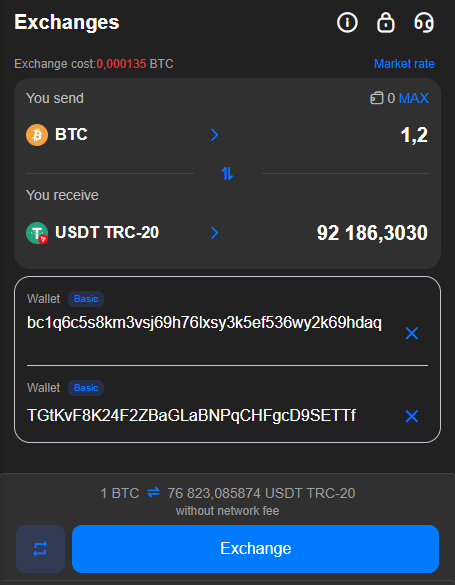
Next, choose the receiving network. TRC-20 is the most popular option for USDT thanks to its low fees and fast processing. Then enter the recipient wallet address.
Step 3. Review and Confirm
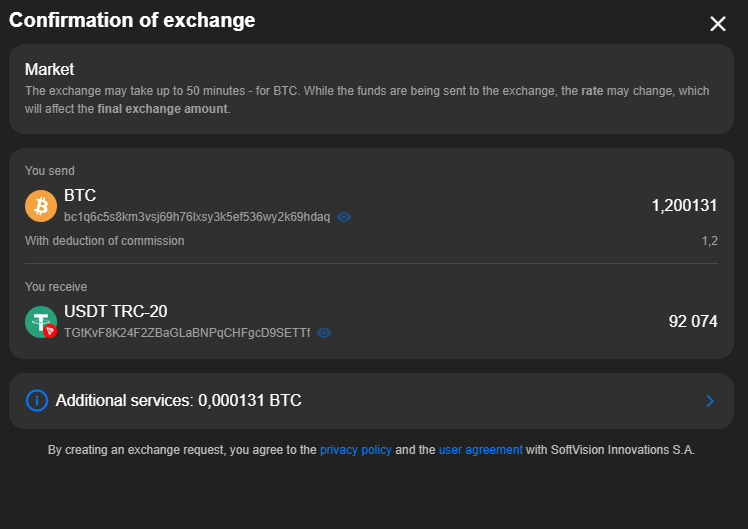
Before sending the transaction, double-check:
- Wallet address
- Selected network
- Fee amount
- Final amount to be received
A mistake in the address or network selection can result in permanent loss of funds – transactions on the blockchain cannot be reversed.
Step 4. Wait for Network Confirmation
Once you send the transaction, it enters the Bitcoin blockchain. Most services wait for a set number of network confirmations before processing the swap. After the required confirmations are reached, the platform sends the USDT.
Step 5. Receive Your Funds
After processing is complete, USDT will arrive at the specified address. Speed depends on network load – on average, a market-rate BTC swap takes up to 50 minutes.
How to Swap Bitcoin for Other Cryptocurrencies
The process of swapping BTC for other crypto assets works the same way as swapping Bitcoin for USDT. Here's what you do:
- Open the exchange service interface
Go to the "Swaps" section
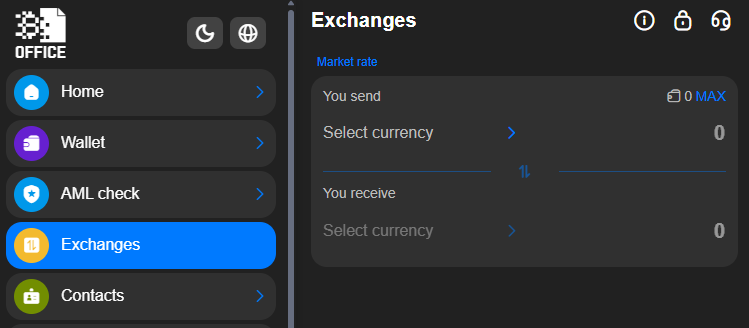
Select the trading pair, e.g., BTC/ETH
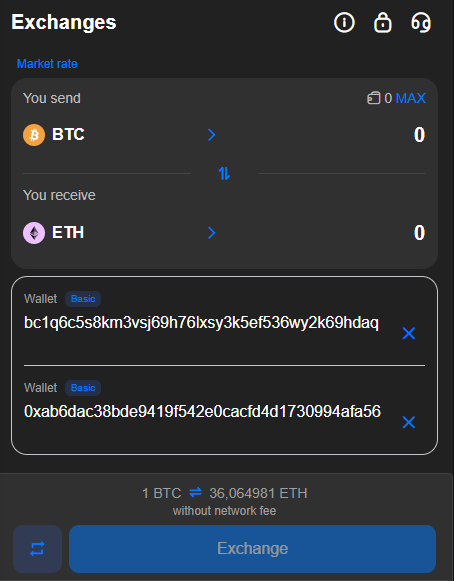
- Enter the amount and destination wallet address
Confirm the swap
After blockchain confirmation, the ETH (or other asset) will be credited to the specified wallet address.

Can You Swap BTC for Fiat Currency?
In 2026, you can exchange Bitcoin for dollars, or other fiat currencies through select crypto exchanges, P2P platforms, online swap services, and Telegram bots. Most users withdraw Bitcoin to fiat via bank transfers or cash. For USD, bank wires and USDT stablecoins are the most common routes.
Regulations vary significantly by country. In the EU, crypto services now fall under the MiCA framework, requiring enhanced AML checks and transaction monitoring. In the US, exchanges operate under FinCEN licensing and require KYC for most operations. Some countries treat cryptocurrency as a recognized digital asset; others restrict its use for payments.
When choosing how to swap BTC for fiat, consider:
- Bitcoin network fee
- Transaction confirmation speed
- Blockchain support on the platform
- Platform limits and service fees
- AML compliance requirements
- Overall platform reliability
Where to Swap Bitcoin
If you're looking for a safe, low-risk place to swap Bitcoin, the key is choosing a platform with transparent infrastructure and verified reliability. The crypto market includes hundreds of options, but not all of them guarantee secure transaction handling and stable liquidity.
Before you swap BTC on any platform, evaluate these factors:
Platform Liquidity
Liquidity directly affects swap speed and the final rate. Platforms that tap into exchange liquidity process orders faster and with lower slippage – especially important for large-volume BTC swaps. Low-liquidity services may delay orders or offer less favorable rates.
Blockchain and Network Support
A reliable service should support the major networks used for receiving crypto, including:
- Bitcoin
- TRC-20
- ERC-20
- BEP-20
- Solana
AML Screening
AML compliance is now a core part of the crypto industry. Many platforms analyze BTC using blockchain analytics tools. AML screening helps identify:
- Wallet connections to darknet activity
- Addresses linked to fraudulent transactions
- Risk of funds being frozen on a centralized exchange
If a service doesn't apply AML filtering, you risk having your crypto blocked after it arrives at an exchange.
Reviews and Support
Before you swap Bitcoin, read user reviews and test the support team's responsiveness. A reliable platform answers quickly and resolves complex issues efficiently. A clear interface and transparent terms are equally important.
One strong option is Crypto Office – a Telegram-based service that supports Bitcoin, USDT, and other cryptocurrencies. It runs automated AML checks during each swap, reducing the risk of funds being frozen on exchanges or custodial platforms. Crypto Office also supports cross-chain transfers: for example, you can send BTC and receive USDT on TRC-20, or move assets between blockchains without a manual exchange step.
Fees When You Swap Bitcoin
Every time you swap BTC, the first cost you encounter is the network fee – built into the rules of the blockchain itself. Fee sizes differ across networks.
The Bitcoin network fee goes to miners as payment for including your transaction in a block. The higher the network load, the more expensive the BTC swap becomes. Confirmation speed is also tied to your fee level – a fee that's too low can leave your transaction stuck in the mempool for a long time.
Beyond the network fee, platforms may also charge:
- A service fee for the swap itself
- A spread between the buy and sell price
- A withdrawal fee on top of the exchange
Some platforms advertise low fees but embed losses into the exchange rate. That's why you should always look at the total cost of the swap, not just the advertised fee.
Crypto Office addresses this by showing a full fee breakdown upfront: the total fee, the network fee, and the exchange rate. This lets you estimate transaction costs before committing.
Common Mistakes When Swapping Bitcoin – and How to Avoid Them
Even experienced users make mistakes when exchanging Bitcoin. Once a transaction is confirmed on the blockchain, it cannot be reversed. Any error can mean permanent loss of funds.
One of the most frequent problems is sending crypto to the wrong network. For example, entering a USDT address on ERC-20 when you meant TRC-20.
Before you swap Bitcoin or any stablecoin, always check:
- The receiving network
- The wallet address format
- Whether the service supports the destination blockchain
A single wrong character in a wallet address can result in irreversible loss. Best practices:
- Always copy and paste addresses – never type them manually
- Use QR codes where available
- Manually verify the first and last few characters of the address
In 2026, security is more important than ever. Many centralized exchanges may restrict incoming BTC after reviewing the origin of the funds. This is why more users now prefer services with built-in AML transaction analysis – it reduces the risk of funds being blocked and makes it easier to use your crypto afterward.
Conclusion
In 2026, there are multiple ways to swap Bitcoin: online exchange services, crypto exchanges, P2P platforms, and Telegram bots. Each method has different tradeoffs in speed, reliability, fees, and privacy.
If you need a fast, straightforward way to swap BTC for USDT, look for services with automated order processing and cross-chain swap support. Solutions like Crypto Office let you exchange Bitcoin in a familiar environment, with exchange-grade liquidity to reduce risk.
But the golden rule stays the same: before every transfer, verify the network, double-check the wallet address, and review the platform's terms. In the blockchain world, security always comes before speed.
Journalist and editor specializing in crypto markets and blockchain infrastructure, covering regulatory shifts, institutional adoption, and the evolution of Web3 protocols.