

USDC and USDT account for the vast majority of the stablecoin market. Yet for many users, the difference between them remains unclear: both tokens are pegged to the dollar, both operate across popular blockchains, and both are used for storage, transfers, and trading. Still, there are fundamental distinctions worth understanding. If you've ever wondered what is USDC and USDT – and why it matters – this article breaks it all down.
In this article, we'll take a detailed look at what stablecoins are, how they work, and what sets the key players in the crypto market apart from each other.
USDC and USDT: What They Are in Simple Terms
USDT and USDC are stablecoins – a type of cryptocurrency pegged to the price of fiat currencies, in this case the US dollar. These assets help users store funds in a more stable form, avoiding the sharp volatility typical of most cryptocurrencies.
USDT was introduced first. It was issued by the company Tether and quickly gained high liquidity and support from major exchanges. Today, USDT operates across multiple networks, including Ethereum, TRON, and BNB Smart Chain.
USDC was launched by Circle. This stablecoin gained popularity thanks to its transparent reserves and regular audits. Many users consider USDC more straightforward in terms of oversight and backing.
Simply put, comparing USDT vs USDC is a matter of choosing between two digital versions of the dollar – each with a different approach to security and governance.
What Is the Difference Between USDT and USDC: Fees and Networks
One of the most practical aspects of understanding what is the difference between USDT and USDC comes down to blockchain support. USDC is natively supported on more than 34 blockchains. USDT is available on approximately 15+ networks, though it is concentrated primarily across a few key ones, including:
- Ethereum
- BNB Smart Chain
- TRON
- Solana
- Arbitrum
- Aptos
- TON, and others
At the same time, fees and transaction speeds vary significantly from network to network.
For example, USDT on the TRC-20 network has long been one of the most popular options for processing crypto payments and transfers, thanks to its low fees and fast transactions. On Ethereum, the situation is different – gas costs are higher and more dependent on network activity.
USDC is more commonly used within the Ethereum ecosystem and DeFi protocols. This is why users often compare them not just on reserve transparency, but also on the practical cost of everyday transfers. When examining USDC vs USDT fees, it's important to remember: the same token can exist in different standards. For instance, USDT ERC-20 and USDT TRC-20 are the same cryptocurrency but on different blockchains. Sending tokens to the wrong network can result in lost funds.
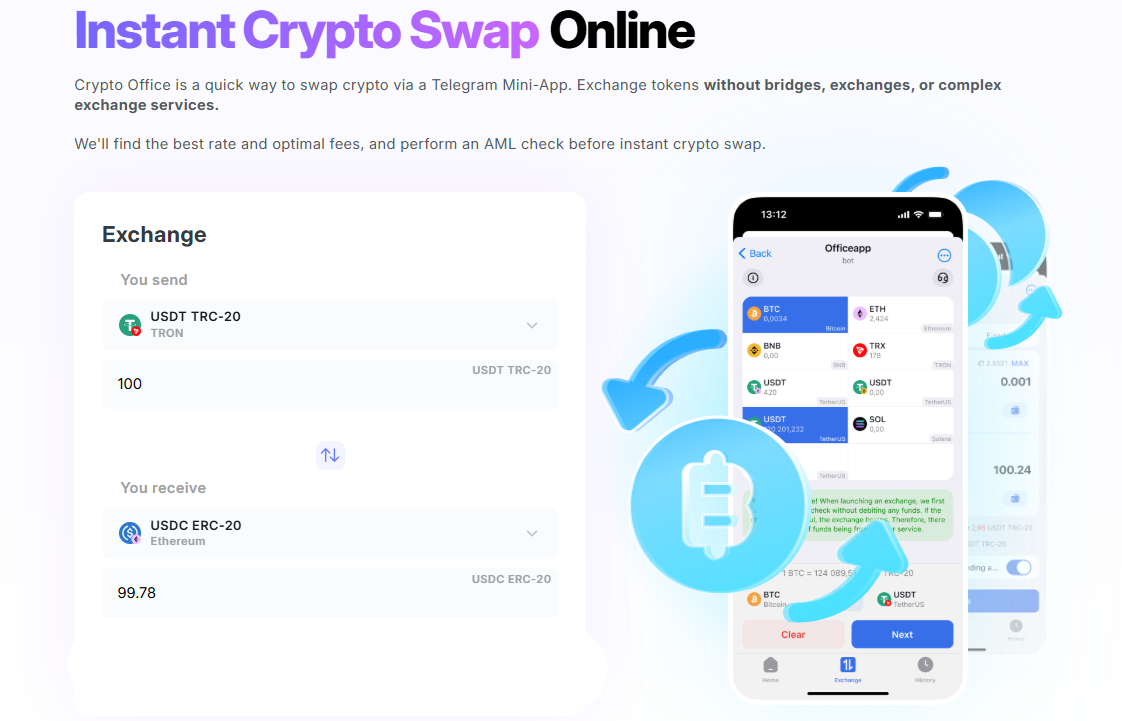
Below are the key fee differences across popular networks in Crypto Office:
| Network | USDT | USDC | Transfer Fee (USDT / USDC) |
| Ethereum (ERC-20) | Yes | Yes | ~$0.95 / ~$0.95 |
| TRON (TRC-20) | Yes | No | ~$2.18 / – |
| BNB Smart Chain | Yes | Yes | ~$1.14 / ~$1.14 |
| Solana | Yes | Yes | ~$1.32 / ~$1.32 |
It's worth noting that the Crypto Office wallet allows you to receive USDC, as well as USDT on Arbitrum, Optimism, Base, Polygon, or AVAX networks via the exchange feature.
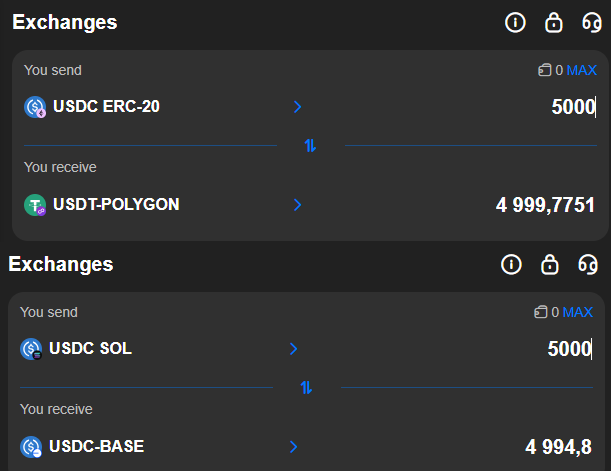
Always verify the recipient's network before sending cryptocurrency. If a wallet only supports ERC-20 and you send tokens via TRC-20, the transaction could result in lost funds.

USDT or USDC – Which Is Better for Storage and Transfers?
Both stablecoins have long been a part of the crypto market and are used by millions of people every day. But different users have different goals. Some store funds in a wallet for months, while others regularly send and exchange them.
USDT is more often chosen for transfers and active trading. This stablecoin has enormous liquidity and is supported by almost all crypto services. USDC, on the other hand, is frequently used for long-term storage, largely due to its more transparent regulatory model.
In practice, the USDT vs USDC differences come down to a choice between convenience and an additional layer of trust in the issuer. Both tokens maintain their dollar peg and hold leading positions in the market – together they control around 85–90% of the entire stablecoin segment.
USDT vs USDC Difference in Liquidity and Market Volume
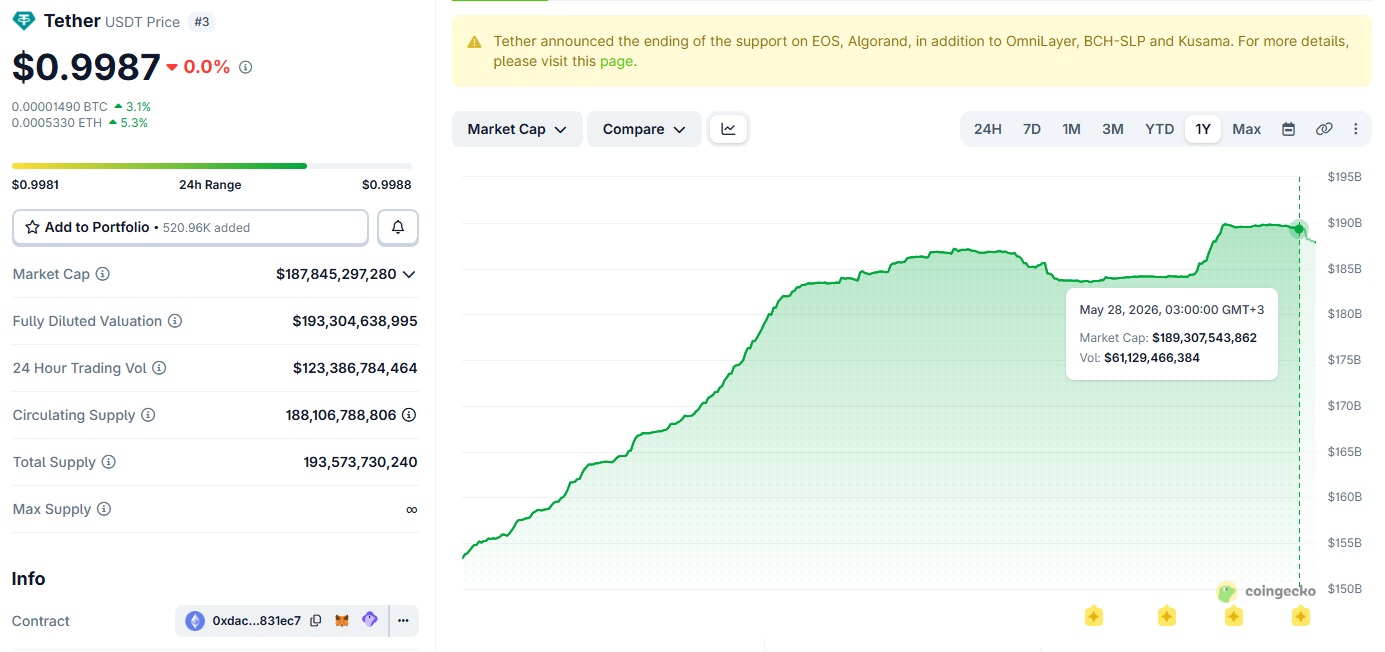
The key USDT vs USDC difference in market metrics is the sheer scale of adoption. USDT remains the world's largest stablecoin. As of June 2026, its market capitalization is approaching $190 billion, with a market share exceeding 60%.
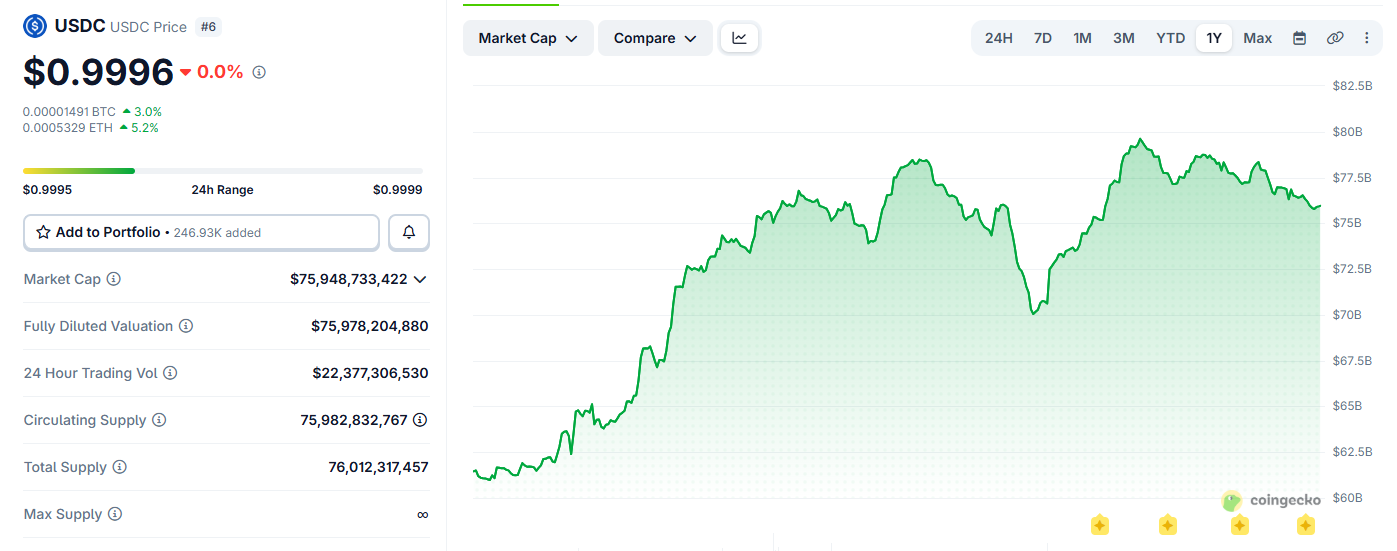
USDC ranks sixth in overall crypto market capitalization, with more than $75 billion in circulation.
The gap becomes even more apparent when analyzing trading volumes. USDT is used on virtually every major exchange and remains the primary instrument for crypto trading, with tens of billions of dollars in daily volume. It is especially active in Asia, Latin America, and the P2P market.
USDC follows a somewhat different model. It is actively used in DeFi, Web3, and institutional payments. Following increased regulatory oversight in the US, major companies and fintech services began adopting USDC more frequently. In early 2026, USDC circulation volume grew by more than 70% compared to the previous year.
Together, they control around 85–90% of the entire stablecoin segment.
Stablecoin Ecosystem Comparison
Today, USDT and USDC operate across far more than a single network. Over the past few years, the stablecoin ecosystem has grown substantially. Users can store assets, send transactions, and interact with DeFi protocols across multiple blockchains.
USDT has historically been the go-to token for transfers. It is especially popular on the TRON network, where low fees and fast transactions have made it one of the most widely used standards for everyday users.
USDC is more deeply integrated into Web3 infrastructure. This stablecoin is actively used on Ethereum, Arbitrum, Optimism, and Solana. Many DeFi platforms and crypto applications were originally built around USDC from the ground up.
There is also a difference in how each token approaches network expansion. Circle actively promotes native USDC support across new blockchains – the stablecoin now operates on more than 20 networks, including Ethereum, Solana, Base, Polygon, Arbitrum, and Avalanche. This is one reason why businesses prefer USDC over USDT: its broad, natively supported multi-chain presence makes it easier to integrate into regulated financial services and cross-border payment systems.
USDT, by contrast, is focused on mass adoption and liquidity. It remains the primary settlement currency across a wide range of services and exchanges.
In short, the differences between USDT and USDC within the ecosystem look like this: USDT is better suited for payments, transfers, and trading, while USDC is more commonly used within regulated crypto services, DeFi, and Web3 applications.
Stability Mechanism – Issuance and Reserves
Both stablecoins operate on a similar principle. When a user purchases tokens with regular dollars, the company issues new coins – a process known as minting. When tokens are converted back into fiat, a portion is removed from circulation. The stability of the stablecoin's peg is maintained by reserves.
But this is precisely where a key part of what is the difference between USDC and USDT lies. Circle regularly publishes reserve data and undergoes independent audits. Tether also discloses information about its backing, but questions around USDT's reserves have surfaced more frequently over the years.
When to Choose USDT and When to Choose USDC?
After comparing reserves, liquidity, and networks, a natural question arises: which stablecoin should you actually use? The answer depends on your goal. Despite their shared dollar peg, the use cases for these tokens often differ – and understanding the USDC vs USDT differences in practice can help you make the right call.
Choose USDT if:
- You need fast payments or transfers between exchanges and wallets.
- You plan to hold funds for an extended period and liquidity is a priority.
- Liquidity is important to you.
- You actively trade cryptocurrencies.
- You use P2P platforms.
- You need low-cost transactions.
- You work with services where USDT is the primary settlement currency.
Choose USDC if:
- Reserve transparency is your priority.
- You use DeFi protocols and Web3 services.
- Regular reporting from the issuer matters to you.
- You work with regulated crypto-financial platforms.
- You want to hold digital dollars in an ecosystem with stricter regulatory compliance.
In practice, many users don't commit to just one. Using both stablecoins allows you to leverage the advantages of each.
Which Stablecoin Is Safer?
Security remains one of the most important factors when choosing a stablecoin – especially when storing larger amounts.
Both stablecoins operate on major blockchains and have been around for many years. Over that time, they have weathered several serious crises while maintaining their dollar peg. But there are still differences worth noting, particularly around reserves and the level of disclosure each issuer provides.
USDC is often described as the more transparent stablecoin. Circle regularly publishes reserve data, giving users a clearer picture of what backs the tokens in circulation.
USDT bets on scale and liquidity. Tether also discloses information about its backing, but questions about the structure of its reserves have persisted in the market for years.
That said, USDT remains the world's largest stablecoin. It leads in both capitalization and circulation volume, and is used on the majority of cryptocurrency exchanges.
Conclusion
Stablecoins USDT and USDC allow users to hold funds in the crypto space and conduct transactions without the high volatility typical of most cryptocurrencies. USDT remains the leader in liquidity, trading volumes, and mass adoption. USDC places its emphasis on reserve transparency, auditing, and regulatory compliance – making it a convenient tool for working with financial services in Web3.
Each stablecoin has its own advantages. The choice depends on what matters most to you: liquidity and universality, or greater transparency and issuer accountability.
Journalist and editor specializing in crypto markets and blockchain infrastructure, covering regulatory shifts, institutional adoption, and the evolution of Web3 protocols.