

Crypto processing has become a standard tool not only for individual users but also for businesses of all sizes. With the help of a modern payment processor for crypto, companies can quickly accept payments in BTC, USDT, and other digital currencies – without relying on traditional banking infrastructure.
In this article, we will explore in detail what cryptoprocessing is, how it works, and how to optimize crypto payments for your business.
What Is Cryptoprocessing: A Simple Explanation
If you're wondering what is cryptoprocessing, here is the clearest answer: it is a system for receiving and processing payments in cryptocurrency. Think of it as the "engine" that drives a transaction from the moment a user sends crypto all the way to the moment the recipient receives it.
In traditional payments, banks and intermediaries handle the flow of funds. In crypto, everything runs through the blockchain – wallets and service layers act as a payment gateway, enabling faster and cheaper transactions with fewer third parties involved.
When a user pays for a product or service in cryptocurrency (for example, Bitcoin, Ethereum, or USDT), the crypto payment processor moves the transaction through several key stages:
- Payment details generation. The system creates a wallet address or QR code for the payment.
- Transaction broadcast. The user sends funds from their own wallet.
- Verification and confirmation. The transaction is processed on the blockchain and confirmed by miners (in PoW networks like Bitcoin) or validators (in PoS networks like Ethereum).
- Recording and conversion. The payment service logs the operation, converts the currency if needed, and forwards transaction data to the business.
- Settlement. Funds reach the recipient – either in crypto or converted to fiat.
In essence, what is a crypto payment processor if not the bridge between Web3 technology and classical acquiring? It makes blockchain practical for payments, turning cryptocurrency into a straightforward way to pay.
How Crypto Payment Processing Works: The Full Cycle
Understanding how crypto payment processing works means following the full lifecycle of a transaction. Let's walk through this using the Crypto Office platform as an example:
- The business creates an invoice, specifying the amount due.
- A cryptocurrency is selected (e.g., USDT), and the system generates an invoice along with a unique payment link tied to that operation.
- The invoice is sent to the client – usually as a link.
- The client opens the link and sends funds from their wallet to the specified address.
- Processing begins automatically. The system transmits transaction data to the blockchain and monitors incoming funds, verifying the amount and address until confirmation.
- Once the network confirms the transfer, the payment is considered complete.
- The service credits the crypto to the account balance and sends a notification so the business knows the payment has gone through.
This is how does crypto payment processing work in practice: it removes the technical complexity of blockchain and allows businesses to accept and track payments without manual intervention.
Getting Started with Crypto Processing
Getting started with a crypto processing platform requires no complex configuration. Within interfaces like Crypto Office, the user:
- Receives a ready-made invoice in the form of a wallet address.
To accept a payment, they generate a wallet link or create an invoice – by navigating to "Top Up" or "Checks and Invoices".
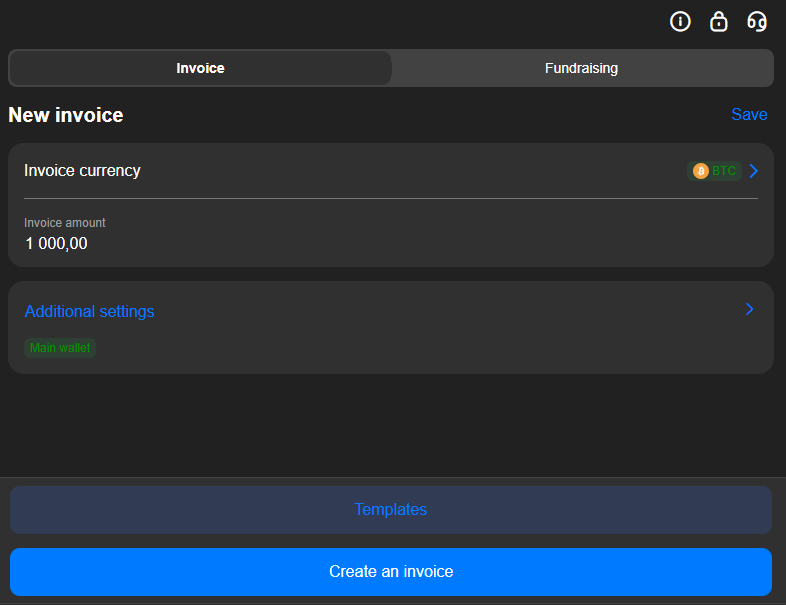
Creates and sends payment details to the client.

- The client sends cryptocurrency from their wallet to the specified address.
Both parties receive a notification confirming the payment.
For corporate clients, Crypto Office offers an API.
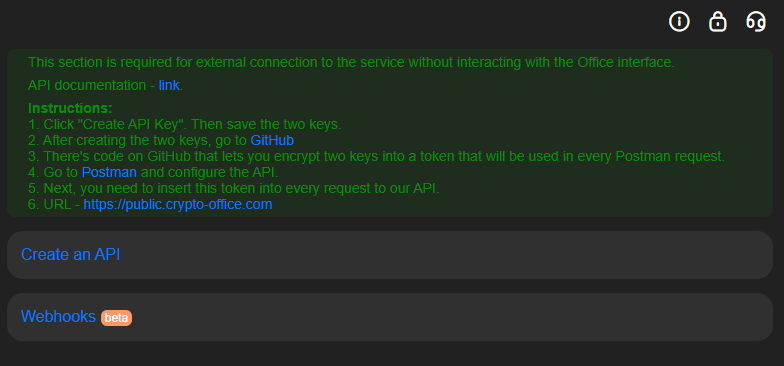
This tool lets you integrate the crypto currency payment processor directly into your platform – enabling automated payment acceptance, invoice creation, and bookkeeping.
Explore the Crypto Office API: https://developers.crypto-office.com/rest-api
Benefits of Crypto Payment Processing for Business
Crypto processing simplifies payment handling. It also reduces dependence on banks. But the main advantage is accessibility. Blockchain allows you to connect to the payment system from anywhere in the world.
Low fees. This matters for business. In banking systems, payment processing costs can sometimes reach tens of percent. Cryptocurrency allows payments to be made at lower costs.
Blockchain architecture plays a separate role. It eliminates chargebacks. Since transactions on the network are irreversible, businesses are protected from refunds and losses.
Transaction Monitoring
Among the key advantages, it's worth noting that every blockchain transaction contains data on the amount, address, and status. This significantly simplifies financial flow control – not only for the business, but on the client side as well.
Operation Reporting
Reporting helps manage finances. It is generated automatically. For example, Crypto Office saves information on all incoming and outgoing funds. This data can be used for analysis and accounting.

Security Considerations Before You Begin
Security is the first thing to address before using any processing system. Set strong passwords for the interface – this is the baseline.
To raise your protection level, enable two-factor authentication (2FA). Always verify wallet addresses before sending funds to avoid losses from mistakes or address substitution attacks.
Never share seed phrases or passwords with third parties. Control over the wallet and API must remain exclusively with the business owner. Failing to do so puts your funds and system access at serious risk.
How to Choose a Crypto Processing Service
When evaluating how to enable cryptoprocessing for your business, stability is non-negotiable. Every blockchain transaction directly affects your business's finances and client trust.
Look for ease of use first. The service should create invoices quickly, display incoming payments clearly, and help manage assets without unnecessary steps.
Also check which networks and tokens are supported. A reliable crypto processing service should work with:
- BTC (Bitcoin)
- ETH (Ethereum)
- TRON and BSC networks
- Stablecoins like USDT and USDC
Consider costs carefully. Know how much you pay for processing each transfer and any additional service fees. Evaluate transaction speed as well – when a service confirms payments quickly after blockchain recording, clients don't wait and businesses get paid faster.
Check whether the service offers an API. This is essential for businesses that want to integrate a payment processor for crypto directly into their website and automate payment acceptance.
Finally, ensure that the service provides a secure environment for working with digital assets.
Use Crypto Office for seamless crypto processing integration. It's a convenient mini-app built for managing crypto payments with ease.
Conclusion
Crypto processing is a practical, working payment mechanism for businesses of all sizes. Services with dedicated payment tools simplify cryptocurrency acceptance and handle transaction processing while maintaining full transparency through the blockchain. Choosing a reliable solution matters – it determines operational stability. Platforms like Crypto Office demonstrate how to embed what is a crypto payment processor functionality into everyday business processes without complex technical configuration. The result is a simple, powerful component of any modern financial model.
Journalist and editor specializing in crypto markets and blockchain infrastructure, covering regulatory shifts, institutional adoption, and the evolution of Web3 protocols.