

Bitcoin was built to run on its own network. Over time, users wanted a way to put BTC to work on other blockchains as well. That need led to the creation of Wrapped Bitcoin — a token whose price is pegged to bitcoin. It lets people use the value of original BTC outside the Bitcoin network itself.
In this article, we’ll explain what is WBTC and why it exists. We’ll also walk through its key features, the ways you can exchange it, and the risks worth knowing before you use it.
Wrapped Bitcoin: Why BTC Gets “Wrapped” Into an ERC-20 Token
Blockchains operate independently of one another. Because of this, assets native to one network can’t be used directly on another. To get around this limitation, the crypto industry developed wrapped-asset technology. It allows the same underlying asset to circulate across multiple networks.
The best-known wrapped token is WBTC. It runs on the Ethereum network and follows the ERC-20 standard.
Wrapping technology makes working with crypto considerably more flexible. It lets holders take part in Ethereum’s DeFi protocols without ever selling their underlying bitcoin.
What Is Wrapped Bitcoin WBTC, and How Is It Different From Regular Bitcoin
At first glance, what is Wrapped Bitcoin WBTC can seem confusing, since wrapped bitcoin and plain BTC look identical and trade at the same price. Technically, though, they are different assets. BTC is the native coin of the Bitcoin network: sending, receiving, and trading it all happen within Bitcoin’s own blockchain.
WBTC is issued on Ethereum and runs on a completely different set of rules. At the same time, wrapped bitcoin is backed one-to-one by real BTC.
The way each asset is created also differs. Bitcoin comes into existence through mining, while WBTC is minted only after a matching amount of BTC has been locked in the ecosystem’s reserve.
What You Can Do With Wrapped Bitcoin on Ethereum
Because WBTC runs on the Ethereum network, the token works with most services and applications that support ETH.
Wrapped bitcoin can be held in a wallet, sent to other users, or exchanged for other cryptocurrencies.
The main advantage of WBTC comes from its home on Ethereum. It gives BTC holders access to DeFi services that simply aren’t available on the Bitcoin network itself.
How to Swap WBTC: A Step-by-Step Process
Learning how to swap WBTC to BTC or any other asset works much the same way as exchanging any other cryptocurrency. You pick a service, wallet, or exchange, choose the trading pair, and confirm the transaction.
Here’s how it’s done:
Open the interface of your chosen service, for example Crypto Office;
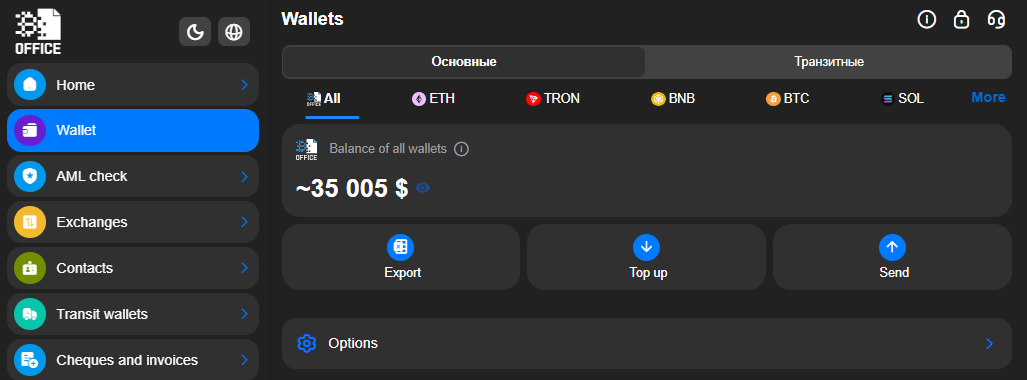
Go to the “Swap” or “Exchange” section;
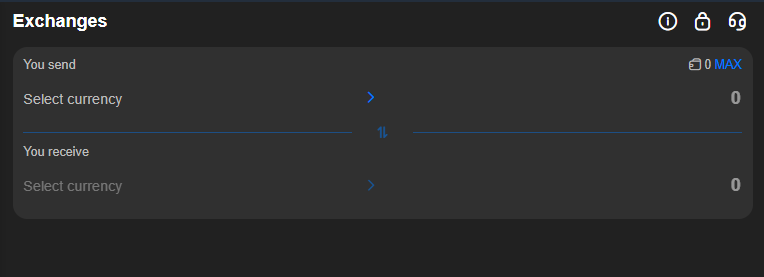
- In the “You send” field, select WBTC;
In the “You receive” field, select the token you want;
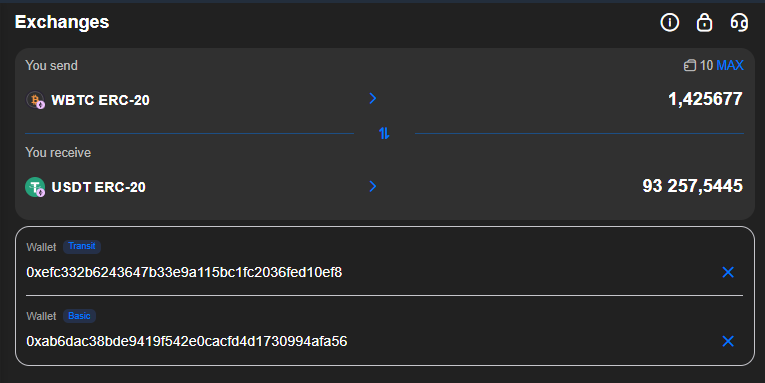
- Confirm the swap.
Once the swap is confirmed, the WBTC is sent to the specified address, and the token you chose to receive lands in your wallet balance.
How to Store and Send WBTC on the Ethereum Network
As with any cryptocurrency, you can store wrapped tokens in a wallet you trust or on an exchange that supports the asset.
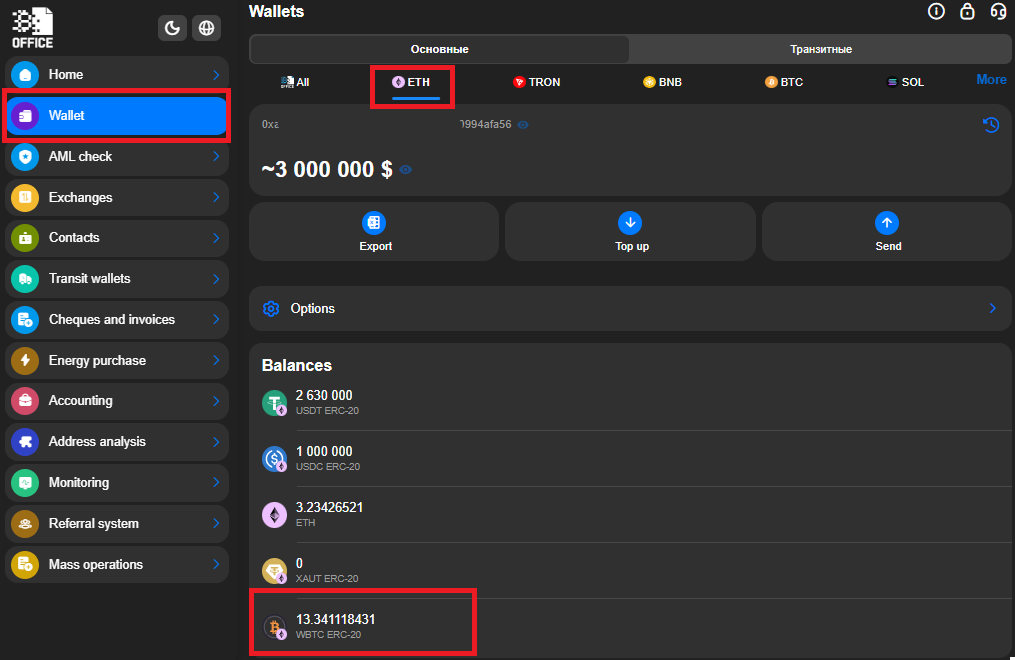
Once you understand how to convert BTC to WBTC and the tokens arrive at your wallet address on the ERC-20 network, showing up in your balance, they’re immediately ready to use.
Sending WBTC works the same way as transferring any other token. In the relevant section of your wallet, enter the amount, specify the recipient’s ERC-20 address, and confirm the transfer.
Receiving WBTC is just as simple. Share your wallet address with the sender and wait for the tokens to arrive. The key is to double-check that the address you share is specifically an ERC-20 address meant for wrapped bitcoin.
ETH Fees and Transaction Speed When Working With WBTC
Even though the price of Wrapped Bitcoin is pegged to BTC, the token itself runs on the Ethereum network, so fees are calculated according to Ethereum’s own rules. It helps to keep a small reserve of ETH on hand to cover those fees.
Transaction speed is also tied to overall network conditions. When user activity is low, transactions confirm faster; under heavy load, processing can take noticeably longer.
Choosing a convenient service makes managing fees and figuring out how to swap BTC to WBTC much easier day to day. For instance, Crypto Office lets you store Wrapped Bitcoin, send transfers, and exchange WBTC for other cryptocurrencies in one place.
It’s worth noting that transferring WBTC through Crypto Office doesn’t require holding ETH on your balance — the fee is deducted in whichever currency you’re sending.
A reliable Telegram wallet for storing WBTC ERC-20.
With Crypto Office, you can send, receive, and exchange WBTC ERC-20 on favorable terms without complicated setup.
Can You Swap Wrapped Bitcoin Back to Regular BTC?
Yes - there’s a dedicated mechanism that links wrapped bitcoin back to the original asset, so how to convert WBTC to BTC is a fair question with a straightforward answer. Every WBTC in circulation is backed by BTC held in reserve. When a token is exchanged back, the corresponding Wrapped BTC is burned and removed from circulation, and the matching amount of bitcoin becomes available to the user.
Knowing how to bridge WBTC to BTC comes down to using a crypto wallet or service that supports both assets and handles this redemption process for you.
WBTC vs BTC: The Difference and When to Choose Wrapped Bitcoin
Under normal market conditions, WBTC and BTC share the same market value, but they serve different purposes. BTC is the primary coin of the Bitcoin network, used for storing capital and making transfers within that network.
The main job of WBTC is to carry bitcoin’s liquidity beyond the Bitcoin network. If all you need is a standard transfer within Bitcoin, plain BTC is enough. But when you want to work with dApps on Ethereum or take part in cross-chain operations, Wrapped Bitcoin becomes the more practical choice.
Which one to use ultimately depends on what you’re trying to do.
Why the WBTC Rate Can Differ From the BTC Rate
The price gap (spread) between WBTC and BTC mostly comes down to differences in demand or liquidity.
Imagine the following scenario:
- BTC is trading at $100,000;
- Demand for WBTC on Ethereum suddenly spikes;
- Buyers start to outnumber sellers.
As a result, the price of WBTC could temporarily rise to $100,100, even though actual BTC is still trading at $100,000.
The reverse can happen too. If investors sell off WBTC en masse, its price might dip to $99,900 while BTC stays steady at $100,000.
Liquidity on a specific platform plays a role as well. The lower the trading volume, the more likely the rate is to drift from BTC’s actual price.
The Liquidity Advantage of Wrapped Bitcoin
The biggest advantage of WBTC is the liquidity it unlocks across multiple networks. Regular bitcoin is confined to its own blockchain and can only be used within Bitcoin’s own infrastructure.
Wrapped bitcoin runs on Ethereum instead, which means BTC’s liquidity becomes accessible to a much wider range of users and services. Greater liquidity also makes swapping tokens easier: trades execute faster, and the gap between buy and sell prices tends to stay narrow.
Risks of Wrapped Bitcoin: What to Know Before Using WBTC
Before using WBTC, it’s worth understanding the risks involved. Like any token, wrapped bitcoin’s value depends on more than just market price. One of the main risks relates to how the token is backed: WBTC’s value depends on BTC reserves, so it matters that every token in circulation is genuinely backed by real bitcoin.
The realities of the Ethereum network also come into play. During periods of high load, fees can rise noticeably, making some transfers more expensive than usual.
Technical risk exists too. Smart contracts undergo regular security audits, but no audit can fully rule out the possibility of bugs.
Choosing a trustworthy service for storing your crypto matters a great deal. Reliable platforms help reduce many of these risks, which is especially important when it comes to protecting funds from scammers and phishing attacks.
Conclusion
Wrapped technology lets users put BTC to work on other blockchains, which is exactly why wrapped bitcoin has become so widely used across the crypto market. The token suits trading, storage, swaps, and DeFi activity alike. Still, before using WBTC, it’s worth understanding how the token actually works — and just as important, choosing reliable services for storing and managing your assets.
Michael Turner knows his stuff when it comes to crypto and blockchain. He puts out content that's not only well-researched but also easy to understand, helping people get a handle on managing their digital assets.