

The choice of where to store BTC directly affects the security of your funds and the convenience of working with cryptocurrency going forward. Before buying Bitcoin, it is important to understand how to create a Bitcoin wallet and how it works. It is equally important to know which BTC storage solutions are best suited to your needs.
In this article, we will look at what a Bitcoin wallet is and how it works. We will also explain the key features that every user should be aware of when choosing a solution.
What Is a Bitcoin Wallet and How Does It Work?
To understand what is a Bitcoin wallet, start with the basics: it is a tool for working with BTC and other digital assets. Through it, you can receive transfers, send coins, and monitor your balance. Many people believe that cryptocurrency is stored inside the wallet itself. That is not the case.
All coins exist on the blockchain. The wallet simply provides access to them and lets you manage your funds. The key element here is the private key — a secret code belonging to the wallet owner. It must never be shared with anyone. If this key falls into the wrong hands, that person will gain full access to your funds.
From the private key, other essential wallet data is derived. This includes the wallet address, which is used to receive BTC and other digital assets. The address works like a bank account number and can be freely shared with other users. When you send BTC, the wallet creates a transaction that is then broadcast to the blockchain, verified, and confirmed by the network. This process takes some time, and a fee is usually charged for processing the transfer.
When a Bitcoin wallet is created, a seed phrase is also generated. This is a set of 12 or 24 words used to recover access to your assets. The seed phrase must be kept in a safe place. Without it, regaining access to your funds after losing your device is typically impossible.
How to Choose a Bitcoin Wallet
Before learning how to make a Bitcoin wallet, it is worth deciding on the type of storage that suits you. This determines both the level of security and the ease of use. The first thing experienced users look at is control over private keys. That is why many prefer non-custodial wallets, where only the owner manages their assets.
For long-term BTC storage, hardware solutions are most commonly used. They keep private keys offline, making this one of the safest options available. If Bitcoin is needed for regular operations, mobile or desktop wallets are often a better fit — they offer quick access to funds, which is convenient for everyday crypto use.
Do not overlook backups. Write down your seed phrase immediately after creating the wallet. A single copy may not be enough — many users store their seed phrase in multiple secure locations.
It is also important to review the terms of the service you choose before registering, especially if it is a centralized platform. Some foreign crypto services have introduced restrictions for certain regions, and sanctions can affect market conditions and how platforms serve their clients.
Choosing the right wallet helps you avoid many risks. Once you have made your choice, you can move on to creating the wallet and working with BTC.
How to Create a Bitcoin Wallet: Step-by-Step Guide Using Crypto Office
Creating a wallet for BTC does not require any complex steps. All you need to do is choose a reliable application. Once that is done, you get access to a full suite of cryptocurrency tools and can manage all your assets through a single interface.
Crypto Office is a universal solution for working with digital assets. It lowers the barrier to entry for those who are just starting out with Bitcoin and simplifies the overall experience.
How to Create a Bitcoin Wallet on Your Phone
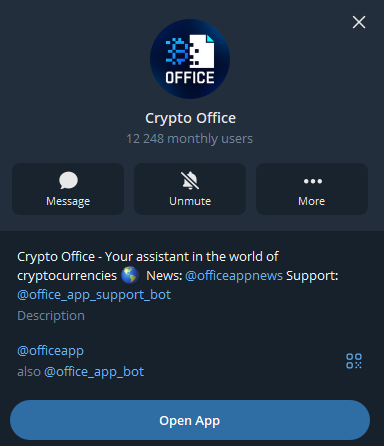
Crypto Office runs on iOS and Android through a Telegram interface, so the entire process takes just two minutes. Here is how to get a Bitcoin wallet using Crypto Office:
Open the official Crypto Office bot in Telegram;
Type the command “/start” in the bot chat;
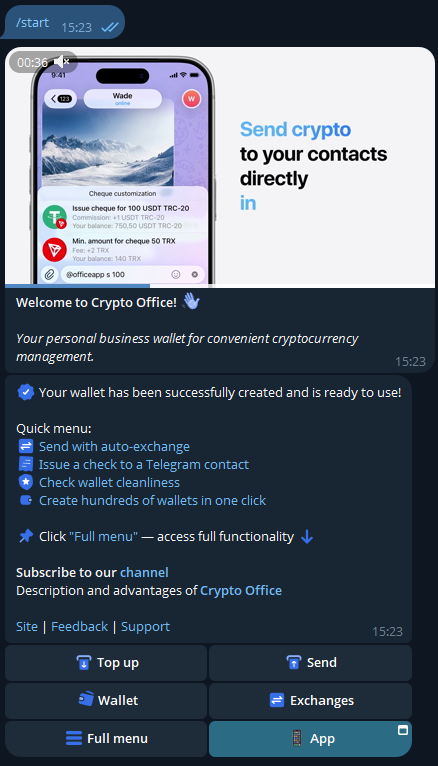
Your wallet with BTC support is ready to use.
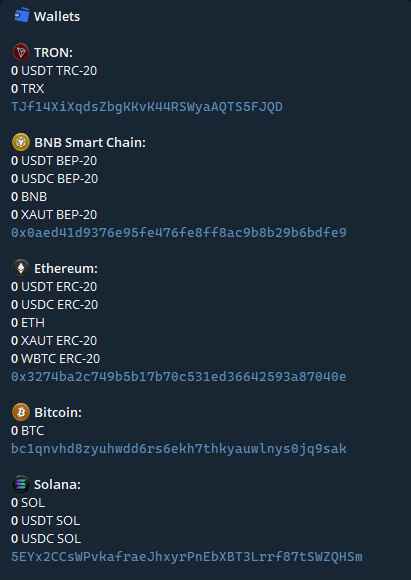
After creating your account, a unique address is generated. This address is used to receive BTC and can be used immediately for transfers and blockchain operations. If you would like to know how to get a BTC wallet address, this is all it takes — the address is created automatically as part of the setup process.
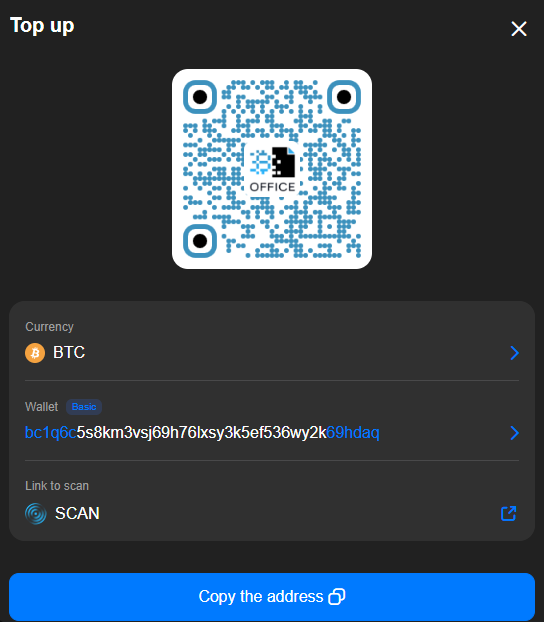
The web version of Crypto Office mirrors the functionality of the Telegram mini app. It is a good fit for those who prefer working with BTC through a browser and do not want to be tied to a specific device.

How to Protect Your BTC Wallet: Basic Rules
Bitcoin is not stored in apps or wallets — these are simply interfaces to your balance on the blockchain. Access and control over your funds are managed through the seed phrase and private key, which are generated when how to create Bitcoin wallet steps are completed. Losing either of these means losing access to your funds permanently.
Where to Store Your Seed Phrase
The seed phrase is the primary tool for accessing the Bitcoin in your wallet. The most secure way to store it is offline. A written paper record remains the basic standard: it requires no devices or internet connection, though it is vulnerable to physical damage.
Metal storage is also recommended. Special stainless steel plates engraved with the words of the seed phrase can withstand water and high temperatures. Some users make multiple copies — one stored at home, another in a more secure location such as a safe deposit box.
Digital storage is considered the riskiest option. Screenshots, cloud saves, and smartphone notes significantly increase the risk of data theft.
How to Avoid Losing BTC
Most Bitcoin losses happen due to user error. One common problem is sending funds to the wrong address. Transactions on the Bitcoin network are irreversible — a single character mistake can mean permanent loss. Always double-check the recipient’s address before confirming a transfer.
Another mistake involves fees. Setting a fee that is too low can cause a transaction to get stuck in the network and remain unconfirmed for a long time.
Users also frequently encounter hacks and phishing attacks. Fraudsters create copies of popular crypto services and wallets, luring users through links and asking them to:
- Enter their seed phrase;
- Connect their wallet;
- Confirm account recovery;
- Sign a transaction.
Once a user does any of these, the attackers gain access to their funds. Follow these basic security principles to stay safe:
- Never share your seed phrase with anyone, under any circumstances.
- Always verify website addresses.
- Do not follow links from random messages or advertisements.
- Protect your device from malware.
- Check the recipient’s address before every transfer.
- Enable additional account protection (2FA, biometrics, PIN codes).
Conclusion
Bitcoin remains the largest cryptocurrency on the market. The question of how to make a Bitcoin wallet is therefore relevant for a wide range of users. Creating one takes only a few minutes. What matters far more is choosing a reliable solution and taking care of secure storage for your recovery data from the very start.
Working with BTC is straightforward. The key is to follow basic security rules and never lose your wallet credentials. That way, your cryptocurrency stays under your full control, and BTC can be used both for storing value and for transfers on the Bitcoin network.
Journalist and editor specializing in crypto markets and blockchain infrastructure, covering regulatory shifts, institutional adoption, and the evolution of Web3 protocols.