

Most crypto users rely on technical analysis. It helps track market trends and possible price moves for an asset. Onchain data adds another layer on top of that — it lets you work directly with the information stored in the blockchain itself. Unlike technical analysis, which shows the consequences of market events, onchain crypto analysis helps you understand their causes, using real, up-to-date data.
In this article, we'll take a close look at what is onchain analysis, what kind of data the blockchain stores, and how to read that information.
What Is Onchain Analysis in Crypto
Onchain analysis (on-chain analysis) is the study of open data that's recorded on the blockchain and published on public platforms and crypto projects. During crypto onchain analysis, information about transactions, wallets, tokens, and network activity is pulled directly from the blockchain.
For example, on the blockchain you might notice that large holders are buying up tokens and accumulating them in their wallets. Or, on the contrary, that they've started actively moving them to exchanges. Sometimes these shifts show up before the market reacts.
Since the blockchain is an open ledger, this data is available to any user through block explorers or analytics services.
How to Read Blockchain Data: Search by Address, TXID, and Block
Finding information on the blockchain isn't difficult. All you need is a block explorer — Etherscan, Tronscan, Blockchair, and others — the same tools behind everyday onchain analysis crypto traders rely on. You'll also need one of three search elements:
- TxID
- Wallet address
- Block number
If you have a TXID, enter it into the blockchain search bar. This is a unique number assigned to every transaction, and it lets you find out:
- Transfer status
- Amount
- Time sent
- Fee and number of confirmations
Searching by wallet address shows its full history. You can view incoming and outgoing transactions, check the balance, and see every transfer. Many services also let you set up address monitoring, so you get notified the moment a new transaction happens — one of the simplest ways to learn how to do onchain analysis for a specific wallet without checking it manually every time.


There's also a third option: searching by block number. This method helps you locate a specific transaction when the TXID or wallet address is unknown. It's often used to track operations and verify data on the blockchain.

Monitoring a Specific Address in Real Time
Constantly opening blockchain trackers isn't always convenient, especially if you need to watch several wallets at once. In that case, it's easier to set up address monitoring.
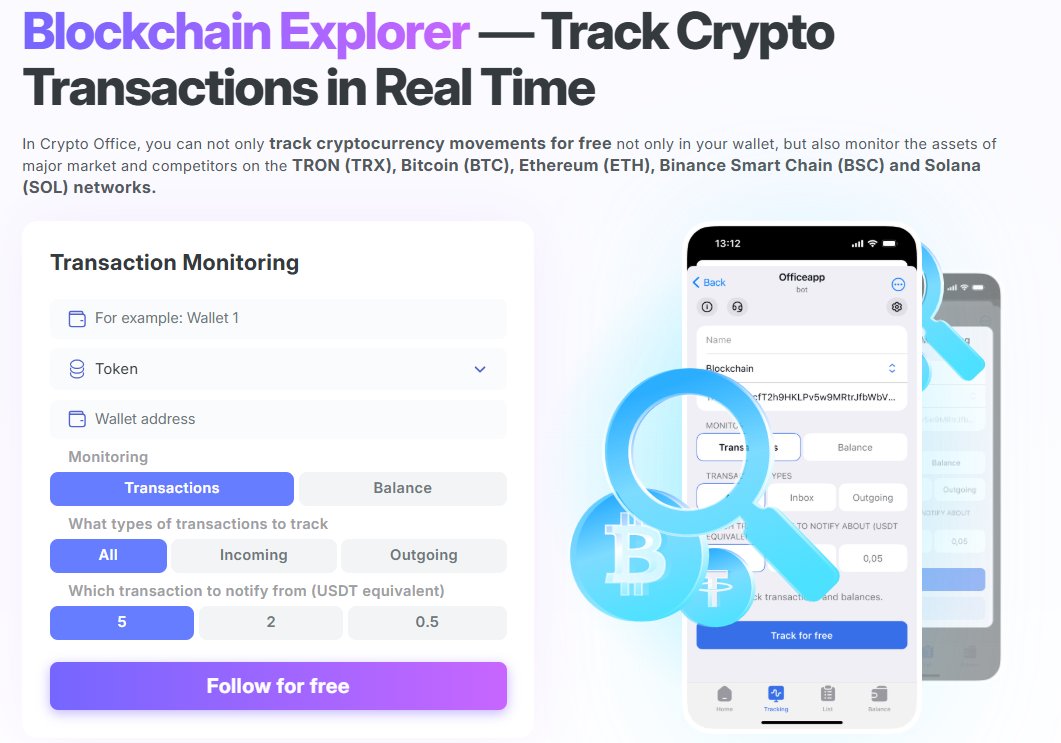
This feature is useful in different situations — for example, if you're waiting for a payment from a client, want to keep an eye on a cold wallet, or are tracking the address of a major investor. As soon as a new incoming or outgoing transaction appears, the user gets an instant notification.
This capability is built into the Crypto Office Telegram bot. Users simply add an address to their watchlist and turn on tracking.

After that, the service automatically reports new transactions. The notification shows the key details of the transfer, which saves time and helps you react faster to any changes.
Monitoring is convenient for companies, traders, and anyone who regularly works with crypto. All important events arrive automatically, and the address itself stays under constant watch — even if the user hasn't opened the app.
Onchain Metrics: What to Look At When Analyzing
The blockchain stores a huge amount of information, but not all of it is equally useful. If you're just starting to learn onchain analysis crypto basics, don't try to track every metric at once — it's better to focus on a handful of key indicators.
Many analytics platforms collect this data automatically. Users just need to open the right section and check how things have changed over a chosen period. In Crypto Office, part of this information is available directly in Telegram.
Active Addresses and Transaction Volume
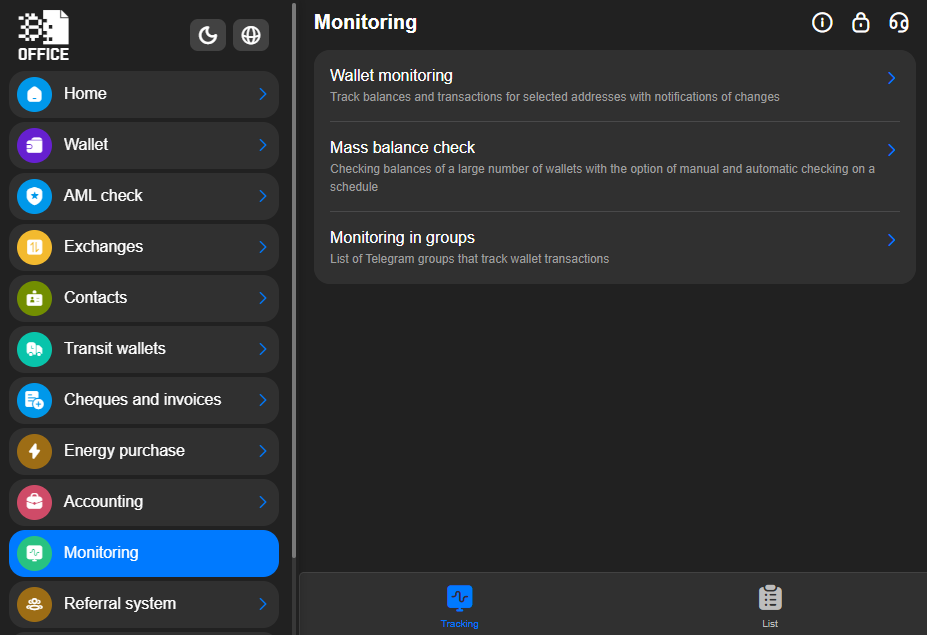
Active addresses show how many wallets took part in network activity over a given period. The higher this figure, the more users are making transactions. Rising activity signals growing interest in a cryptocurrency; a decline can point to weakening activity.
Transaction volume matters just as much. This metric shows how many digital assets were transferred between users over a set period of time. High volume usually means the cryptocurrency or network is being used more actively. It's important to look at both metrics together — sometimes a coin's price rises while user activity stays low, which can simply point to short-term price action rather than a genuine trend.
Movement of Assets in Large Wallets
Large cryptocurrency holders are known as whales. Their actions often have a significant effect on the market, which is why traders and analysts keep a close eye on these addresses.
If a large wallet moves substantial sums to an exchange, the market may expect an increase in selling volume. If assets instead move from trading platforms to personal addresses, this is often read as a sign of accumulation. A single transaction doesn't predict future price on its own, but when similar moves repeat regularly, they help give a clearer read on the sentiment of major market participants.
Network Fees and Block Load
The cost of a blockchain transfer isn't fixed — it depends on network load. As the number of operations grows, there's less free space in new blocks, and fees can rise as a result.
This is often seen on the Ethereum blockchain, where dApps launch frequently, new tokens are issued, airdrops take place, and so on. This creates higher demand and, as a result, gas wars. During periods of high network activity, too many users want to complete a transaction at once, and there may not be enough room in the next block. Users then compete by offering a higher fee (gas) to get their transfer processed first.
That's why, before sending crypto, it's worth checking current network activity and load. When load drops — for instance, during hours of lower network activity — fees typically fall too.
Having access to this data helps you choose the right moment to send a cryptocurrency transfer.
Tracking Multiple Wallets
Instead of checking each address by hand — a slow habit for anyone doing manual crypto onchain analysis — Crypto Office's monitoring feature lets you add several addresses to your watchlist at once.
The service automatically tracks activity across these wallets. As soon as a transaction appears, the user gets a notification.
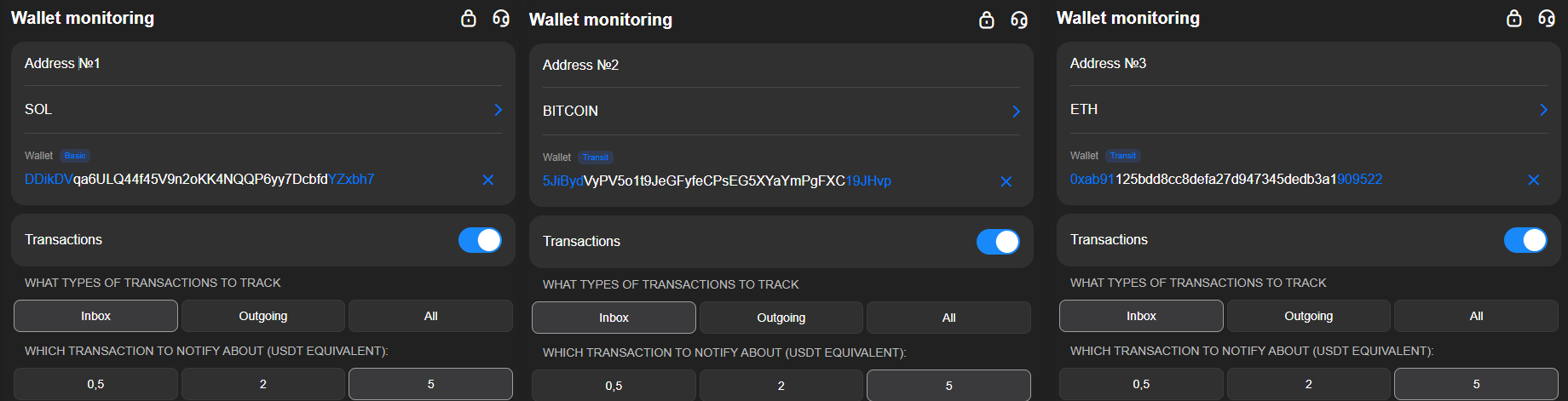
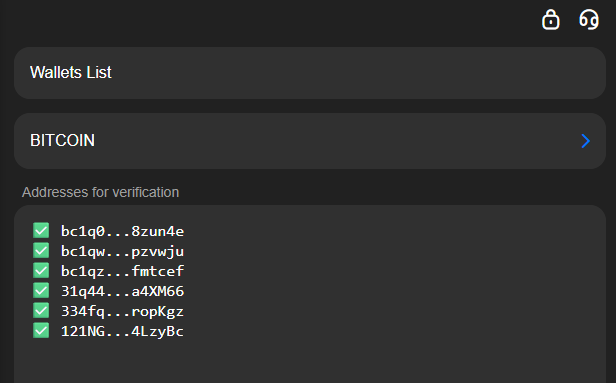
Besides transaction monitoring, Crypto Office also lets you check wallet balances.
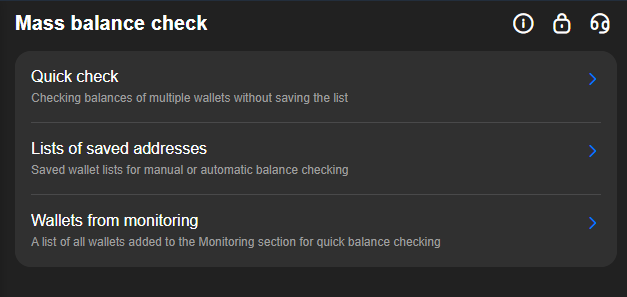
You can also upload a list of addresses to check the balances of several wallets at the same time.
Detecting Suspicious Activity Through AML Checks
Imagine you've just been paid for a job, or bought crypto through a P2P deal. On the surface everything looks normal — the tokens in your balance look no different from any other stablecoin. But the blockchain keeps a full record of every movement, and if those funds were previously involved in suspicious transactions, custodial services and CEX exchanges may:
- Ask you to prove where the funds came from
- Restrict deposits, withdrawals, or exchanges
- Freeze the account
- Flag the wallet address as high risk
AML checks add another layer of protection to everyday onchain crypto analysis, helping you analyze this chain of transactions and answer key questions:
- Did the funds pass through hacked wallets?
- Are they linked to fraudulent schemes?
- Were they used on illegal platforms?
- Were they held in sanctioned wallets?
- Did they pass through mixers or other services used to hide the origin of funds?
AML technology uses onchain data to determine how safe a given set of funds actually is. For users, it's a tool that helps avoid problems when dealing with exchanges, exchangers, and other crypto services, lowering the risk tied to sending and receiving crypto.
Crypto Office offers built-in AML checks. Users simply enter a wallet address to get a risk-assessment report before withdrawing funds. The app also runs automatic AML checks during exchanges and when crypto is received into transit wallets, making it easier to make informed decisions and lowering the chances of account restrictions.
Conclusion
Onchain analysis is part of a broader, more complete approach to researching digital assets. It helps build a fuller picture of what's actually happening in the market. Still, it's important to have a convenient tool on hand for working with this data. Services like Crypto Office let you track dozens of wallets and monitor transactions from a single interface. On top of that, you can add AML checks to the mix, reducing risk. Anyone learning how to do onchain analysis will find this saves time and helps them make faster decisions when working with cryptocurrency.
Journalist and editor specializing in crypto markets and blockchain infrastructure, covering regulatory shifts, institutional adoption, and the evolution of Web3 protocols.