

A Bitcoin address is needed to receive, exchange, and store BTC. You can give it to a sender, paste it into a transfer form, or share it as a QR code. At the same time, the address itself is not a wallet and does not store coins. It is a public identifier linked to the conditions under which BTC can be spent on the network.
In this article, we answer a basic question: what is a Bitcoin address and how is it structured? We will show what a BTC address looks like in different formats. We will also look at where to find it to receive a transfer and how to check it before sending funds.
What Is a Bitcoin Address and What Is It Used For
A Bitcoin address is a string of characters used to receive BTC. Simply put, it is the payment detail that the sender specifies when creating a transaction. Network nodes verify the transaction and, if it complies with the protocol rules, propagate it across the network. The operation ends up on the blockchain after a miner includes it in a block.
It is important to understand the difference between an address and a wallet, especially if you are wondering what is a BTC wallet address. The address itself does not contain coins and does not give access to them. BTC is recorded on the blockchain as unspent transaction outputs (UTXOs), while the wallet manages the keys that allow you to spend these funds.
The relationship looks roughly like this: a wallet creates a private key, a public key is derived from it, and then an address is generated. Depending on the address type, its structure may use a hash of the public key or other data that define the conditions for spending BTC.
A BTC address can be shown to other people. The private key, however, must remain secret. Knowing only the address, it is impossible to sign a transaction or take control of the funds.
What a Bitcoin Wallet Address Looks Like: Formats and Differences
Bitcoin uses several address formats. They differ in the way they are encoded and in the type of conditions that must be met to spend the received funds.
Legacy, or P2PKH, is an old and widely known format. On the main network, such addresses usually start with the digit 1. Here is a Bitcoin address example in this format:
1A1zP1eP5QGefi2DMPTfTL5SLmv7DivfNa
Another format is P2SH. On the Bitcoin main network, such addresses start with the digit 3. Funds are sent to a script hash, whose conditions are revealed when the funds are spent later. P2SH has also been widely used in multisignature setups.
Modern native SegWit addresses use the Bech32 format. On the main network, SegWit version 0 addresses start with bc1q. Bech32 is easier to read and to encode in QR codes, and its checksum helps detect errors during input.
Bitcoin also has the Taproot format. Taproot outputs use SegWit version 1. The corresponding main network addresses are encoded in Bech32m and start with bc1p.
That is why addresses 1..., 3..., bc1q..., and bc1p... can look completely different, although all of them are used to work with BTC. The format alone does not mean that one address is “real” and another is not. What matters is that the address matches the right network and is entered correctly when making a transfer.
How to Get a Bitcoin Wallet Address to Receive a Transfer
To receive BTC, you need to open your wallet interface. If you are wondering how to get a Bitcoin address, this is the first step: the wallet generates the address and shows it to you. For example, in Crypto Office, you can launch the mini app and go to your BTC assets.
Then tap “Top up.” The service will show your BTC address. You can copy it with one tap or pass it to the sender via a QR code.
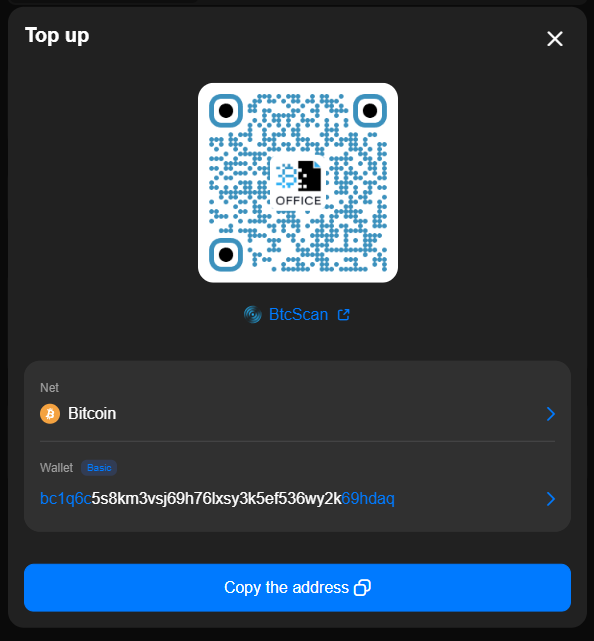
Before sending, it is important to make sure that the Bitcoin network is selected. A BTC address must not be replaced with details of another blockchain.
If you work with crypto regularly, Crypto Office also lets you track BTC addresses and see incoming and outgoing transactions using a monitoring tool.
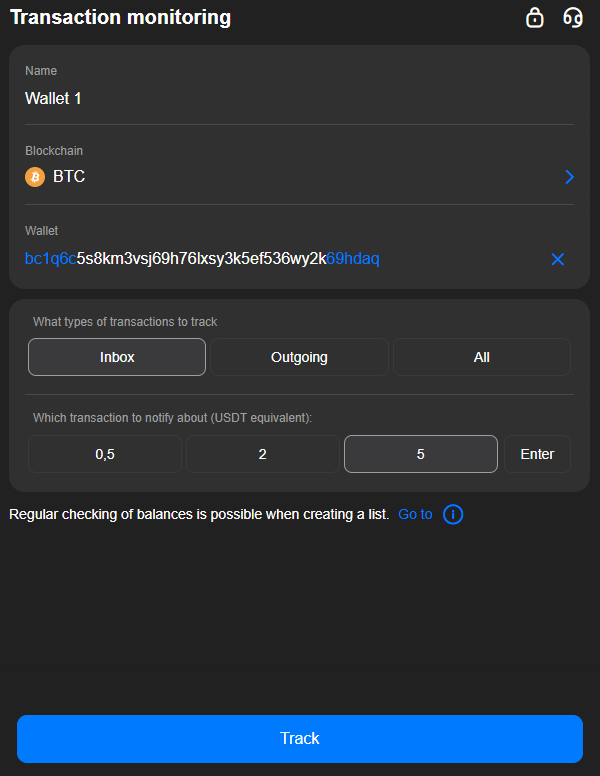

Where Is a BTC Address Located on a Crypto Exchange?
Many beginners ask, how do I get a Bitcoin address on an exchange? On cryptocurrency exchanges, the BTC address is usually located in your personal account. To find it, go to your profile and click “Deposit.”
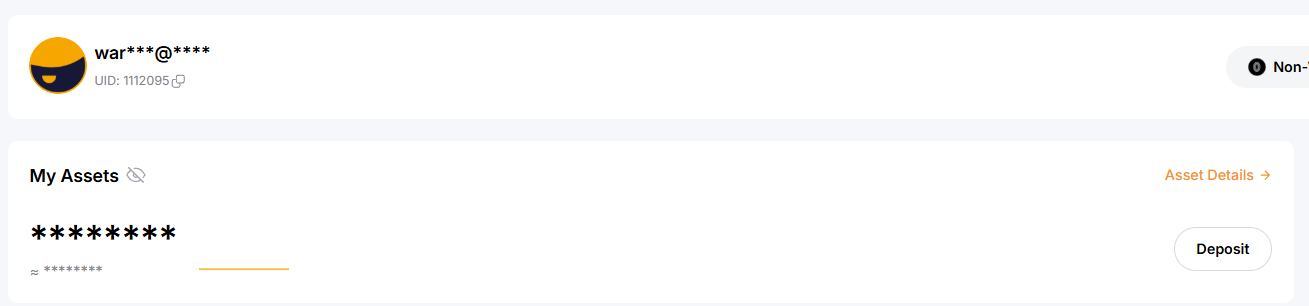
First, select BTC, then specify the Bitcoin network. After that, the exchange will show the address to which you can send funds.
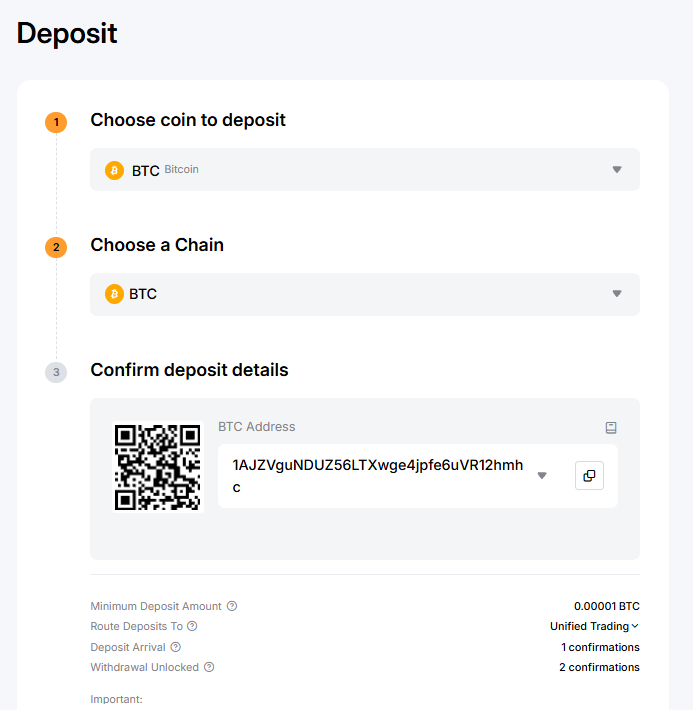
Do not copy an address from the history of an old transfer without checking it. Before sending, open the deposit page again and compare the details. If the exchange shows several networks or top-up options, choose Bitcoin if you are transferring regular BTC.
After sending, the transaction may first appear in the mempool. Then it is validated and included in a block. After that, the network considers the transfer confirmed, and the exchange credits the funds according to its own rules on the required number of confirmations.
How to Check a Bitcoin Address Before Sending
Before sending BTC, it is worth checking the recipient's address. It takes little time but helps you notice a mistake before the transaction is confirmed. The blockchain lets you see the history of operations for a public address, and special services additionally help assess its format and possible risks.
Checking the Balance and Transaction History of a Wallet Address
To check Bitcoin address details, use a blockchain explorer: simply paste the address into the search bar of a Bitcoin explorer.
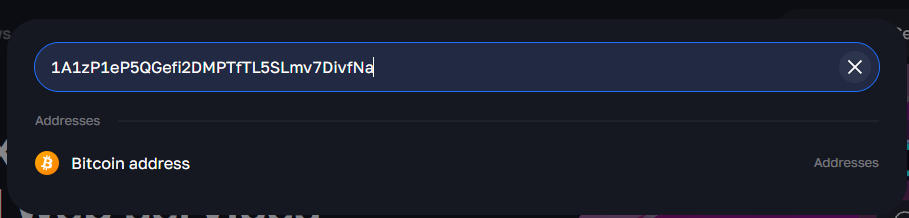
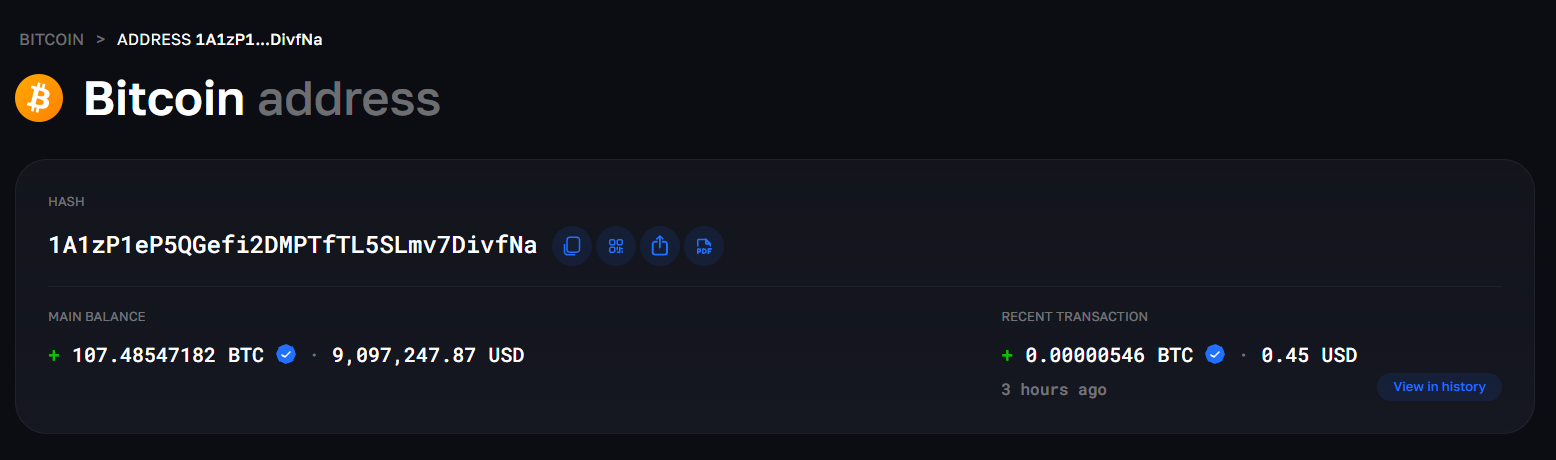
Checking an address on the blockchain lets you make sure that you are using exactly the BTC address that the recipient gave you, and also review its usage history. However, the absence of operations does not mean a problem: the address may have been created recently and may not have received any BTC yet.
The status of the transaction is also important. A new operation may first be in the mempool and then receive a confirmation after being included in a block. Therefore, to check a transfer that has already been sent, it is better to look not only at the address but also at the identifier of the specific transaction – the TXID.
AML Check of a Bitcoin Address: Risk Assessment
A blockchain explorer shows the public history of an address but does not assess the associated risks by itself. AML services are used for such an assessment: they analyze transaction links with known risk categories and assign a result in accordance with their own methodology.
For example, AML analysis can reveal a connection with fraudulent schemes, sanctioned addresses, darknet marketplaces, or mixers.
Note that Crypto Office in Telegram makes it possible to run an AML check of a BTC address.
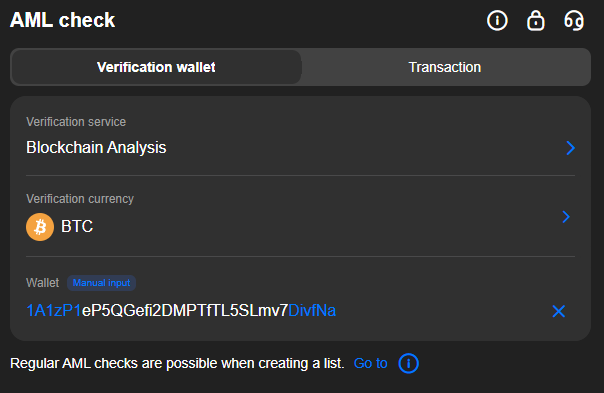
Moreover, the service lets you configure flexible parameters for automatic AML screening of incoming and outgoing BTC payments.
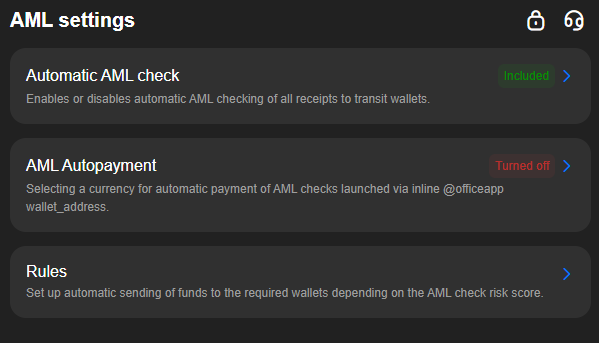
This is especially relevant before a deal with an unfamiliar counterparty or when receiving bitcoins that you plan to send to an exchange.
A high risk score does not prove the illegal origin of funds, so an AML result should be treated as a risk assessment tool, not a legal conclusion.
Crypto Office is a reliable tool for AML analysis of BTC addresses.
Check and control AML risks with a detailed report when working with BTC wallets.
Common Mistakes and Risks When Working with BTC Addresses
When working with a Bitcoin address, users most often make mistakes when copying data and, as a result, send funds to the wrong recipient. There is also a risk of encountering a fake address or malware that replaces BTC addresses at the moment they are entered into the sending field. Confirmed transactions cannot be reversed, so such a mistake can lead to a loss of funds.
There is also a privacy risk. It is important to understand that constantly using the same BTC address allows different transfers to be linked to each other.
Conclusion
A BTC address is needed to receive and send bitcoins. Now you know how to get a Bitcoin wallet address: it can be found in a crypto wallet or on an exchange in the Bitcoin deposit section. BTC addresses come in different formats, so they may look different. Before sending or receiving, it is important to make sure that the Bitcoin network is selected and that the address is copied in full and without errors.
Michael Turner knows his stuff when it comes to crypto and blockchain. He puts out content that's not only well-researched but also easy to understand, helping people get a handle on managing their digital assets.