

The total volume of USDC and USDT transfers exceeds $200 billion. This is common practice in the crypto market, where users constantly redistribute funds. Stablecoin-to-stablecoin exchanges account for a significant share of trading activity, with DEX platforms playing a major role.
In this article, we will take a detailed look at how to swap USDT to USDC and vice versa. We will also cover security considerations and which exchange services to use.
How to Convert USDC to USDT: Step-by-Step Guide
How to convert USDC to USDT is straightforward. Here is how it works:
Step 1. Choose an exchange service. Start by selecting a reliable service that supports USDC and USDT stablecoins. Many users opt for Crypto Office on Telegram. The wallet allows you to swap cryptocurrencies.
Step 2. Create a request. In the "Exchanges" section, select the USDC – USDT direction. USDT is available for receipt on ERC20, TRC20, BEP20, and SOL networks.
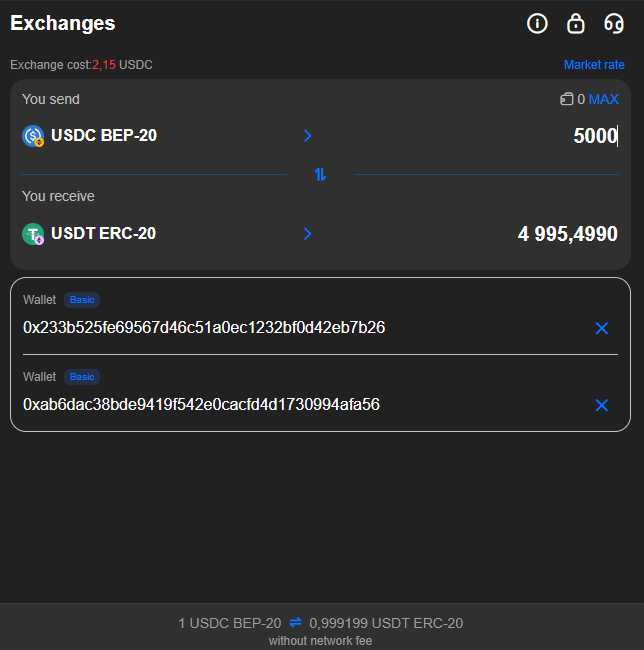
Step 3. Enter the recipient wallet address. Provide the wallet address where you want to receive USDT.
Step 4. Confirm the USDC exchange. Before sending the transaction, make sure to verify:
- The recipient wallet address;
- The selected network;
- The transaction fee;
The final USDT amount you will receive.
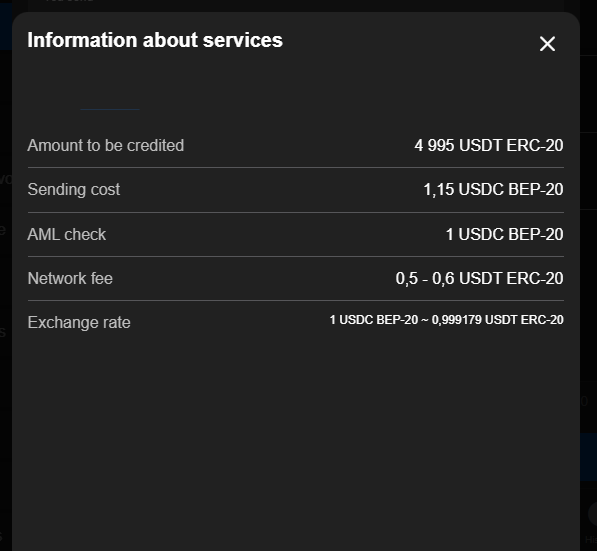
Step 5. Wait for network confirmation. After sending USDC, the transaction will be processed by the selected blockchain. The service typically waits for several network confirmations before completing the exchange. Once confirmed, the platform will send USDT to the specified address.
Step 6. Receive your funds. Once processing is complete, USDT will arrive in your wallet. The exchange speed depends on the selected network and the current blockchain load. On average, a USDC to USDT swap takes a few minutes.

Common Mistakes When Converting Stablecoins
One of the most frequent mistakes is choosing the wrong network. A user sends USDC on one network but expects USDT on another. In such cases, funds can get stuck. This is a typical problem that arises when blockchain compatibility is overlooked.
Another common issue involves transaction fees. On the Ethereum network, fees can be quite high, especially during peak load. On TRON, transfers are usually cheaper. This directly affects which exchange route makes the most sense. Many users ignore this factor and end up losing significant amounts to gas fees.
Users also frequently make mistakes when entering wallet addresses. A single wrong character can result in lost funds. That is why it is essential to double-check both the address and the network before sending.
How to Verify a Transaction After the Swap
After sending funds for exchange, a transaction ID and a link are always generated. This is a unique identifier for the transfer on the blockchain. By following the blockchain link, the user can check the status of the received USDT.
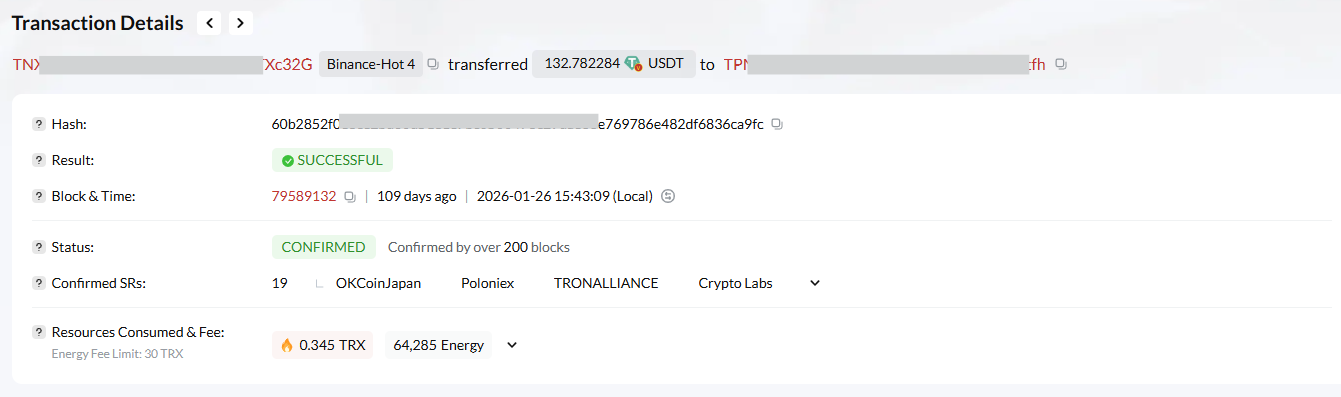
The blockchain tracker shows transaction confirmations — whether validation has passed and how many blocks have already confirmed the operation. If there are enough confirmations, the exchange is complete.
In the Crypto Office exchange service, the transaction status and details are also saved in the wallet history.
Processing Time and Status
The exchange time depends on the network and liquidity. Sometimes the operation takes just a few seconds; in other cases it may last 2–3 minutes.
The transaction status can be tracked in real time. Initially, it is considered unconfirmed. Then it goes through validation and becomes final. After that, USDT or USDC appears in the user's wallet balance.
Security When Exchanging: How to Protect Your Funds
When figuring out how to transfer USDC to USDT, it is essential to stay attentive. Most mistakes happen not because of technology, but due to user error. This is especially important when stablecoins are being sent to another wallet or exchange.
Always verify the address before sending. It must match symbol by symbol. Even a minor mistake will result in lost funds.
It is also crucial to confirm you are using the correct network. USDT and USDC exist on different networks, and this is critical. If an asset is sent to the wrong network, recovering it is nearly impossible without the support of the exchange service.
Another risk factor is fake websites and interfaces. A user might land on a phishing page and sign a transaction without realizing it. That is why it is best to use only trusted services and always verify the domain before logging in.
Fees and Networks: ERC20 vs TRC20 for Stablecoins
The choice of network directly affects the cost and speed of the exchange.
On the Ethereum network, fees are higher. This is due to network load and the blockchain's operating rules. Sometimes a transfer costs a few dollars, sometimes significantly more. However, ERC20 is widely used for crypto swaps, as Ethereum supports the majority of DeFi protocols and services.
On the TRON network, fees are significantly lower. TRC20 users can reduce transaction costs by leveraging the blockchain's internal resources: Energy and Bandwidth. Instead of paying in network tokens, users can cover expenses by purchasing or obtaining energy. This is why many people choose TRC20 for fast USDT transfers — and it's also a popular choice for those looking into how to change USDT to USDC at minimal cost.
Why the Stablecoin Rate May Differ During Exchange
Many users assume that how to convert USDT to USDC always results in a strict 1:1 exchange rate. In practice, this is not entirely accurate. The difference is minimal, but it does exist — and it can arise from market dynamics and the specifics of the exchange service used.
One reason is the spread — the difference between the buy and sell price of an asset. The lower the liquidity in a specific network or service, the more noticeable the rate deviation can be.
There is also slippage, which occurs when the market moves quickly or the exchange volume is too large. At the moment the user creates and confirms a USDT or USDC swap, the rate may shift slightly. This is especially noticeable in the DeFi segment and during periods of high blockchain activity.
Transparency also plays a separate role. Some platforms only show a preliminary rate, with additional fees deducted after the operation is confirmed. As a result, the user receives less than expected.
In Crypto Office, the process works differently. The app's interface immediately shows the final amount of USDT or USDC the user will receive, before confirming the token exchange.
This is especially important for large transfers. When the amount is high, even a small spread can noticeably impact the final result of the swap.
Conclusion
Exchanging USDC to USDT is an integral part of everyday crypto activity. Users perform these operations daily through exchanges, wallets, and swap services. But even a simple token swap requires attention to detail — especially the network, fees, and liquidity. If the user understands how the blockchain and swap mechanism work, the exchange process will not seem complicated. Services like Crypto Office make stablecoin swaps even simpler: the user sees the transaction terms and final amount upfront, making it easy to solve the question of how to swap USDT to USDC without any complex steps.
Michael Turner knows his stuff when it comes to crypto and blockchain. He puts out content that's not only well-researched but also easy to understand, helping people get a handle on managing their digital assets.