

KYC (Know Your Customer) has long become a mandatory standard for most centralized crypto platforms. Without completing verification, users face restrictions: reduced limits, inaccessible features, or account blocks.
In this article, we explain what KYC is and why it matters, how the process works, and how it differs from AML.
What Is KYC Verification and Why Does It Matter
To understand what is KYC in crypto, start with the basics: it stands for Know Your Customer – a mandatory identity verification procedure. It confirms who is conducting transactions on the platform and reduces the risk of involvement in illegal activity. Without it, platforms cannot maintain high compliance standards or legitimize operations.
If a user has not completed identification, the platform may restrict access to their assets.
How KYC Differs from AML and How They Work Together
KYC and AML serve different purposes but operate together. KYC is completed once during registration, and again if limits need to be expanded.
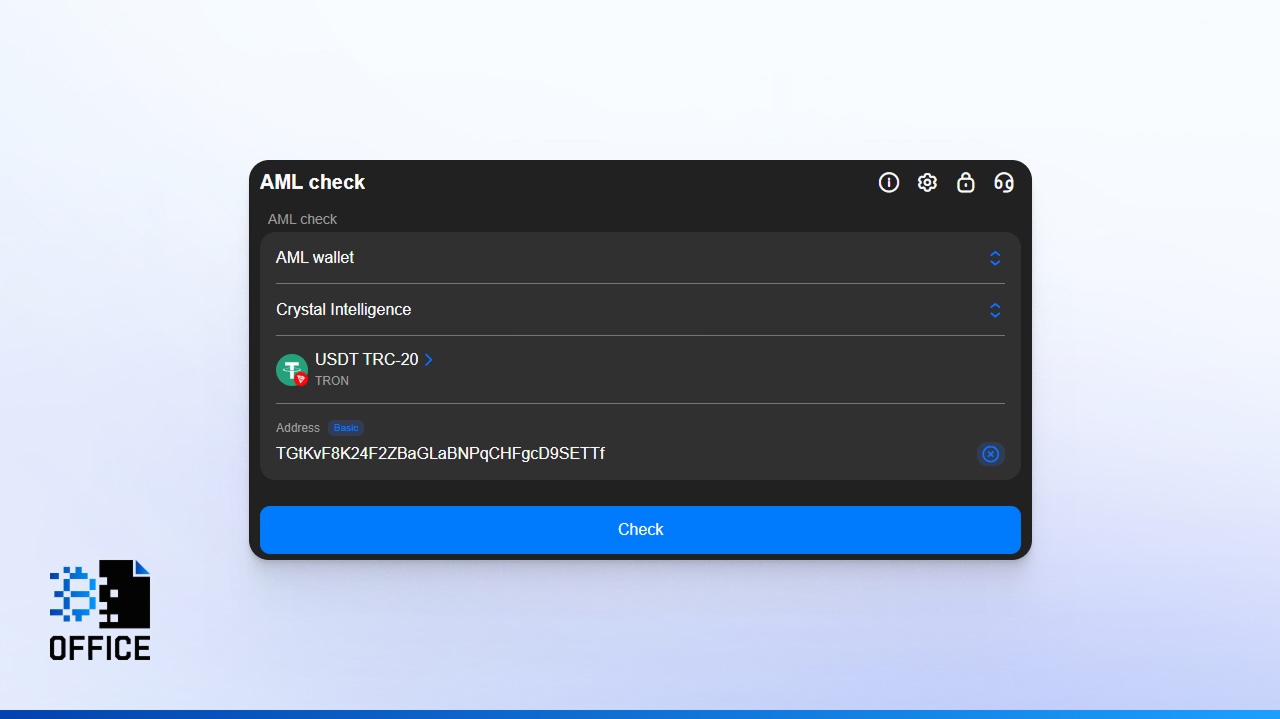
AML (Anti-Money Laundering) operates continuously. The system analyzes user transactions and the movement of digital assets on the blockchain, identifying suspicious patterns. When suspicious activity is detected, the platform may restrict the user's account or request additional verification.
The Crypto Office platform on Telegram allows you to run an AML check. This protects your wallets from being blocked during transfers or crypto exchanges.
FATF International Standards and Regulatory Compliance
KYC and AML requirements are set at the international level by the Financial Action Task Force (FATF). It establishes the rules for managing financial risks, including in the crypto market.
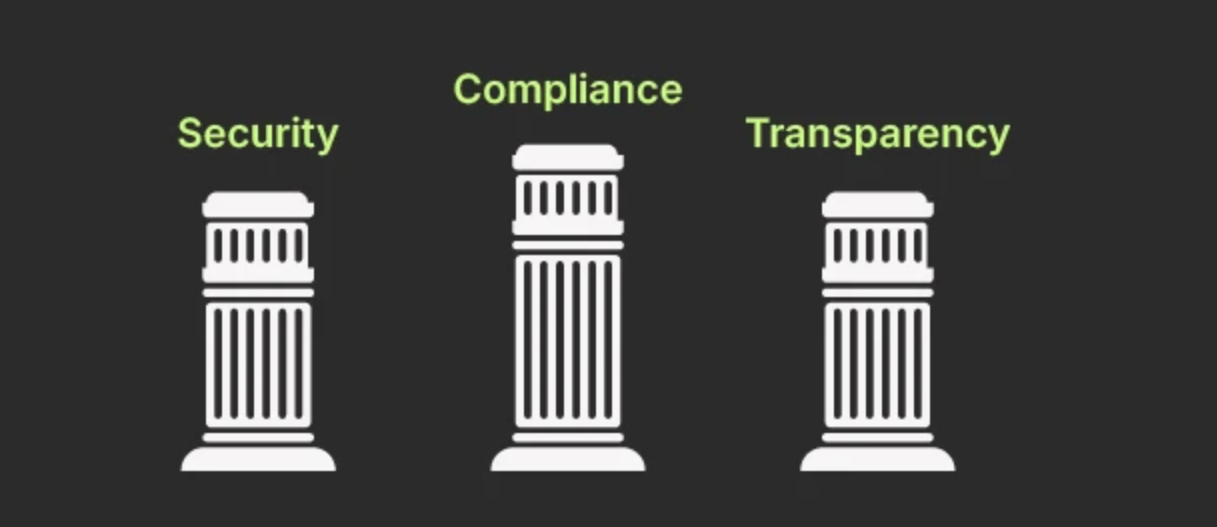
FATF defines how the KYC procedure should be conducted. These rules cover customer identification, risk assessment, and transaction monitoring.
Special attention is given to the Travel Rule. This requirement obliges crypto service providers (VASPs) to pass sender and recipient data to the counterparty for large transfers: name, wallet address, and identification details. Without compliance, a platform cannot legally process operations in jurisdictions where the Travel Rule is enshrined in law.
In many countries, national legislation reinforces these international standards. Local authorities monitor how identification is carried out and how user data is processed. The result is an integrated system where global standards set the direction and local law enforces it in practice.
How to Complete KYC Verification: Step-by-Step Guide
The verification principle is similar across most platforms. If you are wondering what is KYC crypto and how it works in practice – the user goes through several steps and then gains access to crypto operations. Verification typically takes from a few minutes to a few days.
Most major platforms use automated verification systems such as Sumsub, Jumio, or Onfido. These analyze documents and photos in real time, reducing verification time to just minutes.
To complete KYC verification, you need to:
- Create an account on a crypto exchange.
- Navigate to the "KYC Verification" section.
- Fill in your citizenship and personal details.
- Upload scans of your documents (passport, driver's license, etc.).
Submit a selfie or video verification.
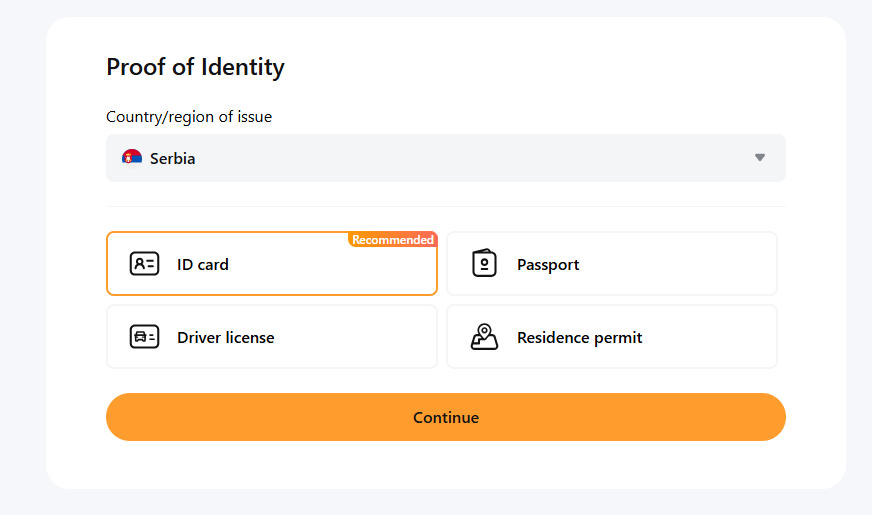
After review and approval, the exchange will grant access to expanded features, including crypto withdrawals and deposits, futures trading, P2P markets, and higher trading limits.
What Documents and Data Are Required
Understanding KYC in crypto also means knowing exactly what information you need to provide. The platform requests data that confirms the user's identity and place of residence.
The platform requests:
- Full name and date of birth.
- Passport or driver's license.
Additional documents may sometimes be required – for example, a utility bill at the place of residence. Many services use photo or video verification. The user must confirm that they are the document owner. This reduces the risk of fraud and strengthens compliance.
Limits for Verified vs. Anonymous Users
The difference between users what does KYC mean in crypto becomes clear when you compare access levels: verified accounts unlock the full platform functionality, while anonymous ones remain heavily restricted.
Anonymous accounts are significantly limited. They have low limits on depositing or withdrawing crypto. There may also be restrictions on storing assets, as well as daily or monthly trading volumes.
With Crypto Office, you can store, transfer, and receive cryptocurrency without completing KYC. Create an account for crypto operations without KYC verification on Telegram.
KYC Features Across Different Platforms
Despite the common logic, the KYC process can vary. If you are asking whats KYC in crypto on different platforms – the answer is: the same concept, but different requirements. This depends on the level of regulation, the type of platform, and internal policy.
On some crypto exchanges, verification happens quickly – sometimes in just a few minutes. On others, the process takes longer, especially with manual review.
The depth of identification also varies. In some cases, basic information is sufficient. In others, extended verification is required: additional documents or proof of the source of funds.
The geographic factor also matters. Users from certain countries face stricter verification requirements or may not be able to register on some platforms at all due to local legislation. It is worth considering these factors in advance – prepare your documents and be ready for the process to take some time.
KYB – What It Is and Key Differences for Businesses
KYB (Know Your Business) is the process of verifying companies. It is required to maintain compliance and reduce risks when working with legal entities. If KYC handles individual user identification, KYB verifies the business itself. The platform analyzes the company and its ownership structure, with particular attention to beneficiaries and sources of funds.
KYB verification takes more time. This is because it is necessary to confirm not only the company's data, but also its actual activities. To pass KYB, a company typically provides its founding documents, a state registry extract, information about beneficial owners (UBO), and proof of its legal address. The process can take from several days to several weeks, depending on the jurisdiction and the complexity of the corporate structure.
The key difference is the scale of analysis. With KYC, an individual is checked. With KYB, the entire business model and associated parties are examined. This is important when dealing with large transactions and corporate accounts.
There is also a practical difference. Without KYC, users face restrictions. Without KYB, a company cannot connect payment solutions or process high-volume operations.
Is It Safe to Share Your Data?
Data security is one of the most sensitive issues in the industry. Understanding what is KYC verification crypto includes knowing what happens to your personal data after it is submitted. This is especially relevant in the crypto industry, where privacy is traditionally valued.
Major crypto exchanges protect this data. Information is stored in encrypted form and access is restricted. This reduces the risk of leaks – but does not eliminate it completely.
At the same time, platforms are legally required to share user data upon request from regulators and law enforcement agencies. This is a direct legislative requirement in most countries where licensed exchanges operate. This is not about constant surveillance, but targeted requests when illegal activity is suspected.
Additionally, in the event of a data breach or exchange hack, personal information provided during KYC may be at risk. That is why it is important to only complete verification on trusted platforms with a solid reputation.
The risk always exists. But without KYC, it is impossible to fully operate with cryptocurrency on CEX platforms.
Verification Without Losing Control of Your Assets
For those wondering what is a KYC in crypto and whether it gives the platform access to your funds – the answer is no. This is a common misconception. Identification concerns only the user’s identity, not their assets.
If a crypto service uses a non-custodial model, the user controls their own private keys and access to funds – even if the platform requires KYC.
In custodial services, the situation is different. In this case, the platform controls the private keys and access to user funds. This, however, is related to the service's operating model, not to KYC itself.
Common KYC Problems: Why Verification May Fail
The KYC procedure does not always succeed on the first attempt. Reasons can vary, but most often they stem from user-side errors.
One of the most common issues is poor photo quality. The document may be blurry or cropped. In such cases, the system will reject the KYC meaning in crypto check – the automated system requires clearly visible, complete document images to verify identity accurately.
Data entry errors also occur frequently. If the information does not match the documents – name, date of birth, or address – verification will be declined.
Sometimes the issue is technical. The platform may freeze or the review may be delayed due to load or manual processing.
There can also be more serious reasons – for example, a match with sanction lists or a high-risk profile. In such cases, access to operations may be permanently restricted.
Conclusion
Despite users' mixed feelings about KYC verification, it is an integral part of working with cryptocurrency. Without completing verification, users face restrictions and lose access to digital assets. However, KYC is a compliance tool that enables services to meet regulatory requirements and monitor transactions on the blockchain.
On one hand, KYC unlocks access to crypto operations, removes restrictions, and increases limits. On the other hand, it reduces the level of privacy and increases oversight of user activity. Nevertheless, the market is moving toward greater regulation. In these conditions, understanding what KYC is and why it is needed becomes essential knowledge for the entire crypto community.
Michael Turner knows his stuff when it comes to crypto and blockchain. He puts out content that's not only well-researched but also easy to understand, helping people get a handle on managing their digital assets.