

When sending USDT TRC20, the TRON blockchain uses more than just the token itself. Transfer fees for stablecoins can be covered by dedicated network resources: Energy and Bandwidth. These are required to process operations and confirm transactions.
In this article, we will explain how to send USDT without TRX, what Energy is, and how the TRC20 standard works. We will also look at solutions that help you complete how to send USDT TRC20 without TRX with the lowest possible costs.
Why TRX Is Needed to Send USDT on TRON
When a user wants to transfer USDT on the TRON network, it seems logical that having USDT on the balance should be enough. However, TRON's architecture works differently. Every operation inside the network passes through a resource allocation system that involves the native TRX token. TRX participates in the network governance mechanism and supports validator operations. That is why TRX is charged as a fee when making USDT TRC20 transfers.
Moreover, the TRON blockchain was originally built as infrastructure for fast and low-cost transactions. It uses a resource-based model that allows transaction processing costs to be offset. Thanks to this, a USDT transfer can be executed without direct TRX expenditure – but only if the user has the right resources available.
How to Send USDT Without TRX – Step-by-Step Guide
To complete a transfer without TRX, users have three basic options:
- Top up the wallet with TRX;
- Obtain Energy through staking or purchase it;
- Use external solutions to transfer USDT TRC20 without paying fees in TRX.
In practice, the third option is the most convenient. There are several solutions on the market that claim to reduce fees, but many still deduct TRX for USDT TRC-20 transfers. However, the Crypto Office wallet allows you to send USDT TRC20 without TRX at all.
Here is how to do it:
- Go to the Crypto Office personal account in Telegram.
Open the wallet and select the TRON network.
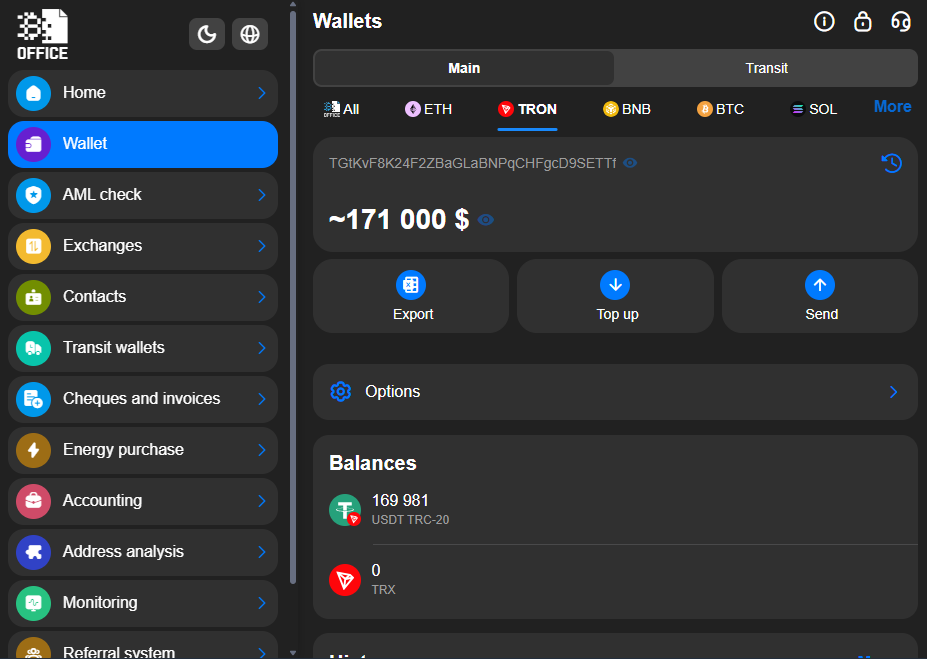
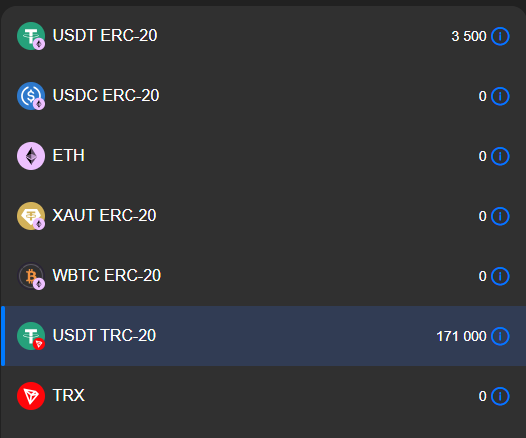
Tap "Send", choose "USDT TRC20" as the currency.
Enter the amount and the recipient's wallet address.
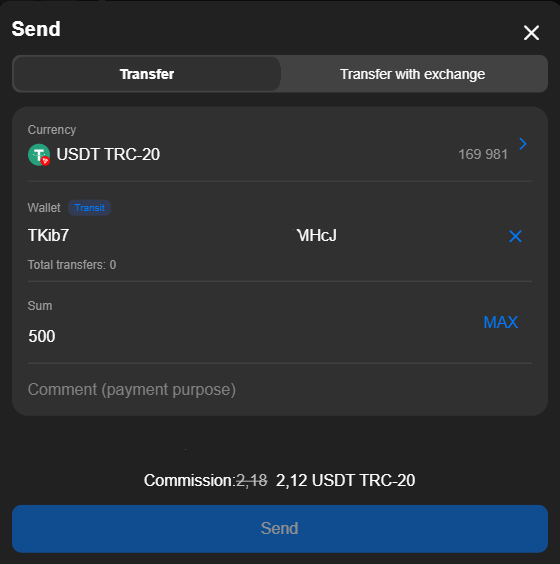
- Confirm the transfer.
The Crypto Office system automatically calculates the transfer fee and charges it in USDT – not in TRX. This works for all stablecoins supported by the wallet.

What Are Energy and Bandwidth
Every operation on the TRON network requires computational resources: Energy and Bandwidth. Bandwidth is used for basic actions – for example, sending TRX or tokens on the TRC10 standard.
Energy is used for smart contract interactions. It is required whenever you send USDT on the TRC20 standard. Think of it this way: the network is a system that processes every transaction, and to execute it, that processing must be paid for.
If there is no Energy, the system deducts TRX as payment. Without sufficient resources, the transfer fails – even if USDT is available on the balance.
Users sometimes assume the issue is with their wallet. In reality, this is standard TRON blockchain behavior – not a bug.
How Energy Rental Eliminates the Need to Hold TRX
Originally, the only way to obtain Energy was to freeze TRX through staking. The user "locks" a certain amount of coins in the blockchain and receives network resources for future transactions. However, this approach does not work for everyone. To get a sufficient amount of Energy in practice, you would need to freeze a significant sum in TRX. Some rental platforms set a minimum threshold of 7,000 TRX – equivalent to over $2,500. As a result, regular users end up holding TRX reserves just to cover fees, which increases costs.
Modern DeFi solutions, such as Crypto Office, make it possible to rent Energy instead. This is far cheaper, faster, and more efficient.
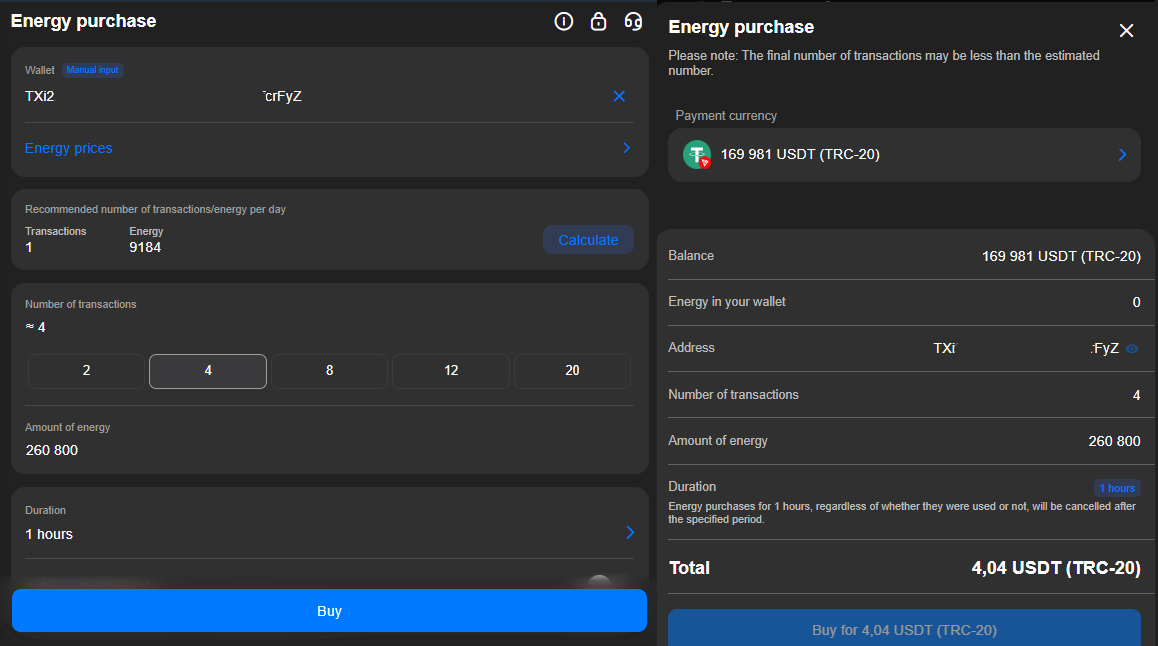
These services delegate Energy directly to the user's wallet for a limited period or for a specific transaction.
Energy rental solves the core problem: it eliminates the need to hold extra tokens just to pay fees. This is the most practical answer to the question of how to reduce TRX fees when sending USDT.
Comparing Methods to Send USDT Without Topping Up TRX
There are several approaches to making a USDT transfer without TRX:
| Method | How It Works | Key Considerations |
| Buying TRX | Top up TRX balance and pay the fee. | Requires constant balance monitoring and extra spending. |
| Staking TRX | Freeze TRX to receive Energy. | Funds are locked; high initial capital required. |
| Renting Energy | Receive Energy without holding TRX. | Depends on a service, but highly flexible with low costs. |
In practice, the most flexible approach is purchasing TRON Energy. This eliminates unnecessary steps and allows transfers to be made at any time – without worrying about how much TRX is needed to transfer USDT.
How Much TRX Is Needed to Send USDT TRC20
Understanding how much TRX is needed to send USDT depends on the scenario. Typically, a single USDT transfer requires approximately 65,000 Energy units. This is the standard case when the recipient already has USDT in their wallet.
If it is the first transfer to a new wallet, more is required: approximately 130,000 Energy units. This is because the blockchain must perform additional verification and address initialization.
Importantly, the transfer amount does not affect resource consumption. Whether you are sending 10 or 10,000 USDT, the Energy cost remains the same.
If you prefer to pay fees directly in TRX rather than using Energy, how to transfer TRX to USDT conversion is straightforward via most exchanges or swap services – but this approach still means managing TRX separately, which is less efficient for frequent senders.
Conclusion
Energy rental has become a practical solution for both newcomers and active USDT TRC20 users. Thanks to TRON's network architecture, there is no longer a need to keep large amounts of TRX on the balance. You do not have to worry about whether you have enough tokens for the next transfer. The main advantage of this approach is simplicity. Energy also helps save on fees, speeds up the transfer process, and makes working with the TRON network more accessible – even for beginners.
Michael Turner knows his stuff when it comes to crypto and blockchain. He puts out content that's not only well-researched but also easy to understand, helping people get a handle on managing their digital assets.