

The crypto world is really focused on stablecoin transfers with no fees. This is mostly because it's getting more expensive to make transactions on big networks. Even with market growth and expanding infrastructure, users still face situations where sending USDT requires holding additional tokens for gas. Plasma crypto, a next-gen blockchain built for stablecoins, tackles this problem.
This review will cover what is Plasma crypto, how it functions, the purpose of the XPL token, and why this setup is gaining traction in 2026.
What Is Plasma Network: Purpose and Core Features
So, what is Plasma in crypto?
Plasma is a Layer-1 solution focused on stablecoin transactions.
Plasma blockchain is an independent layer 1 (L1) setup. It mixes Bitcoin-level security with Ethereum Virtual Machine (EVM) compatibility.
Launched in 2024 with backing from big names in the industry, Plasma network blockschain combines Bitcoin’s decentralized approach with EVM power. This lets developers create smart contracts and keep security tight.
To put it simply, Plasma XPL crypto is a stablecoin-focused L1 blockchain. Users can move USDT without dealing with regular gas fees.
The Plasma blockchain crypto setup has two main parts:
- Zero-fee USDT transfers.
- Security anchored in Bitcoin infrastructure with EVM compatibility.
Zero-Fee USDT Transfers on the Plasma Chain
One of the main advantages of Plasma chain crypto is the absence of gas fees for standard USDT transfers. Transactions are processed without requiring users to hold ETH, TRX, or other gas tokens.
Unlike traditional networks, the Plasma stablecoin blockchain introduces a paymaster mechanism that covers gas logic at the protocol level. For users, this means seamless stablecoin transfers without additional token requirements.
This feature positions the Plasma blockchain XPL ecosystem as a practical infrastructure for payments, remittances, and large-volume stablecoin settlements.
For anyone researching what is Plasma in blockchain, the zero-fee USDT functionality is one of the defining answers.
Bitcoin-Level Security and EVM Compatibility
Security is key to how the Plasma chain blockchain is set up. The system uses Bitcoin tech to stay decentralized and keep validators from messing with things.
Also, the Plasma XPL blockchain works with the Ethereum Virtual Machine. This lets developers use the tools they already know to create DeFi protocols, smart contracts, and decentralized applications.
This mix means the Plasma blockchain crypto setup has the dependability of Bitcoin plus the ability to program like Ethereum.
People can use popular wallets like Trust Wallet and Crypto Office to get on the network, which makes it easier for everyone, from regular users to big institutions, to start using it.
What Is XPL Token in the Plasma Blockchain?
To fully understand the ecosystem, it’s important to clarify what is XPL token Plasma blockchain.
XPL is the native utility token of the network. While USDT remains the primary transactional asset, the XPL token Plasma blockchain model uses XPL for:
- Validator staking
- Network governance
- Incentivizing ecosystem participants
- Paying for advanced smart contract interactions
When people look up Plasma XPL crypto, they're usually asking about how the Plasma blockchain works with its XPL token.
The Plasma blockchain's XPL token has a total supply of 10 billion. In 2026, the system will switch to a full Proof-of-Stake setup, letting XPL holders stake their tokens and help confirm transactions.
Basically, XPL Plasma crypto runs the show behind the scenes, while stablecoins are what users actually interact with.
Technical Architecture of Plasma in 2026
The Plasma chain operates on a Byzantine Fault Tolerant consensus model known as PlasmaBFT. Validators stake XPL to participate in block production and finalization.
This structure allows the Plasma blockchain XPL infrastructure to process thousands of transactions per second, positioning it as a scalable settlement layer for stablecoins.
Additionally, the network supports programmable Bitcoin (pBTC) via decentralized verifiers and the Omnichain Fungible Token standard. This allows Bitcoin liquidity to move into the Plasma network blockchain environment securely.
For analysts asking what is Plasma blockchain from a technical standpoint, the answer includes:
- Bitcoin-anchored security
- EVM compatibility
- PlasmaBFT consensus
- Native staking via XPL
- Stablecoin-first architecture
How to work with the Plasma network in Crypto Office
For users exploring how to buy crypto and access the ecosystem, platforms like Crypto Office provide a simple entry point.
Through Crypto Office, users can swap USDT for XPL and send assets to any address within the Plasma chain crypto network. If you hold BTC, ETH, USDT, or other digital assets, you can exchange them for the XPL token Plasma chain directly.
To receive XPL:
- Open Crypto Office in Telegram.
Navigate to “Exchanges.”
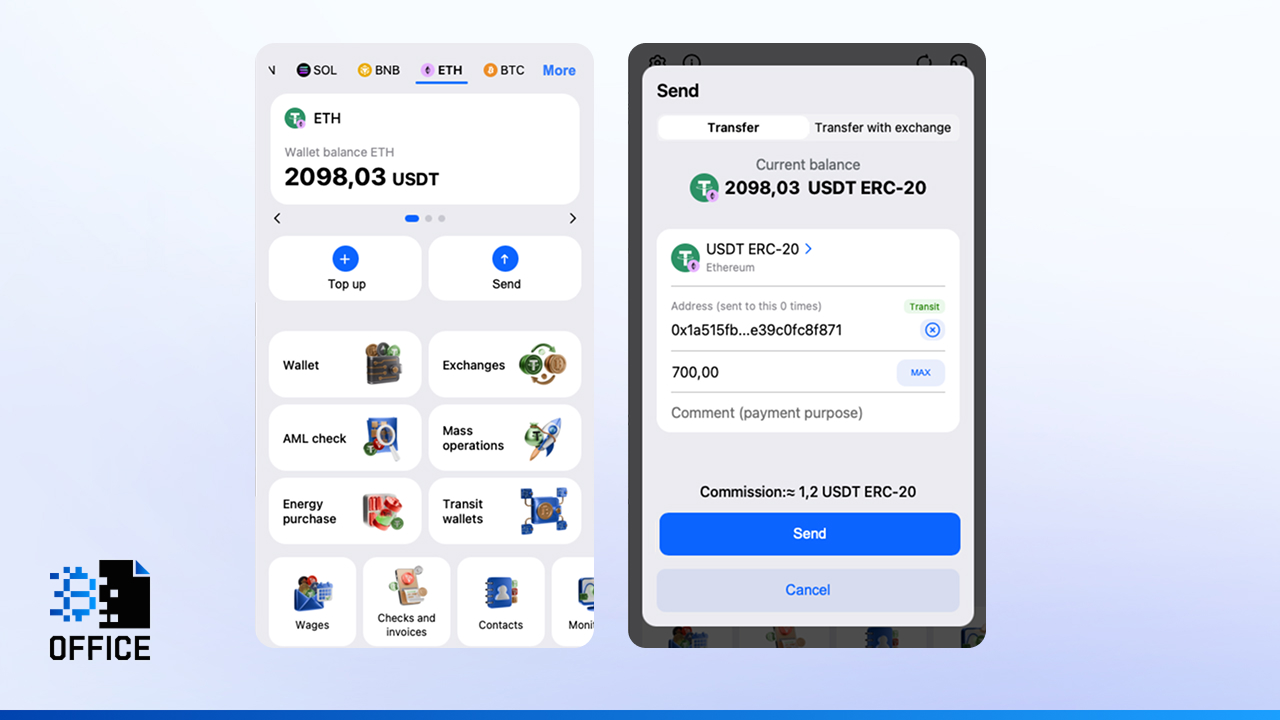
- Select a stablecoin such as USDT (ERC-20).
- Choose XPL as the receiving asset.
Enter your ETH-compatible wallet address.
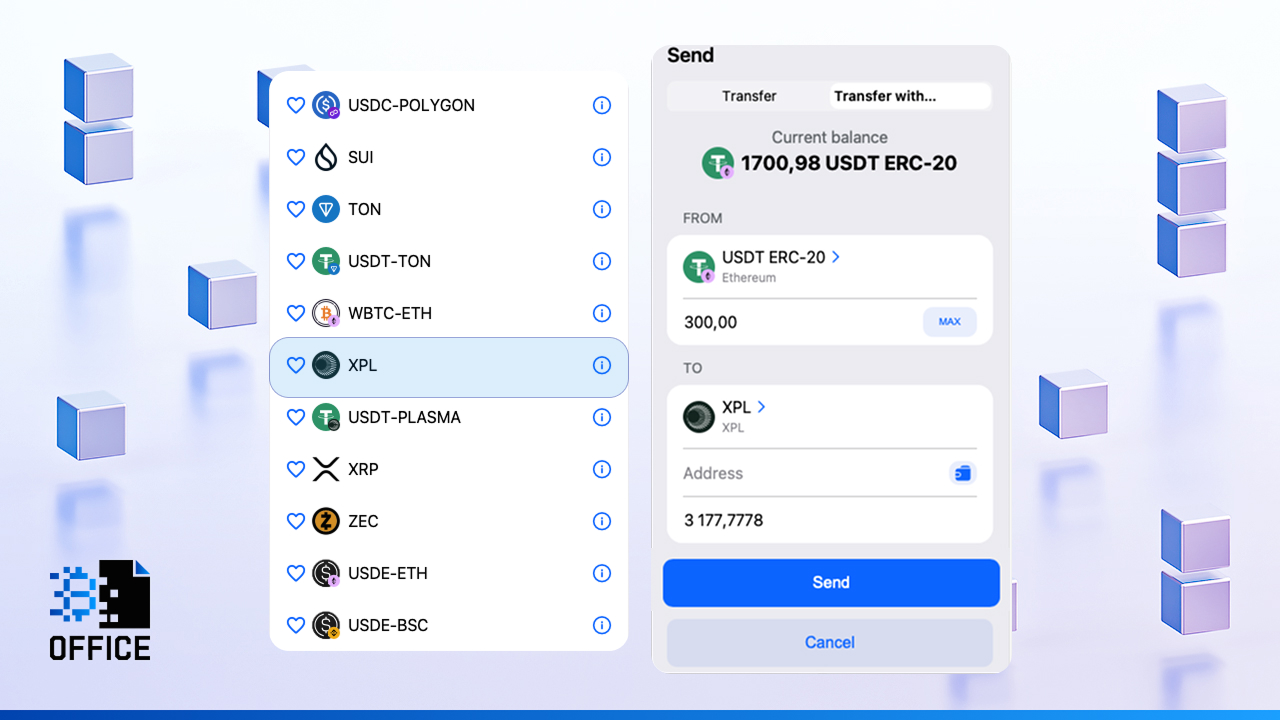
- Confirm the transaction.
After confirmation, the Plasma XPL token blockchain transaction is completed, and tokens appear in your wallet.
This simplified onboarding process allows users exploring what is Plasma crypto not only to better understand the project, but also to start using it with minimal friction.
Plasma (XPL) Tokenomics and Market Position
The Plasma blockchain XPL token has a total supply of 10 billion. It's a key player in how the network is set up, but USDT is still the main option for moving money around.
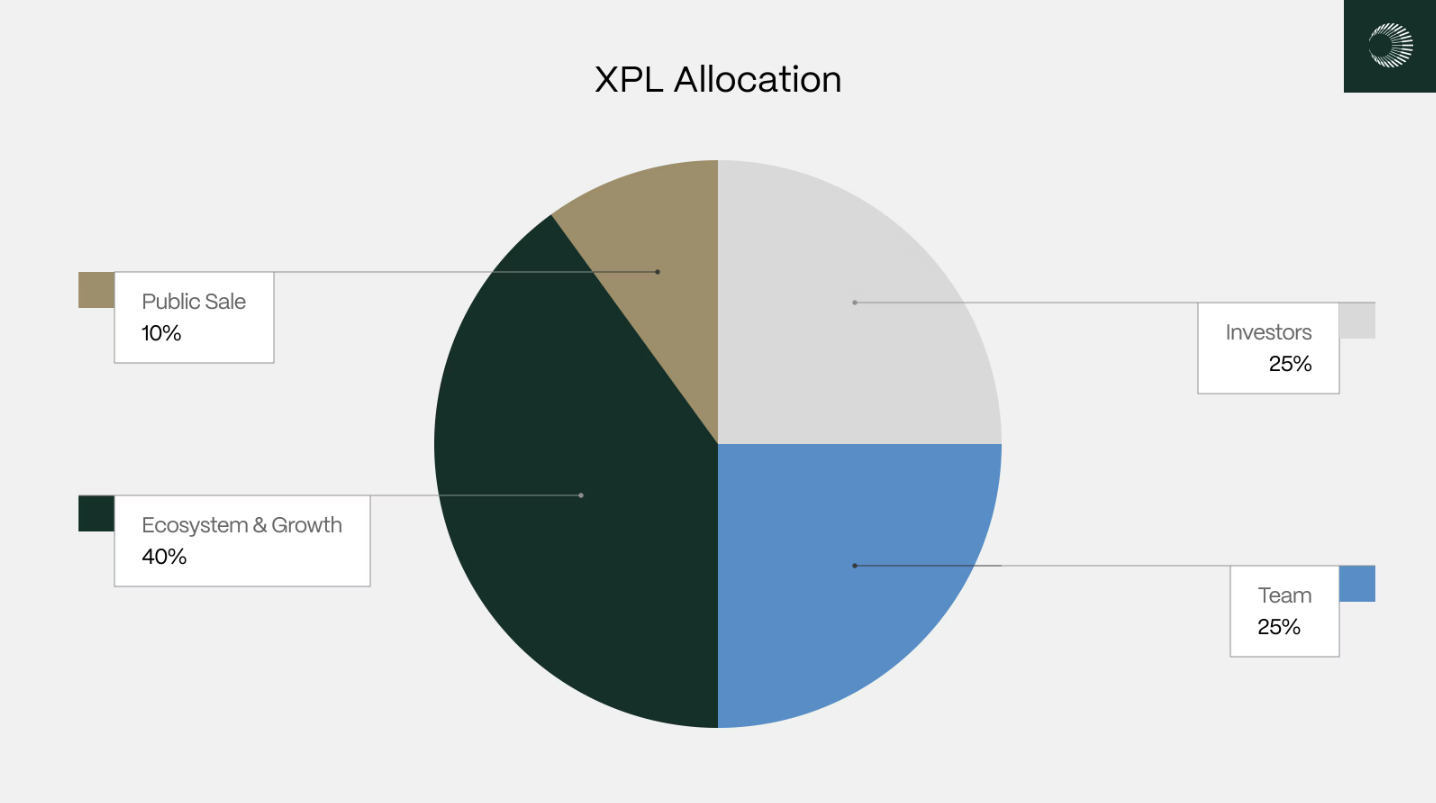
The distribution model is structured as follows:
- Team – 25%
- Investors – 25%
- Ecosystem and development – 40%
Public market – 10%
With the network moving to Proof-of-Stake, the XPL token Plasma blockchain is becoming more critical. Validators stake XPL to secure the chain, and holders can vote on governance issues and get staking rewards.
In mid-2026, additional tokens acquired during the public sale are scheduled to unlock. This could expand the circulating supply and potentially increase price volatility — an important consideration for investors assessing XPL Plasma crypto.
The project's market cap is over $300 million right now, showing that people are getting more interested in the Plasma blockchain crypto setup.
Current Status of the Plasma Network
As of January 2026, the Plasma network blockchain shows a lot of activity. The Total Value Locked (TVL) is over $7 billion, and it supports about 25 stablecoins. The system already combines services from many areas:
The ecosystem already integrates services across multiple sectors:
- Stablecoins
- DeFi
- RWA (Real World Assets)
- DEX platforms
- Lending protocols
- Payment services
- Infrastructure tools
Some of our key integrations include Aave, Ethena, LayerZero, Curve, Chainlink, and Trust Wallet.
For those wondering what is Plasma in blockchain, it's all about its rising liquidity, more partnerships, and growing total value locked (TVL).
Plasma vs Tron and Solana
| Network | Description | Throughput (TPS) | Fees | Primary Focus |
| Plasma | Layer-1 blockchain for stablecoins with zero-fee USDT transfers and integration with Bitcoin and EVM | No specific public TPS data disclosed, but designed for high-load performance | Minimal / zero-fee for USDT transfers on the main network | Stablecoin payments, DeFi, global settlements |
| Tron | Decentralized PoS blockchain активно used for stable USDT transfers and high-volume transactions | Real-world throughput ~130 tx/s under typical conditions (third-party data) | Very low fees, close to zero due to PoS design and resource model | Everyday transfers and EUR/USDT DeFi activity |
| Solana | High-speed PoS blockchain with optimized architecture and an EVM competitor for DeFi and dApps | In real-world conditions processes hundreds to thousands of tx/s, with peak performance above 5000 tx/s | Low transaction fees, but may vary depending on network load | Scalable DeFi, NFT, dApp ecosystem |
Advantages and Limitations of the Plasma Chain
Let’s take a closer look at several key advantages and disadvantages of the Plasma network.
Advantages
Zero-fee USDT transfers
Users do not need to purchase additional gas tokens such as ETH, TRX, or others for basic transfers within the Plasma chain blockchain.
High throughput
The PlasmaBFT consensus enables block finality within seconds and scalability exceeding 1,000 TPS, strengthening the position of the Plasma XPL blockchain in payment use cases.
Immediate liquidity at launch
With over $2 billion in stablecoin liquidity and key support, the project's launch aims to speed up the Plasma blockchain XPL ecosystem's acceptance.
Limitations
Early-stage ecosystem
The ecosystem is still in its early stages. While it's expanding quickly, it has fewer integrated DApps than more established networks.
Limited dApp diversity
For some users, the current focus on stablecoins within the Plasma blockchain crypto model may be a constraint.
Bridge-related technical complexity
Cross-chain interactions, especially involving Bitcoin, introduce additional technical layers.
Investment and Network Risks
Like any blockchain infrastructure, the Plasma chain crypto ecosystem involves certain risks.
Token Volatility
The price of XPL may fluctuate significantly, particularly around major token unlock events. Investors researching what is Plasma XPL crypto should account for supply dynamics.
Risks of Cross-Chain
Bitcoin bridging increases what you can do, but cross-chain bridges have had security problems in the past. If you're using programmable BTC inside the Plasma XPL blockchain, be careful.
Regulatory Uncertainty
Stablecoins are still being watched by regulators in many places. This could change how institutions use the Plasma stablecoin blockchain.
Ecosystem
Since this network is new, its long-term depends on more infrastructure, developers using it, and increased liquidity.
Plasma Development Outlook in 2026
In 2026, the project will move from just starting to scaling for real use.
The main goal of the Plasma network blockchain is to grow the number of stablecoin apps that people can use, like:
- P2P payments
- Business settlements
- Cross-border transfers
- DeFi liquidity operations
The roadmap also emphasizes enhanced privacy features and deeper Bitcoin bridge integration. If Plasma blockchain XPL token keeps up its current performance, it could become a stable and competitive player next to other big networks.
For those wondering about Plasma crypto and where it fits in the industry, it's a special part of the infrastructure that aims to make stablecoin payments smooth and easy.
Conclusion
The Plasma chain is a blockchain created to make using stablecoins easier. It gets rid of USDT gas fees and the need to hold other gas tokens for simple transactions, which makes it more user-friendly.
The Plasma blockchain's XPL token is for staking, governance, and validation, but stablecoins are still the main way to pay.
Even though it's pretty new, the Plasma blockchain crypto system has good liquidity, support, and tech. If you're looking into buying crypto and getting involved with stablecoin networks, Plasma is a different option.
Michael Turner knows his stuff when it comes to crypto and blockchain. He puts out content that's not only well-researched but also easy to understand, helping people get a handle on managing their digital assets.