

Sending crypto usually only requires entering the recipient's address and confirming the transfer. However, in some cases, a successful transaction also requires one additional parameter – a memo crypto tag or Destination Tag. These identifiers are used when making deposits to exchanges, custodial wallets, and exchange services.
This guide explains what a memo in crypto means and how it works. We also cover the difference between memo tags and transaction comments when transferring between personal wallets.
What Is a Memo in Crypto and Why Is It Needed
A memo is an additional identifier that is attached to a transaction. It helps the system determine exactly which account should receive the funds.
The blockchain records the recipient's address but does not link a transaction to a specific account within an exchange. Exchanges and major services often use a single shared deposit address for thousands of users. One address alone is not enough to correctly distribute incoming funds. This is where a memo tag comes in – it connects the transfer to a specific account.
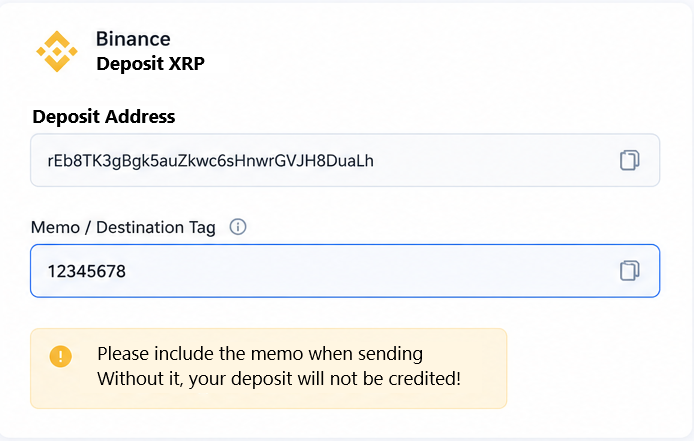
Think of it like an apartment building. The building's address is public, but without an apartment number, no one knows who the letter is for. Memo crypto tags work the same way. The wallet address points to where the funds are going, and the memo identifies the exact recipient within the platform.
The destination tag is most commonly used on the XRP network. The term memo is prevalent in Cosmos, Stellar, and several other blockchains. The exact field name depends on the blockchain, but the function is the same. If an exchange shows both an address and a separate identifier field when you create a deposit, you must use both values when sending.
If you send crypto without including the memo, the blockchain transaction itself will usually go through. But the exchange or service may fail to match the incoming funds to any specific user account. In that case, the deposit is not credited – and you'll need to contact support for manual processing.
That's why it's so important to double-check all transfer details before sending. A memo plays just as important a role as the recipient address and the selected network – it cannot be ignored when working with crypto.
How to Find and Enter the Memo in Your Wallet
Before sending crypto, always check the deposit details provided by the recipient. If a platform uses memo tags, the corresponding value will appear next to the deposit address.
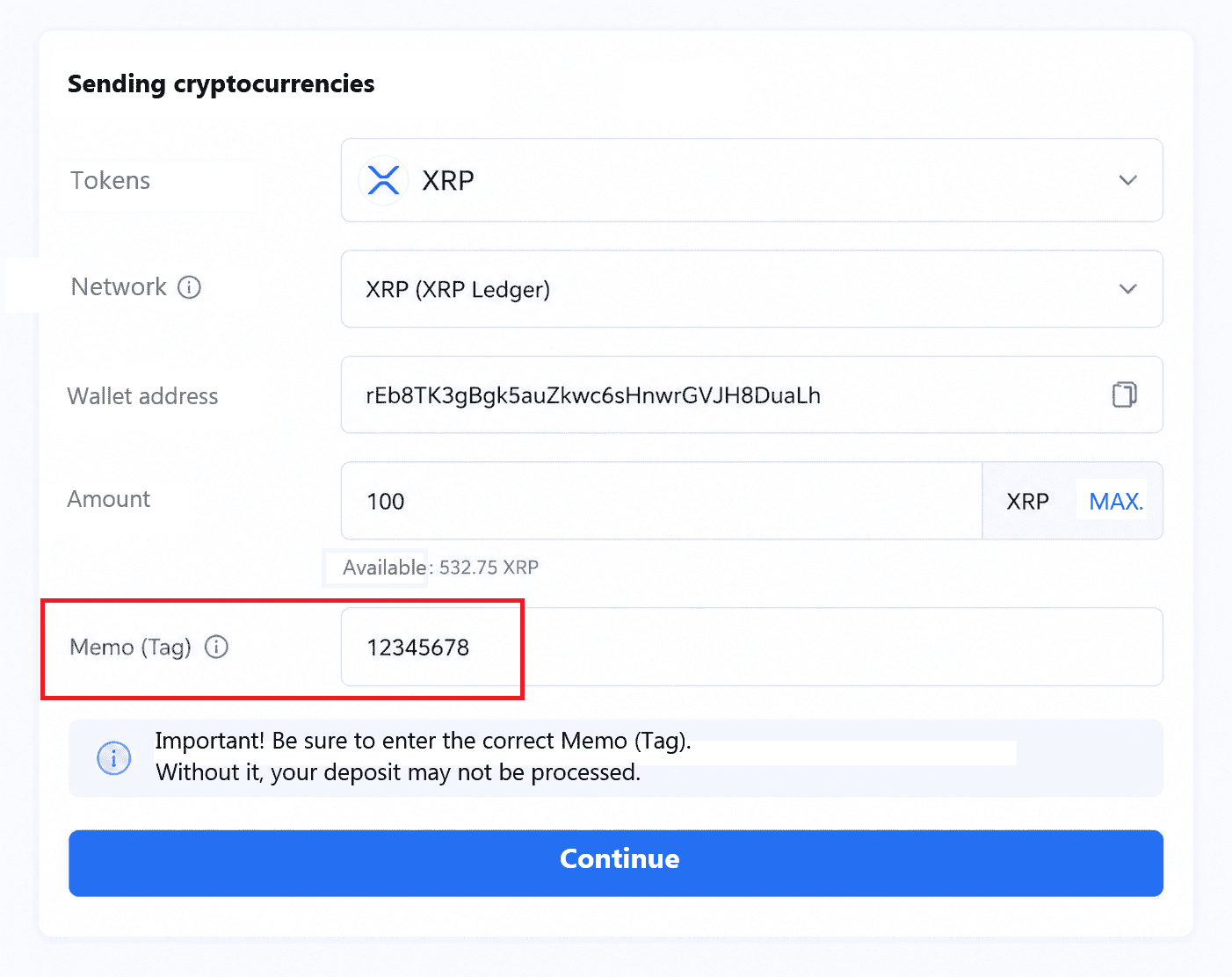
The process is straightforward. Open the deposit section on the exchange or wallet, select the coin you need, and receive the transfer details. If additional identification is required for that network, the system will show a separate Memo or Destination Tag field.
It is essential to copy the value exactly, without any changes. A single wrong digit may prevent the platform from identifying the transfer owner.
The memo in crypto works the same way in Telegram wallets. If the cryptocurrency's network supports identifiers for transfers and deposits, the wallet will display a Memo Tag field before the transaction is confirmed.
Common Memo Mistakes and How to Avoid Losing Funds
Most memo-related problems are caused by inattention. A user checks the wallet address and the transfer amount, but forgets the tag. The transaction goes through successfully in the blockchain, but the funds never appear in the recipient's account.
This often happens during deposits to an exchange. The user copies only the deposit address and skips the identifier field entirely.
Entering the wrong memo is just as dangerous. If an incorrect Memo ID is provided, the platform may be unable to identify the recipient. Some users also confuse the wallet address with the memo. These are two separate pieces of data with different roles. The address defines the destination of the transaction, while the memo handles account identification within the service.
Another common mistake involves using outdated transfer details. Exchanges can update their deposit information. Always re-check the current address and tag before each transfer.
To avoid losing funds, follow one simple rule: always verify the address, the network, and the memo before confirming the transfer. If a mistake does occur, save the TXID of the transaction and prepare information about the sender, recipient, and transfer amount. You will need this when contacting the platform's support team.
Memo in Telegram Wallets – Where to Find It and How to Use It
Let's look at how a memo in crypto works in Telegram wallets. The principle remains the same. In most cases, the tag is provided by the exchange or platform that is receiving the deposit.
When a user opens the deposit page – for example, in the Crypto Office wallet – the system displays the transfer details. In addition to the wallet address, a Memo Tag field is shown. This is the value you must use when sending funds.
Copy the recipient address, then copy the Memo provided by the exchange, and paste both values into the transfer form.
If the exchange does not show a Memo when creating a deposit, it is not required for that coin or network. However, always review the deposit details carefully before sending. This helps prevent mistakes and speeds up the crediting of funds to your account.
One important distinction: the memo is not a password, a seed phrase, or an access key to your wallet.
Comment vs. Memo – How to Tell the Difference
Comments and memos are different elements used in different scenarios. Memo in crypto meaning is tied to identification: it is required when sending crypto to an exchange or an exchange service, as it is part of the internal system's identification process.
Transaction comments, on the other hand, are used when transferring funds between wallets – for example, when sending from one personal wallet to another. This feature exists purely for the user's convenience. Put simply, a memo is a technical tag for the exchange. A comment is a personal note for you.
The Crypto Office wallet in Telegram lets you attach comments to any transfer.
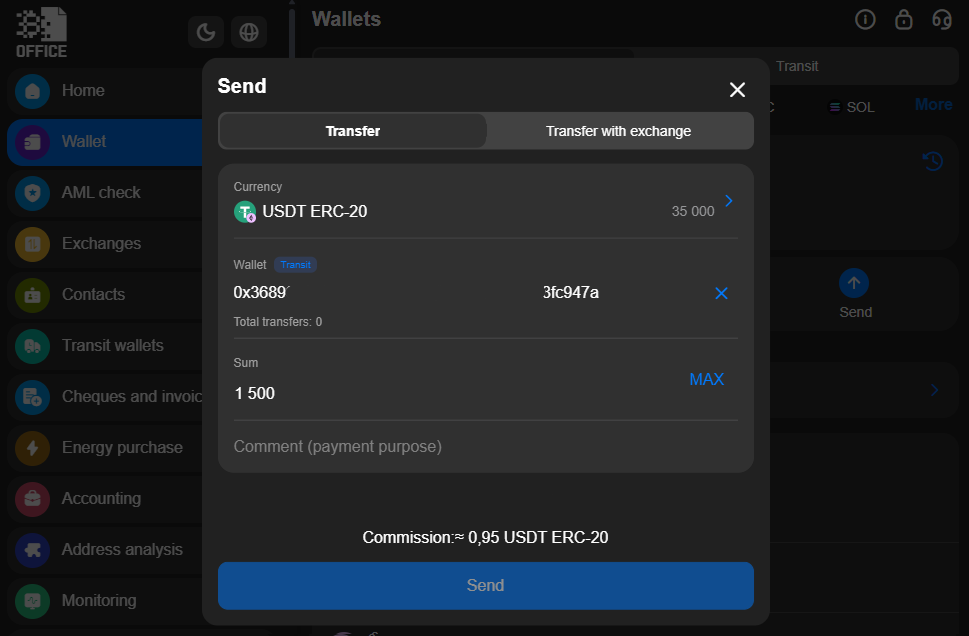
This makes it easy to note the purpose of a transfer or add a clarification – for example, "payment," "refund," or "personal transfer."
To send crypto with a comment in Crypto Office:
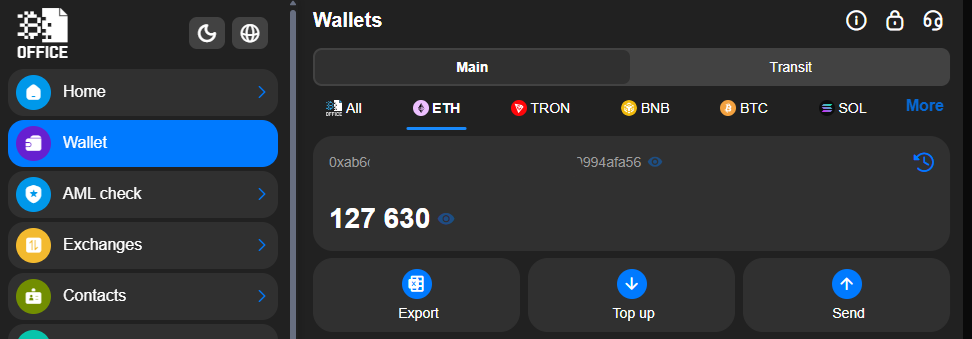
- Select the asset from the list
- Tap "Send"
- Enter the recipient's wallet address
- Enter the amount
Write a note in the "Comment" field
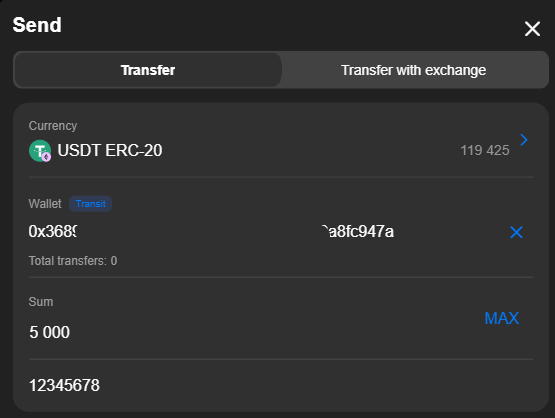
- Confirm the transfer
It's important not to mix up these fields. The memo directly affects whether funds are credited on the platform. A comment does not.
Which Cryptocurrencies and Networks Require a Memo
Memos are not required across all blockchains. They are most commonly used in the following networks:
- Ripple (XRP)
- Stellar (XLM)
- Cosmos (ATOM)
- EOS
- BNB (Binance Coin)
- The Open Network (TON / Gram)
In these networks, crypto can be sent to a shared platform address. Without an identifier, the system cannot determine who should receive the funds. This is a critical point: even if the transaction is confirmed on the blockchain, the platform may not credit the transfer without a memo.
When a Memo Is Not Required: Personal Wallets and Other Blockchains
A memo is not needed when transferring between personal wallets. In those cases, every address is already unique and belongs to a specific user. Memos are also not used on most standard networks that do not use aggregated deposit addresses – for example, when sending tokens directly between non-custodial wallets.
If you're sending crypto directly to another person, the memo field is usually absent or optional.
You can check whether a memo is required directly in the wallet or exchange interface. When creating a deposit, the exchange typically shows:
- The transfer address
- The selected network
- An additional field labeled Memo, Destination Tag, or Payment ID
If that field is present, the memo is mandatory or strongly recommended.
The situation is similar in wallets. When sending funds, the system will display the Memo field before the transaction is confirmed. Enter it exactly as shown in the recipient's deposit details.
Conclusion
A memo crypto tag is a small but critical element when working with cryptocurrency. It isn't always required, but where it applies, it plays a key role in identifying the recipient. The blockchain handles the actual transfer. The memo helps the exchange or platform route the funds to the right account within its system. Getting it wrong can cause delays or require manual processing.
The key takeaway: always check the deposit conditions before sending any crypto. A clear understanding of what does memo mean in crypto reduces the risk of mistakes and makes transfers more predictable.
Journalist and editor specializing in crypto markets and blockchain infrastructure, covering regulatory shifts, institutional adoption, and the evolution of Web3 protocols.