

According to data from Chainalysis, illicit addresses received at least $154 billion in cryptocurrency in 2025 – 162% more than the year before. That total may climb even higher as analysts uncover more linked addresses. This is exactly why, in 2026, checking transactions remains a core part of crypto wallet security.
In this article, we'll break down what is KYT and how a transaction check actually works. We'll also cover the difference between KYT, KYC, and AML, and explain why a single blockchain confirmation is never enough on its own to judge a transfer's risk.

Know Your Transaction: How the Transaction Analysis System Works
Know Your Transaction, or KYT, is a technology used to analyze cryptocurrency transactions. The method helps determine the risk level behind a specific transfer.
Every transaction is recorded on the blockchain, and this record alone already shows:
- Sender address
- Recipient address
- Transfer amount and time

But that's not enough for a full risk assessment. This is actually one of the main know your transaction limitations: raw blockchain data confirms that a transfer happened, not what happened around it. A proper KYT check looks at the wallet's entire history, along with its connections to other addresses.
During the analysis, the system – or the person running the check – scans previous operations and compares them against databases of known risky addresses. It also tracks what happens to the funds after the transfer: for example, whether the cryptocurrency quickly moved through several wallets or landed on a high-risk address.
KYT also accounts for more complex chains. Assets can pass through multiple wallets, different services, mixers, or even across blockchains.
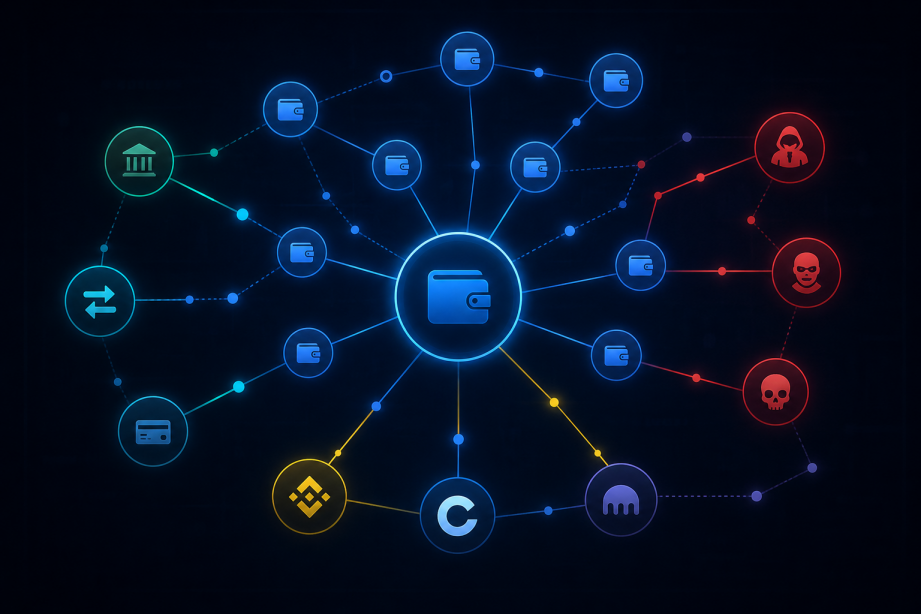
The result of the check is an overall risk score. Depending on the system, the transaction gets a specific status showing whether it needs additional review or can be processed without further action.
This is why a KYT check helps build a clearer picture of where funds actually came from – and why transaction analysis has become such an important part of AML infrastructure.
AML, KYC, and KYT: What's the Difference
KYC (Know Your Customer) verifies a customer's identity. To do this, the user submits documents confirming who they are.
AML (Anti-Money Laundering) is a set of measures against money laundering. It covers customer checks, transaction monitoring, data retention, and detecting suspicious activity. In practice, AML and KYT are often used together: AML sets the general procedures for countering money laundering, while KYT analyzes the risk of one specific transaction.
For cryptocurrency, KYC alone isn't enough. A user can verify their identity and still receive funds from a risky address. That's why KYT complements KYC and AML, helping verify the origin of funds and the transaction history behind them.
What's in a KYT Report and How to Read It
Before getting into report structure, it helps to revisit the KYT meaning: it's about assessing the risk behind a specific transfer, not just confirming it took place. The result of a KYT analysis is usually presented as a report on a wallet address or a specific transaction. Its job is to show not just the transfer itself, but the risk connected to it. Modern systems match addresses against known risk categories while analyzing how funds move across the network.
For example, a wallet might have ties to sanctioned organizations, fraudulent services, mixers, or stolen assets.
One of the main elements of a report is the risk level. It shows how suspicious an operation looks under a given service's rules – the higher the risk, the more grounds there are for additional review. That said, a high status doesn't mean the user broke the law; it's a signal for further analysis.
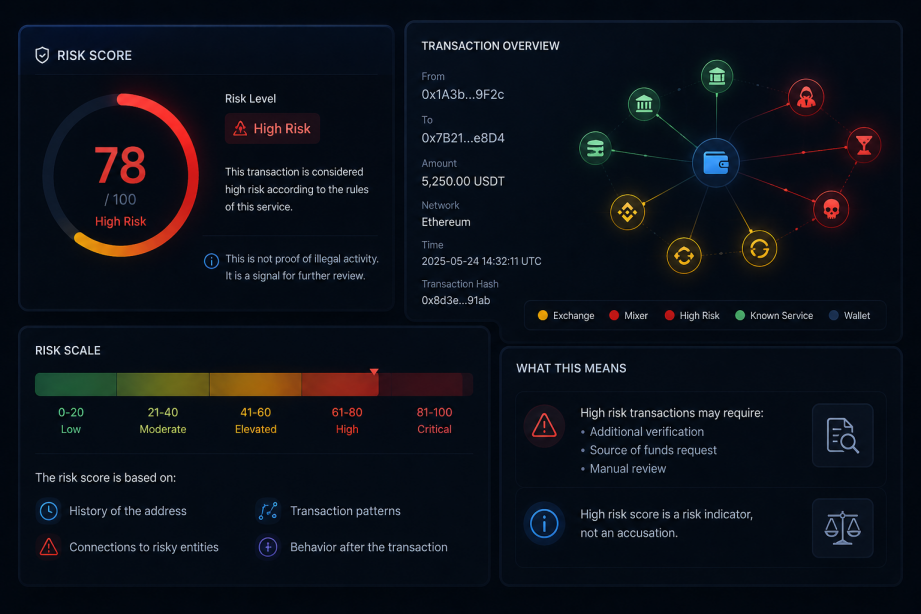
The report can also show a separate risk category, which helps explain why a transaction received a particular score. You will typically also see transfer history, connections between addresses, and the path the funds took. This context matters a lot when cryptocurrency passed through several wallets before reaching its final destination.
When and Why You Need a KYT Check
Transaction analysis comes into play when accepting payments, exchanging assets, and moving funds between wallets. For a business, this kind of analysis helps determine how safe it is to keep working with a particular wallet or counterparty.
This kind of check matters especially for crypto services that process large volumes of operations every day. Manually reviewing every single transaction just isn't practical. KYT effectively automates monitoring and lets compliance specialists quickly focus on the operations that actually need attention.
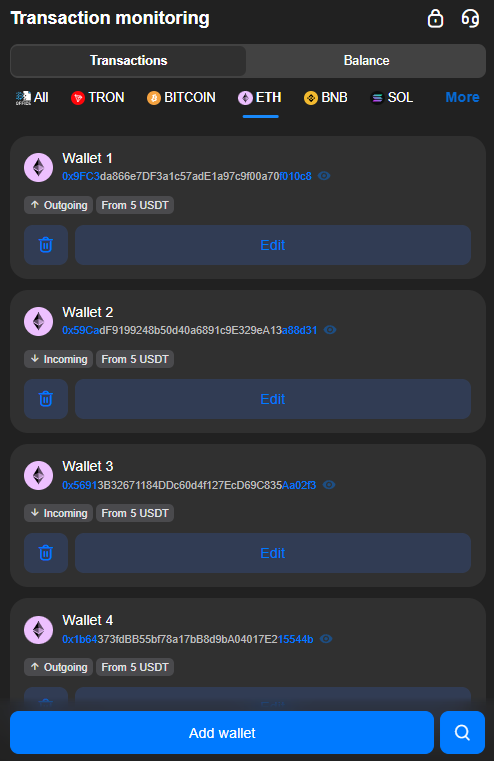
Users also benefit from understanding a wallet's overall activity: its transaction history, fund movement, and related risks. Many services let users track balance changes and activity over time as well. Crypto Office, for example, lets you track wallets and their balances while also providing detailed transaction information.
Protection Against Exchange Freezes and Source-of-Funds Requests
Know your transaction crypto monitoring helps lower the risk of an exchange or other crypto service restricting your account while asking you to prove where your funds came from. This kind of request can come up if an incoming transfer is linked to a high-risk address or a chain of risky operations.
For example, a user receives USDT from someone else and immediately sends it to an exchange. The transfer might look completely ordinary. But the previous owner of those funds may have interacted with a risky service. The exchange can pick up on that connection and ask for extra proof of where the funds came from, request identity verification, temporarily restrict operations, or – in some cases – freeze the funds or the account entirely.
Checking a transaction in advance makes it possible to catch a potential issue before the funds even reach the exchange. It lets the user assess the transaction's risk level and decide whether further analysis is needed.
Checking Stablecoin Purity
Stablecoins are most often used for payments, storage, and transfers. USDT and USDC can be sent to another wallet quickly and used to process payments or exchanges. But the history behind the coins you receive stays on the blockchain. That's why, before receiving stablecoins or withdrawing them to an exchange, it's worth checking not just the transaction amount and status, but also where the assets actually came from.
Particular attention goes to sanctioned addresses, fraud schemes, hacks, darknet services, and other risk categories. Modern solutions, including Crypto Office, track stablecoin movement and can detect complex transfer chains.
This makes it possible to spot potential risk in advance and understand whether a transfer might raise questions on the receiving platform. KYT is also applied before accepting a payment from a client or partner – for a business, it's a way to lower the chance of working with assets whose origin might need extra explaining.
KYT for Business – Where and How It's Applied
In business processes, KYT is part of ongoing operational control. A single check at customer onboarding isn't enough on its own – risk can change after just one transaction.
Businesses run KYT know your transaction checks when accepting payments, withdrawing cryptocurrency, and exchanging assets. It also helps control operations tied to corporate wallets.
The system automatically checks transactions and flags suspicious operations for further review. The check can run before an operation and then continue in monitoring mode, showing not just a wallet's current state but also how its activity changes over time.
For instance, a low-risk address today might receive funds from a high-risk source tomorrow. This is exactly why continuous monitoring is treated as a separate task within any KYT system.
Continuous Wallet Monitoring and Risk Change Alerts
A one-time KYT check shows a wallet's state at a single moment. Continuous monitoring paints a far more detailed picture, tracking new transactions and changes in an address's activity after the initial analysis.
In Crypto Office, the KYT mechanism is built directly into monitoring. Users can connect the address they want to track and get notified about:
- New incoming and outgoing operations
- Changes in balance and other activity
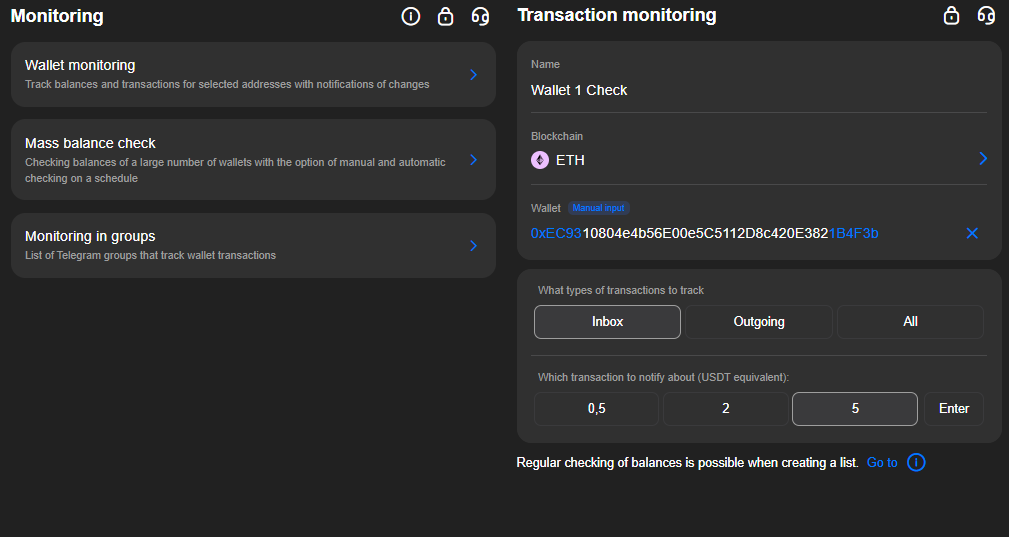
You can choose which types of transfers to track and set an amount threshold that triggers a notification. Monitoring is available across several blockchains at once: TRON, Bitcoin, Ethereum, BNB Smart Chain, and Solana.
KYT is also complemented by AML checks. In Crypto Office, users can run an AML check themselves at any time, on either a transaction or a wallet address. The service also automatically runs an AML check on every exchange and every withdrawal to an exchange.
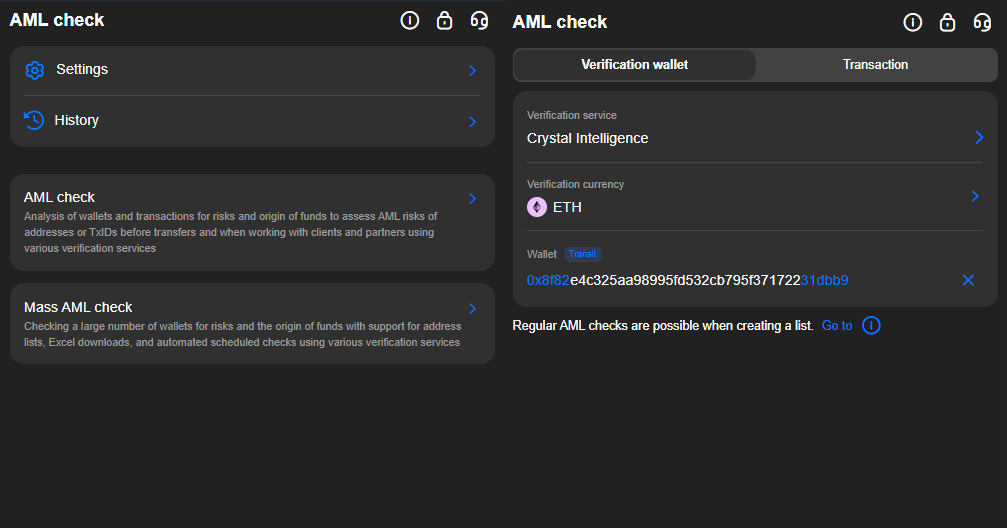
In the end, users get two connected control tools: KYT monitoring helps track wallet activity, while AML evaluates the risk tied to specific funds and transactions. The check can run manually or automatically as part of everyday operations in Crypto Office.

Conclusion
Know Your Transaction technology turns public blockchain data into a clear, readable risk assessment. It shows the detailed context behind how funds move – something that matters a great deal when working with cryptocurrency, especially when assets arrive from third-party wallets or are meant for further exchange. Paired with KYC and AML procedures, KYT helps build a far more resilient risk management system.
Michael Turner knows his stuff when it comes to crypto and blockchain. He puts out content that's not only well-researched but also easy to understand, helping people get a handle on managing their digital assets.