

Beyond simply buying Bitcoin directly, the market offers specialized investment instruments designed to make crypto accessible to institutional players. The most popular among them is the ETF fund.
Over the past few years, Bitcoin ETFs have become a fixture of the traditional financial market. Bitcoin fund shares are purchased by retail investors, funds, and even banks.
In this article, we'll break down what is a Bitcoin ETF, how it works, and how the Bitcoin share market is structured in 2026.
What Is a Bitcoin ETF in Simple Terms
A Bitcoin ETF (Exchange Traded Fund) is an exchange-traded fund that allows investors to gain exposure to BTC through a standard brokerage account. Instead of holding the cryptocurrency itself, investors buy shares of the fund – and those shares mirror the price of Bitcoin. When BTC rises, so does the ETF price. When the market falls, share prices follow. The mechanism works exactly like traditional stock ETFs or commodity funds tracking gold or silver.
It's worth noting that the "shares" of a Bitcoin ETF are technically fund units, not equity shares. Unlike shares in a regular company, there is no underlying business, revenue, or dividends. They represent a claim on a portion of the Bitcoin held by the fund's custodian – a licensed company that professionally stores crypto assets. For most US spot ETFs, that role is fulfilled by Coinbase Custody.
There are two main types of BTC fund:
- Spot Bitcoin ETF. These funds hold real Bitcoin with a custodian. This is the most transparent model because the fund genuinely owns the underlying asset.
- Futures Bitcoin ETF. These funds buy BTC futures contracts rather than the coins themselves. Because futures contracts have expiration dates, the fund must continuously sell expiring contracts and buy new ones to maintain exposure. This creates a drag on returns known as the contango effect – each rollover costs a premium, which systematically erodes performance over time.
The core idea is straightforward: what is a Bitcoin ETF comes down to making crypto accessible through familiar financial infrastructure.
How the Bitcoin ETF Market Is Structured in 2026
In 2026, the Bitcoin ETF market has become a fully established segment of the global financial system. After the SEC approved spot Bitcoin ETFs in 2024, the market grew rapidly.
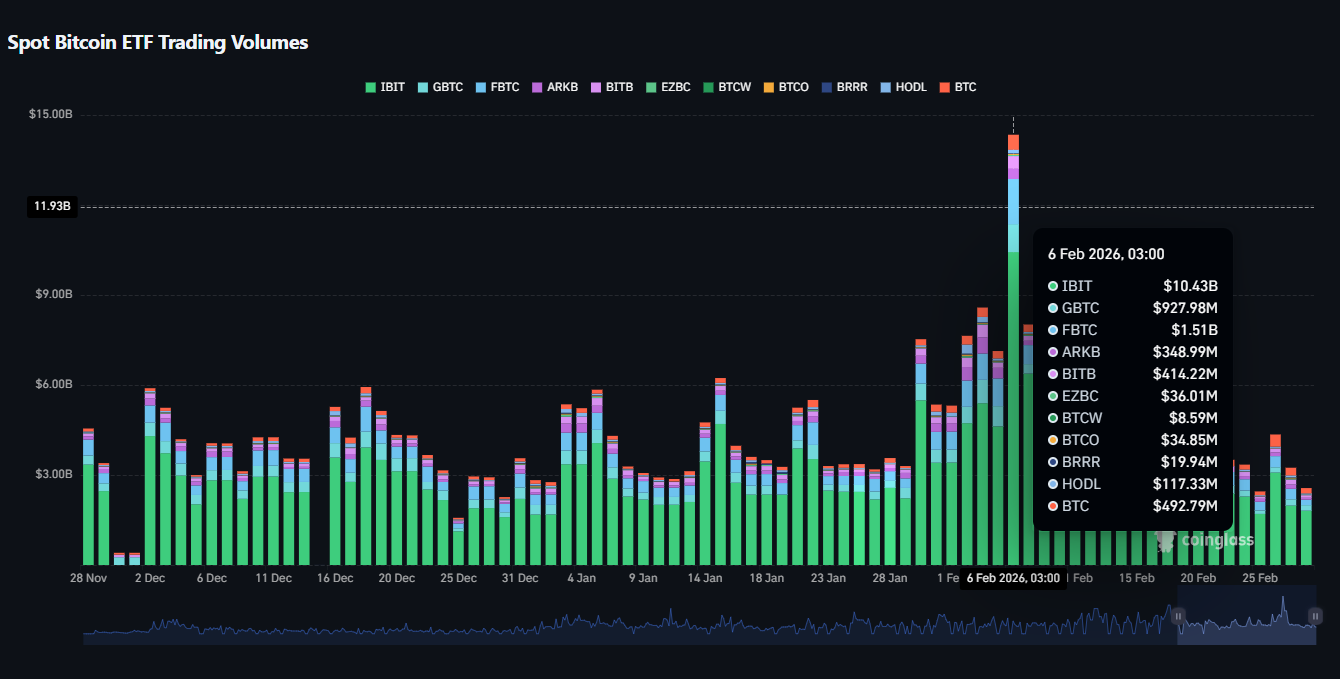
Within months, assets under management surged into the tens of billions of dollars. According to Glassnode data, the current balance held across spot Bitcoin ETFs exceeds 1.26 million BTC. Daily trading volumes are now comparable to major commodity ETFs.
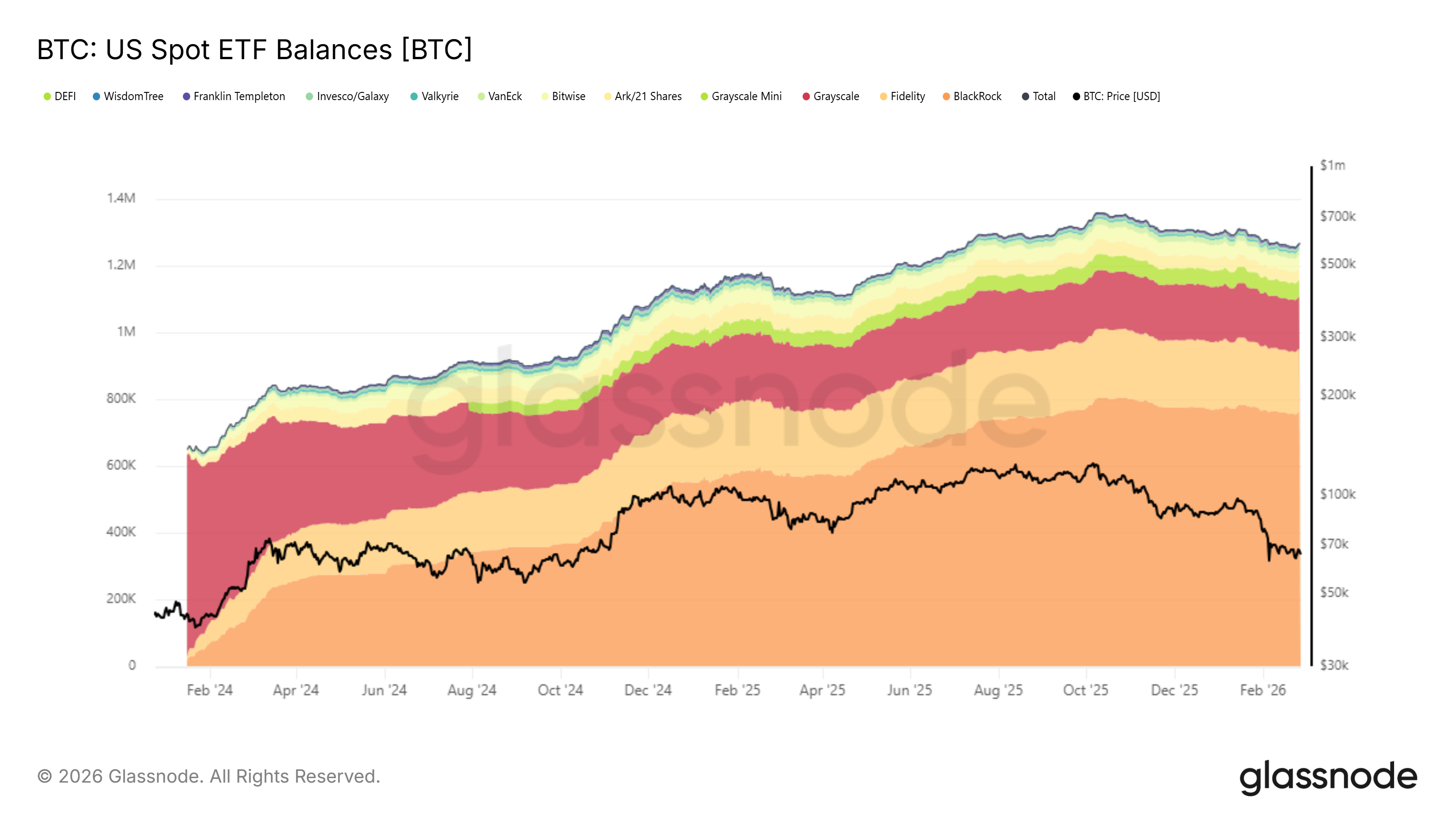
The market leader by assets remains BlackRock (IBIT) with over 750,000 BTC under management, followed by Fidelity Investments (FBTC) with more than 185,000 BTC, and Grayscale Investments (GBTC) holding over 155,000 BTC.
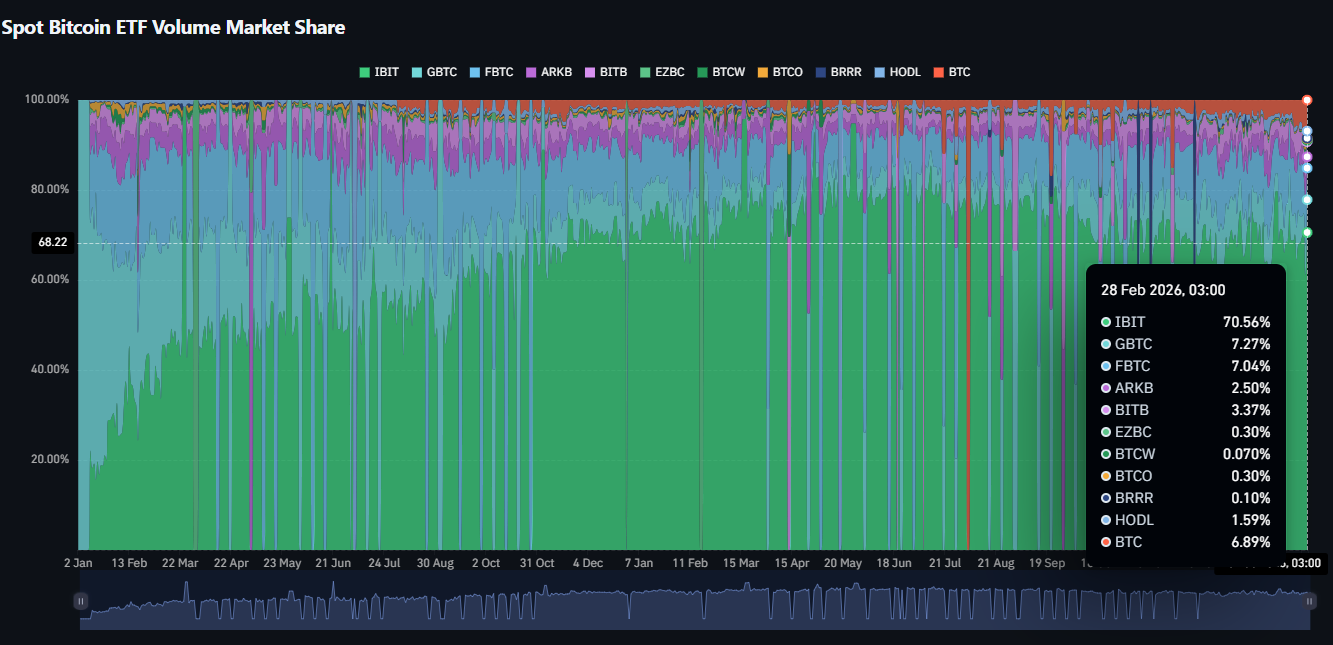
Other significant players in the Bitcoin fund space include:
- Ark/21 Shares (ARKB) – over 35,000 BTC
- Bitwise (BITB) – over 37,000 BTC
- VanEck (HODL) – over 16,000 BTC
- Valkyrie (BRRR) – over 6,000 BTC
- Invesco/Galaxy (BTCO) – over 6,400 BTC
- Franklin Templeton (EZBC) – over 5,000 BTC
- WisdomTree (BTCW) – over 1,930 BTC
The competitive landscape has shifted significantly. The vast majority of Bitcoin ETF capital is now concentrated in spot funds. Futures-based ETFs lag behind because investors clearly prefer direct Bitcoin backing.
If you're wondering how many shares of Bitcoin are there across all ETFs – the answer is that each fund issues its own units, but collectively these funds now represent over 1.26 million BTC, roughly 6% of all Bitcoin in circulation.
In 2026, the question of what is the Bitcoin ETF has a broader answer than ever before. These instruments are no longer just a retail product – hedge funds use them for strategic capital allocation, and BTC shares are increasingly included in diversified institutional portfolios.
Bitcoin ETF vs Bitcoin: Key Differences
At first glance, the gap may seem small. Both give exposure to the same asset – Bitcoin. But the ownership model is fundamentally different, and understanding what is Bitcoin ETF vs Bitcoin matters for making an informed investment decision.
When an investor buys a Bitcoin ETF, they acquire fund shares. They do not own the tokens. They depend on the asset manager and its infrastructure. If the fund freezes operations or changes its terms, the investor has no direct recourse. Temporary restrictions on redemptions are rare but have happened – in 2023, Grayscale prevented investors from redeeming GBTC shares at market value for an extended period, resulting in a persistent discount to Bitcoin's actual price.
When buying actual BTC, the situation is different. The investor owns the asset directly, controls the private keys, and can transfer funds without intermediaries. They can use Bitcoin freely across the market, in payments, and in business processes.
Why buy Bitcoin ETF instead of Bitcoin?
The answer depends entirely on the investor's context:
- Bitcoin ETF is the right choice for those treating BTC as a long-term strategic position within a traditional financial structure – particularly for institutions that cannot legally hold crypto directly.
- Direct Bitcoin ownership is better suited for those who want full control, the ability to transfer and use the asset, and independence from any fund manager.
Understanding why Bitcoin ETF vs Bitcoin comes down to this: the ETF is a financial instrument within the regulated system. Owning BTC directly is ownership of the digital asset itself.
How to Store and Manage Bitcoin
Bitcoin ETF is a convenient investment vehicle – but it gives no control over the asset itself. If you want to own Bitcoin directly, transfer it, use it in payments, or accept it as income, you need a reliable tool for managing BTC.
For that purpose, a strong option is Crypto Office – a multifunctional business wallet for working with cryptocurrencies inside Telegram.
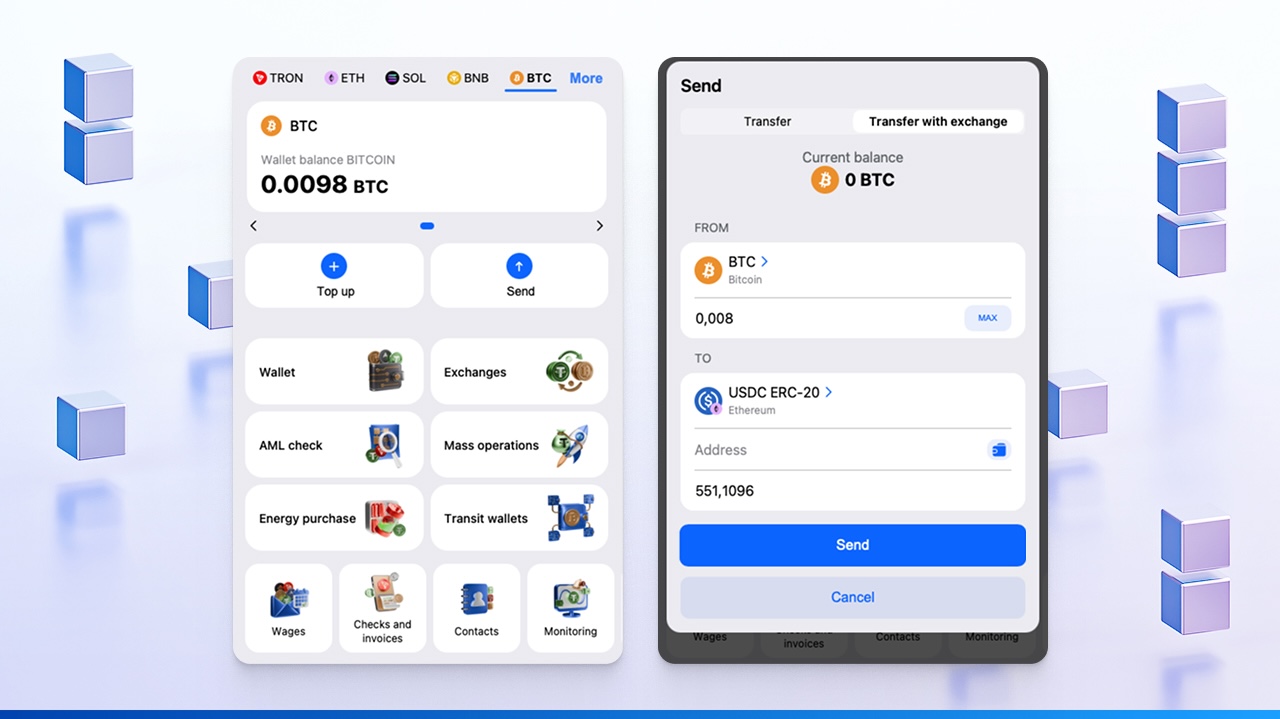
It combines storage, exchange, and payment tools in a single interface — no need to install separate apps or dive into the technical details of blockchain.
What Do You Need to Store and Manage BTC?
Below, we'll cover the main tools for effective Bitcoin management — using the Crypto Office app as an example:
- Wallet.
Store and manage your BTC balance with private keys under your full control – no dependency on an exchange or asset manager. - Crypto swap.
A built-in exchange lets you convert BTC into other tokens directly within the wallet, without switching to external platforms. - Bulk operations.
Designed for business use – send BTC to dozens or hundreds of addresses simultaneously, saving time and reducing operational costs. - Invoices and checks.
Create crypto payment requests and send them to contacts directly within Telegram, or issue invoices to accept Bitcoin and collect funds. - AML verification.
The built-in AML screening system helps assess risks before receiving funds – essential for companies and investors who prioritize asset transparency. - Transit wallets.
Create transit wallets with flexible AML settings for managing incoming payments from multiple counterparties. - Accounting.
All operations are logged automatically – income, expenses, fees, asset movements – simplifying reporting and tax accounting.
The result is not just a wallet, but a comprehensive crypto asset management system that handles the technical layer on your behalf.

Benefits and Risks of Bitcoin ETF
Bitcoin ETF in 2026 is fully embedded in the traditional market – but that doesn't mean it's without risk. Before deciding, is there a Bitcoin ETF worth adding to your portfolio, it's important to weigh both sides.
Key advantages of Bitcoin ETF shares
Regulated environment. ETFs operate within securities law. For large institutional investors, regulatory compliance and transparency are non-negotiable requirements – and what is a Bitcoin ETF from a compliance perspective is simply a regulated security that fits within existing mandates.
- Accounting convenience.
Fund shares integrate seamlessly into existing reporting systems. No separate custody infrastructure for crypto is required, which significantly reduces operational overhead. - High liquidity.
Major funds trade with minimal spreads. This allows investors to enter and exit positions without materially moving the price – a critical factor for large capital. - Simple access.
Purchases are made through a standard brokerage account. For many institutional players, this is the only permissible format for gaining exposure to digital assets. If you've ever asked is Bitcoin an ETF – no, but it can be accessed through one in a way that fits traditional portfolio frameworks.
Main risks of Bitcoin ETF
- Market volatility.
The ETF mirrors Bitcoin's price dynamics. When the underlying asset drops, so does the value of the fund shares – there is no buffer. - Management fee.
Funds charge an annual fee that gradually erodes total returns, especially for long-term holders. This is a key factor when comparing what is BTC fund performance against direct BTC ownership. - No direct ownership.
The investor holds securities, not BTC tokens. There is no ability to transfer, spend, or use the Bitcoin outside the fund structure. - Regulatory sensitivity.
The market remains exposed to shifts in government policy and macroeconomic decisions. Changes in SEC rules or broader financial regulation can directly affect ETF operations and valuations.
Why Investors Choose Bitcoin ETF Shares
Large capital rarely enters Bitcoin directly – at least not without a clear ownership structure. Bitcoin ETF solves that problem. Here's why institutional investors in particular favor BTC shares over direct crypto exposure:
- Compliance with internal mandates
Many funds are prohibited from holding cryptocurrency assets outright. Internal policies only permit securities. Bitcoin ETF shares fit squarely within those requirements – removing legal barriers and opening access to a new asset class without changing the investment mandate. - Managed risk exposure
What is a Bitcoin ETF and how does it work from a risk management perspective? It allows a fund to allocate a defined, limited portion of the portfolio to a high-risk asset, with a clear product structure, visible fees, and measurable liquidity – all within a familiar framework. - Transparent reporting
Major funds publish detailed data on asset volumes and custody structure. For institutional investors, this transparency is critical. It reduces operational concerns and simplifies due diligence. - Deep market liquidity
In 2026, trading volumes across the largest Bitcoin ETFs reach significant scale. Positions worth hundreds of millions of dollars can be established without serious slippage – something that would be far more difficult in spot crypto markets. - Portfolio diversification
Bitcoin is increasingly viewed as an alternative asset that can partially reduce correlation with traditional markets during certain market phases. What does Bitcoin ETF mean for a diversified portfolio? It means structured, liquid exposure to a non-correlated asset class without the operational complexity of direct custody.
Bitcoin ETF represents a compromise between traditional finance and the crypto economy. It simplifies access. It standardizes processes. But it doesn't provide full control over the underlying asset. The choice between an ETF and direct BTC ownership ultimately comes down to the investor's goals, time horizon, and risk tolerance.
Conclusion
Bitcoin ETF in 2026 has cemented its role as a bridge between traditional finance and the crypto market. It is a structured investment instrument with a transparent operating model, clear reporting, and strong liquidity. For institutional investors, what is ETF Bitcoin comes down to one thing: a compliant, regulated entry point into BTC exposure – one that fits existing mandates and is accounted for as a security.
For retail investors, the appeal is simplicity: no wallets, no crypto exchange mechanics to learn, no custody concerns.
But the key distinction is worth understanding clearly. When you buy an ETF, you own a financial instrument. You do not control the Bitcoin itself. You cannot transfer it or use it outside the fund system. You are dependent on the asset manager and the fund's structure.
Understanding what is Bitcoin ETF vs Bitcoin is ultimately what should guide your decision.
Michael Turner knows his stuff when it comes to crypto and blockchain. He puts out content that's not only well-researched but also easy to understand, helping people get a handle on managing their digital assets.