

More and more users continue shifting a part of their savings into digital assets. According to a16zcrypto, the global number of crypto users has surpassed 700 million. It’s a 16% increase compared to 2024. The number of active wallet users worldwide has also increased by 20%.
But where’s the best place to keep your crypto safe and what can you do to make sure you don’t lose access to it?
User experience has changed significantly. Besides exchanges, there are specialized services, digital wallets, and entire ecosystems that simplify crypto management — including solutions like Crypto Office inside Telegram.
This guide shows you the right way to store your cryptocurrency. It also points out the risks and helps you pick the wallets that keep your digital money safest.
Why Choosing the Right Storage Method Matters
Your digital assets are not just numbers on a screen — they are savings that require reliable protection. Choosing where you keep your crypto isn't just about ease; it's key to keeping your money safe.
The blockchain and DeFi space changes fast. New chances also bring new risks. Today's scams are slicker than ever: phishing, viruses, or bogus apps, all trying to steal your crypto. One mistake can cost everything.
Remember the fundamental rule: not your keys – not your coins.
Main Methods of Storing Cryptocurrency
Crypto users have a few ways to store their coins. They use hot wallets, cold wallets and leave them on exchanges. Each choice comes with trade-offs in how easy it is to use, how quickly you can get to your crypto, and how secure it is.
Hot wallets are easier for beginners but require caution. Cold wallets act like a digital safe — slightly less convenient but far more secure against online attacks.
Below are the key ways of how to store your cryptocurrency in 2025.
Hot Wallets
Hot wallets are software-based solutions connected to the internet. They can be mobile apps, desktop programs, or browser extensions.
A hot wallet is ideal when you need to:
- Send crypto quickly
- Pay for services
- Make swaps or interact with DeFi protocols
Access is typically protected with a password, PIN, or biometrics. But the core security relies on your private keys and seed phrase. Understanding how to store crypto seed phrase securely becomes critical from day one.
A lot of people use different wallets for different things. One for everyday spending, another – for saving up for the long haul. It's a smart way to keep your crypto safe and also be able to use it easily.
Cold Wallets
Cold wallets store private keys completely offline. Most often, they look like compact hardware devices similar to USB sticks.
A cold wallet is considered the safest method of how to store crypto securely. It’s designed for long-term protection of large holdings, not for everyday spending.
Since it doesn’t connect to the internet, it eliminates the majority of hacking risks and helps answer the question where to safely store crypto if security is your top priority.
Where to Store Crypto in 2025 — Overview of Options
Choosing where to store your crypto in 2025 generally comes down to three categories:
- Storage on centralized exchanges
- Software (hot) wallets
- Hardware (cold) wallets
Some options maximize convenience and speed, others maximize security and isolate your private keys from online threats.
Storage on Exchanges
This is the most familiar option for active traders or users who rely on the exchange interface for quick transfers.
Advantages:
- No need to understand how to store crypto keys or seed phrases
- Access via login, password, and 2FA
- Exchanges manage balances, trading pairs, and technical operations
Disadvantages:
- Your crypto is controlled by a third party
- Any exchange can face sanctions, hacks, or internal issues
- Exchanges may freeze withdrawals or introduce strict limits
To be as safe as possible, keep only what you're actively trading or transferring in your main wallet. Move the rest to a wallet where you control the keys.
Software or Hardware Wallets?
That choice depends on what matters more to you: easy access or top-notch security.
A software wallet lives on your device. It's easy to use for everyday stuff. But since it's online, it's not as secure.
A hardware wallet is a separate device that keeps your private keys offline. It’s less convenient for frequent actions, but significantly more secure.
The golden rule: use hot wallets for everyday spending. Use cold wallets for long-term storage and large holdings.
How to Store Cryptocurrency Safely
Security begins with habits. Beyond choosing where to store your cryptocurrency, you must protect the tools and information that provide access to your assets.
Key rules:
- Split your funds between hot and cold storage
- Keep your seed phrase offline — never in cloud, notes, or chat apps
- Enable 2FA everywhere
- Double-check recipient addresses
- Avoid storing large sums on exchanges
- Keep wallets and devices updated
- Prefer audited wallets with open-source code
All these practices directly affect how to store cryptocurrency safely and reduce the likelihood of compromise.
What Is a Seed Phrase and How to Protect It
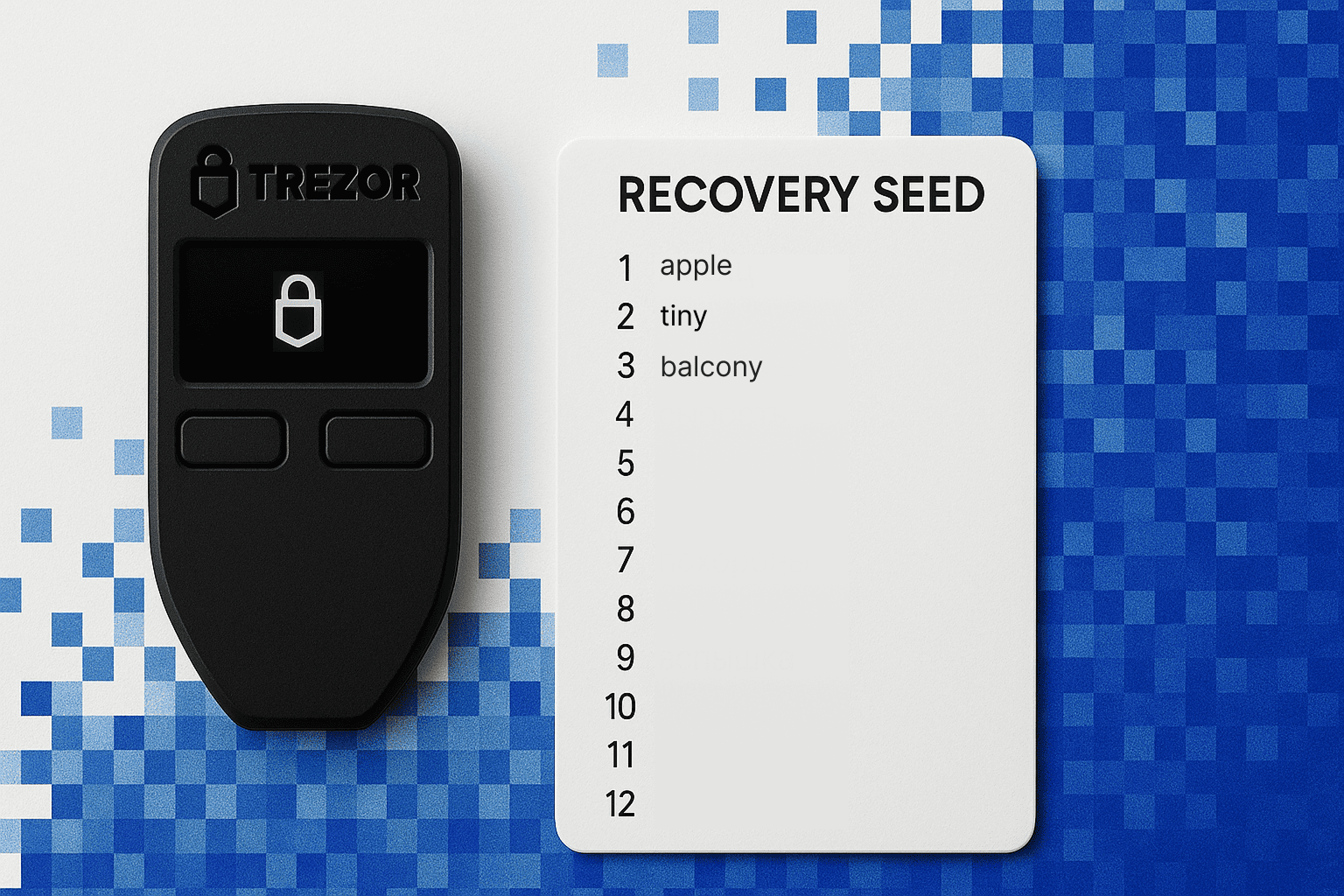
A seed phrase (or mnemonic phrase) is a sequence of 12–24 words generated when creating a new crypto wallet. This phrase allows you to restore full access to your funds.
Anyone who knows your seed phrase can take control of your assets. That makes understanding how to store crypto seed phrase securely absolutely critical. You shouldn’t store it in cloud storage, email, messaging apps or mobile notes.
The best way to keep your seed phrase safe is to write it down or stamp it on a metal plate and store it in a secure place like a safe. Taking care of your seed phrase is key how to store your cryptocurrency and making sure you don't lose access to it.
Key rules:
- Never photograph your seed phrase
- Never enter it on websites, even if they look authentic
- Only use the phrase when restoring a wallet via an official app
- For large holdings, keep several copies in different secure places — but ensure no unauthorized person can access them
These habits directly influence how to store cryptocurrency safely and protect long-term crypto savings.
Asset Distribution to Minimize Risks
Even the most secure storage solution doesn’t eliminate one fundamental rule: never keep all your assets in a single place.
Most users keep a portion of their funds in a hot wallet or on an exchange for daily needs, and store long-term investments in cold storage. This approach solves two tasks at once:
- determining where should I store my crypto to minimize risk
- maintaining flexibility while managing your capital
Advanced users diversify further: they spread assets across platforms, use multiple wallets, multisig setups, and extra devices. This minimizes the chance that compromising one element will endanger the entire portfolio.
This diversified model reflects modern best practices for how to store cryptocurrency in 2025.
Choosing a Reliable and Secure Service
Telegram has evolved into a full-featured crypto environment. You can now perform key operations directly inside the messenger:
- Store cryptocurrencies
- Send and receive crypto
- Swap tokens
One example is Crypto Office — a secure and transparent service built into Telegram. Here you can safely store BTC, ETH, USDT, and many other assets.
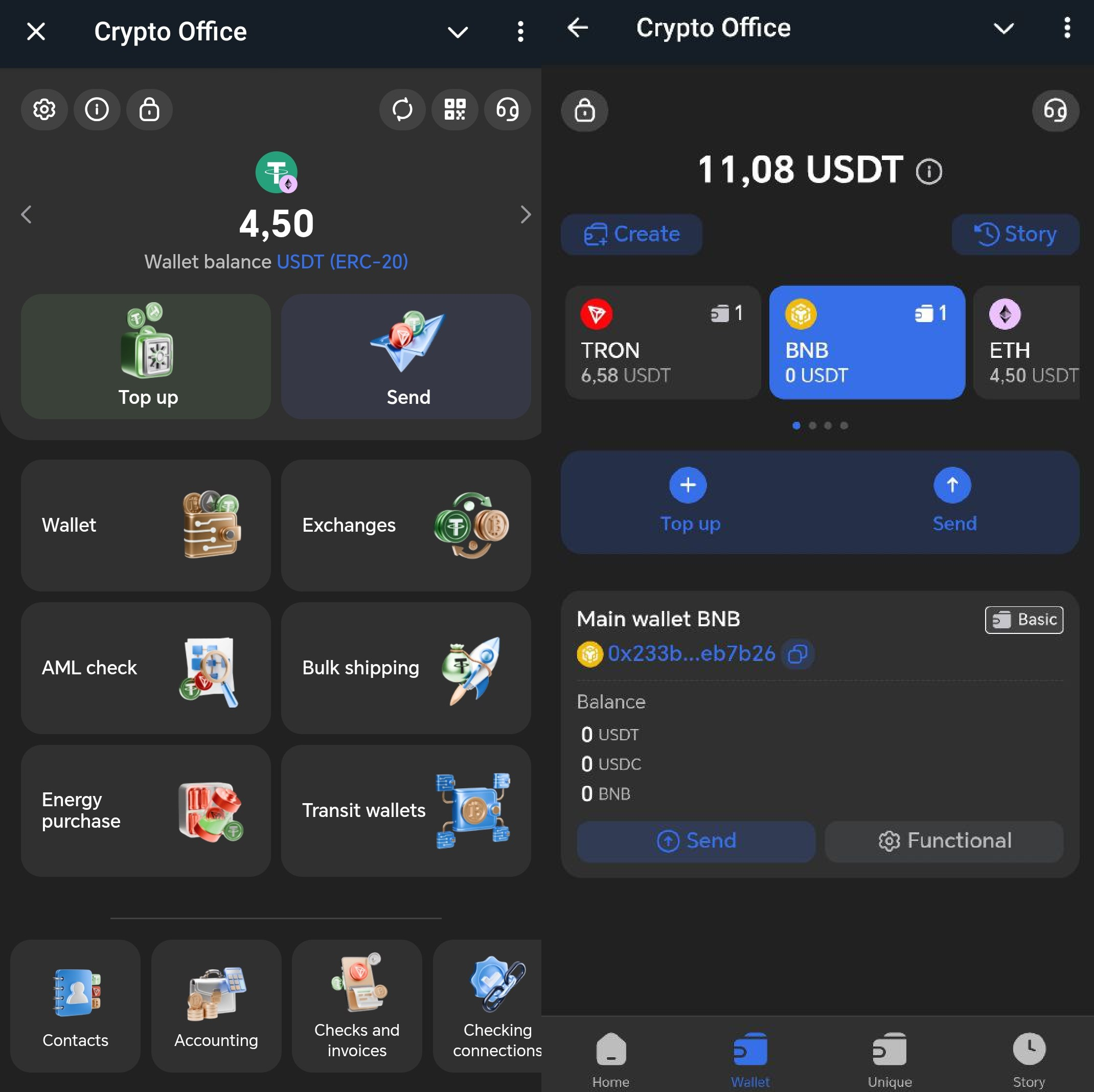
Crypto Office also provides:
- Instant cross-network transfers
- Built-in accounting tools
- Mass salary payouts
- AML checks
- Invoices and payment links
- Wallet and transaction monitoring
- Address connection analysis
This all-in-one ecosystem simplifies how to store crypto coins in a wallet without installing extra apps. It focuses on being open and keeping users safe. It also provides a secure way to store your crypto, even if your device isn't.
Conclusion
By 2025, the crypto market continues to mature and adopt clearer regulations. It gives users more confidence in their storage choices. Your ideal option depends on your goals:
- For active trading — exchanges or hot wallets
- For long-term savings — cold storage solutions
- For mixed daily use — integrated services like Crypto Office
Regardless of the method, one rule remains universal: protect your private keys and seed phrase. This defines how to store crypto safely and avoid irreversible losses.
- To keep your cryptocurrency secure in the future:
- Remember to store recovery data offline.
- Keep your devices updated. Use different storage methods.
These simple habits will help you store your cryptocurrency responsibly now and later.
Michael Turner knows his stuff when it comes to crypto and blockchain. He puts out content that's not only well-researched but also easy to understand, helping people get a handle on managing their digital assets.