

Cryptocurrency today is not just an investment asset. It’s used for transfers, exchanges, DeFi protocols, NFT platforms, and daily settlements. That’s why the question of secure storage remains critical. In 2026, there are many options for crypto storage, from mobile apps to physical devices. To really get what hot and cold wallets are all about, it's important to go beyond basic definitions and see how they really work.
This guide will cover what hot and cold wallets are, how they work, and which one might be right for you.
How Crypto Wallets Work
Your crypto isn't actually inside the wallet itself. It lives on the blockchain, which keeps track of all balances and transactions. Think of a wallet as the tool that lets you interact with your crypto on the blockchain. Control over funds is managed through a private key. This cryptographic key signs transactions and proves ownership. If it is lost, access to assets cannot be restored. A public address, which is created from your private key, can be shared safely to receive funds.
When looking at cold wallets versus hot wallets, the key difference is how and where the private keys are kept, and whether they're online.
What Is a Hot Wallet?
A hot wallet is a software that's online. It could be a mobile app, a computer program, a browser extension, or a website. If you're wondering about the difference between a hot wallet and a cold wallet, the easiest thing to remember is that hot wallets are always online.
When talking about hot wallets and cold wallets, keep in mind that hot wallets are made for speed and easy access. They let people:
- Send and receive tokens instantly
- Interact with smart contracts
- Connect to dApps via Web3
- Perform swaps and DeFi operations
However, there are structural differences inside the hot wallet category itself. Users must decide between a custodial or non custodial wallet. In custodial solutions, private keys are stored by a third party (for example, exchanges). In non-custodial wallets, users control their own keys. This raises the classic question: custodial or non custodial — convenience or full responsibility?
Examples of hot wallets include:
- MetaMask
- Trust Wallet
- Phantom
- Exodus
Exchange accounts on platforms like Binance, Bybit, or Coinbase also fall under the hot wallet vs cold wallet vs exchange comparison. In this case, the exchange acts as a custodial hot wallet. When evaluating hot wallet vs cold wallet crypto solutions, hot wallets clearly win in speed — but not necessarily in protection.
How Software Wallets Work and Who They Are For
A software wallet generates private keys on your device and stores them in encrypted form. Access to assets is performed online, meaning the device remains connected to the network.
In discussions about hot vs cold wallet crypto, software wallets are the standard representation of the hot side.
They are suitable for:
- Frequent transfers
- DeFi participation
- NFT trading
- Active market trading
For beginners trying to understand what is a hot wallet vs a cold wallet, software wallets are usually the starting point because of their intuitive interface. Still, permanent internet connectivity increases exposure to phishing, malware, fake browser extensions, and compromised devices. Even in the comparison of hot wallet vs cold wallet cryptocurrency, security ultimately depends not only on technology but also on user discipline — proper seed phrase storage, 2FA activation, and cautious online behavior.
What Is a Cold Wallet?
A cold wallet refers to an offline storage solution. It is typically a hardware device that stores private keys in a secure, isolated environment.
If hot wallets are always connected, cold wallets are intentionally disconnected. That’s the core of the cold wallet vs hot wallet distinction.
In a deeper crypto cold wallet vs hot wallet analysis, the key advantage of cold storage is that private keys never directly interact with the internet. Even if your computer is infected, an attacker cannot access funds without physical access to the device.
Popular hardware wallets include:
- Ledger
- Trezor
- SafePal
- Tangem
- Coldcard
When examining cold wallet vs hot wallet crypto, cold wallets are preferred for long-term holding and capital preservation.
The trade-off is convenience. Transactions require connecting the device and manually confirming each operation.
Who Should Use a Hardware Wallet?
A hardware wallet stores private keys inside the device and signs transactions internally. This structure significantly improves cold wallet vs hot wallet security, especially for large holdings.
Cold storage is ideal for:
- Long-term investors
- Users holding significant capital
- Those minimizing exposure to online risks
When it comes to crypto wallets, you have two main choices: hot and cold. Think of cold wallets as your savings account and hot wallets as your checking account.
The best choice depends on what you need. One is great for everyday use, while the other is better at keeping your assets safe.
Key Differences: Cold Wallet vs Hot Wallet

To properly compare hot wallet vs cold wallet, it’s important to evaluate them across practical criteria rather than abstract definitions.
Below is a comparison that helps evaluate the risks and practicality of each approach.
Comparison of Cold and Hot Wallets
| Criterion | Hot Wallet | Cold Wallet |
|---|---|---|
| Internet connection | Constant | Absent or limited |
| Private key storage | Online or on the device | Offline environment |
| Security level | Medium | High |
| Access speed | Instant | Slower |
| Ease of transactions | High | May be limited |
| Best suited for | Frequent transactions | Long-term storage |
Knowing how they're built differently helps when comparing hot vs cold wallets for real-world use.
Security and Hacking Risks
Security is often the deciding factor in the crypto hot vs cold wallet discussion.
A hot wallet is always online, so it's open to online threats like phishing, bad browser add-ons, hacked devices, and scams. Even with security steps like encryption and two-factor turned on, there are still many ways to get attacked.
A cold wallet, by contrast, keeps private keys offline. In the classic cold vs hot wallet crypto comparison, this significantly reduces the probability of unauthorized remote access.
But nothing is 100% safe. If your seed phrase isn't stored safely, both types of wallets can be cracked. Careless habits can ruin even the safest hardware.
So, when deciding hot or cold wallet to use it often comes down to how careful you are, not just which tool you pick.
Transaction Speed and User Experience
In the hot vs cold crypto wallet comparison, hot wallets win in operational speed.
Sending tokens takes seconds. Connecting to DeFi protocols, NFT marketplaces, or cross-chain bridges is seamless.
Cold wallets require connecting the device and confirming each transaction physically. This adds friction — but that friction is part of the security design.
When analyzing crypto wallet cold vs hot, hot wallets are clearly optimized for agility, while cold wallets are optimized for resilience.
Active traders, arbitrageurs, and liquidity providers often choose hot storage for working capital. Long-term investors usually prefer cold storage for strategic reserves.
Costs and Fees
Most hot wallets are free to use. Users only pay network fees. Some services add swap or service commissions.
Cold wallets require an upfront hardware purchase. After that, there are typically no additional maintenance fees.
From a blockchain fee perspective, there is almost no difference between cold wallet vs hot wallet crypto — costs are determined mainly by the selected network and congestion level.
When to Use a Hot Wallet and When a Cold Wallet
There is no universal answer in the hot wallet vs cold wallet: pros and cons debate. The right choice depends entirely on context.
When a Hot Wallet Makes Sense
Hot storage is suitable when:
- You trade daily
- You participate in DeFi
- You frequently send and receive crypto
- You need instant liquidity
In the broader hot wallet vs cold wallet vs exchange comparison, exchanges may offer convenience but introduce custodial risk. That’s why many users prefer non-custodial hot wallets for active operations.
When a Cold Wallet Is Better
Cold storage is preferable when:
- You hold assets long-term
- You store significant capital
- You prioritize maximum isolation from online threats
If you’re wondering cold or hot wallet for savings, cold storage is usually the safer strategic choice. Many experienced users combine both approaches. Working funds remain in a hot wallet, while long-term holdings are transferred to cold storage. This hybrid model is sometimes informally referred to as a cold hot wallet strategy — separating operational liquidity from protected reserves.
Crypto Office: More Than Just a Hot Wallet
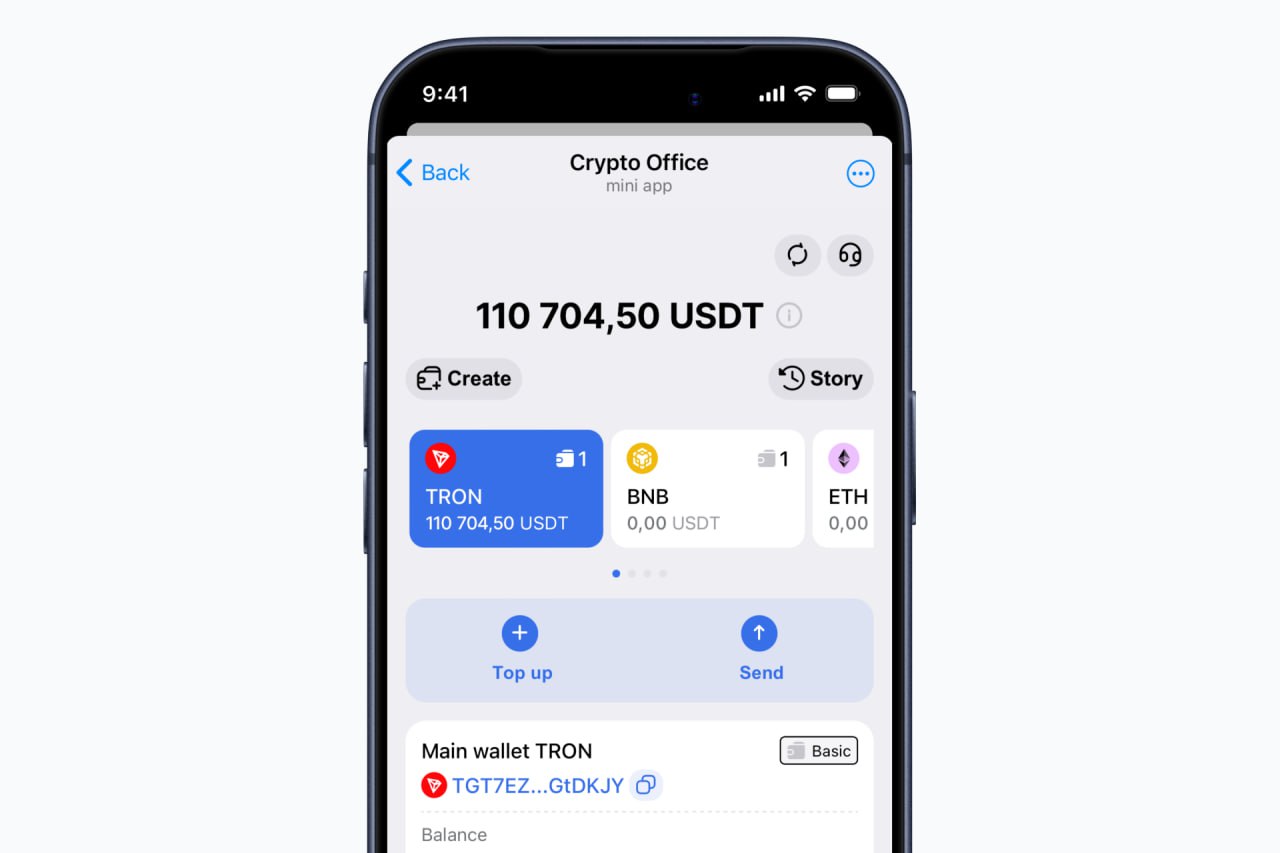
Crypto Office is a multifunctional Telegram-based crypto management solution.
From the perspective of crypto hot wallet vs cold wallet, it operates as a hot wallet — but with additional structural control tools.
The platform allows users to create a wallet in seconds directly inside Telegram.
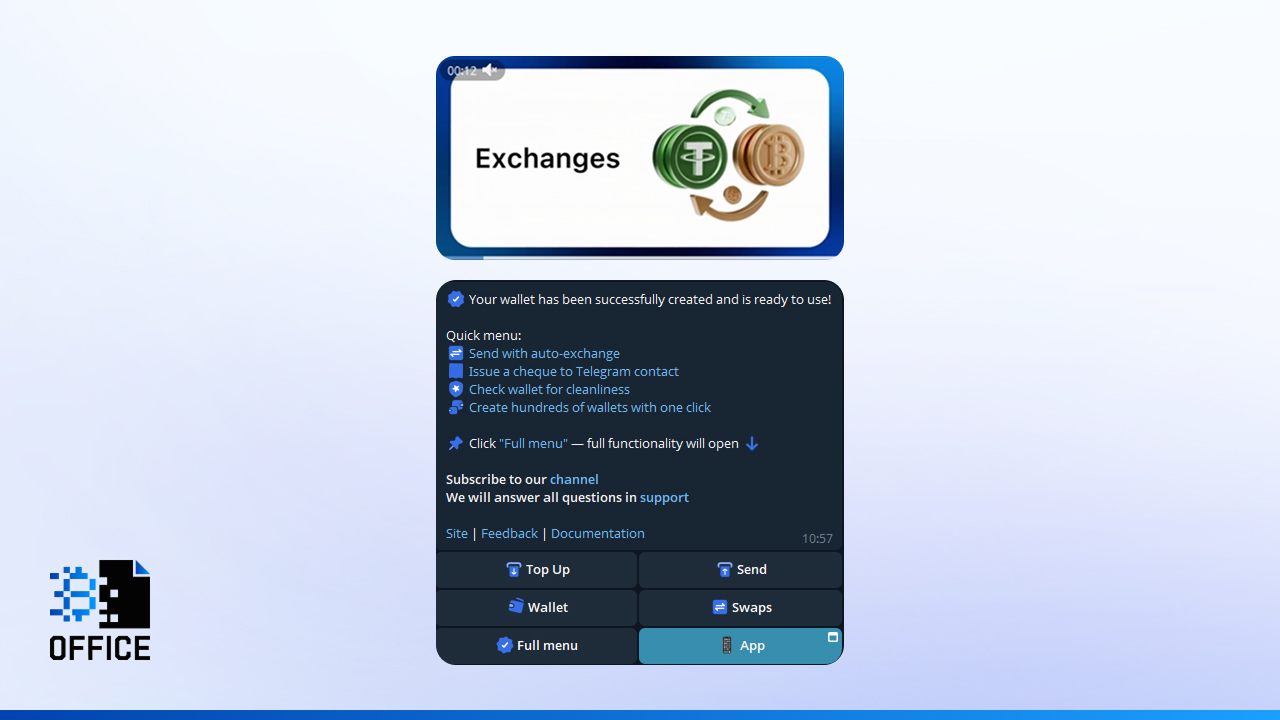
It integrates:
- Automatic AML checks for incoming and outgoing transactions
- AML screening during cross-chain swaps
- No mandatory KYC
- Batch transfers and wallet monitoring
- Built-in accounting tools for transaction analysis
- Transit wallets with customizable parameters
Unlike traditional exchange custody, Crypto Office operates as a non-custodial solution, meaning users retain control over their private keys.
In the broader hot wallet vs cold wallet cryptocurrency ecosystem, such hybrid functional platforms represent an evolution of hot storage — adding risk management layers without sacrificing speed.
Five Golden Security Rules for Any Wallet Type
Whether you choose hot vs cold wallet crypto, security discipline remains essential.
- Store your seed phrase offline. Never keep it in cloud storage or messaging apps.
- Never share your private key. No legitimate support team will request it.
- Enable two-factor authentication wherever possible.
- Double-check addresses and network selections before sending funds. Blockchain transactions are irreversible.
- Maintain device hygiene. Avoid suspicious extensions and keep your software updated.
These practices matter regardless of whether you use a crypto cold wallet vs hot wallet setup.
Conclusion
The debate around hot wallet vs cold wallet is not about which option is universally better. It’s about matching the tool to your objectives. Hot wallets provide speed, flexibility, and seamless DeFi integration. Cold wallets deliver structural security and long-term capital protection. When evaluating what is hot wallet vs cold wallet, the real distinction lies in internet exposure and private key management. For active users, hot storage is often more practical. For long-term holders, cold storage offers stronger peace of mind. Experienced crypto users rarely choose one exclusively. They combine both — optimizing liquidity while protecting reserves. Understanding hot wallet vs cold wallet cryptocurrency helps build a rational, risk-adjusted storage strategy rather than relying on myths or oversimplified assumptions.
Michael Turner knows his stuff when it comes to crypto and blockchain. He puts out content that's not only well-researched but also easy to understand, helping people get a handle on managing their digital assets.